

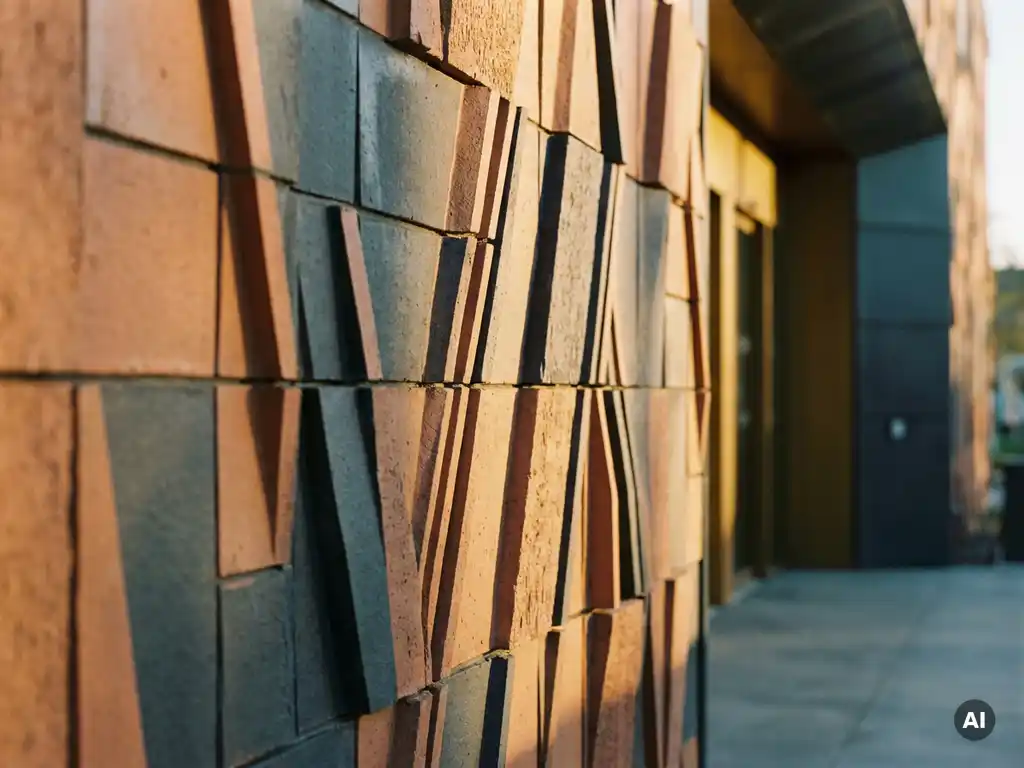
Surface texture is one of the most underused tools in facade design. While material choice and color selection typically dominate early design conversations, the geometry of a facade surface quietly shapes how a building is perceived, how it performs, and how long it remains visually relevant. Deep profiling on ceramic facades takes this a step further, turning the tile surface itself into an active design element rather than a passive backdrop. Whether you are working on a commercial development, a cultural institution, or a residential block, understanding what profiled surfaces can do will sharpen your design decisions from the outset.
What deep profiling brings to ceramic facade design
Deep profiling refers to pronounced three-dimensional relief applied directly to the surface of ceramic facade tiles during the manufacturing process. Unlike shallow surface textures, deep profiles create meaningful variations in depth, typically several millimeters or more, that interact with natural light, define shadow lines, and give a facade genuine tactile presence. The result is a surface that reads differently depending on the time of day, the viewing angle, and the surrounding environment.
For architects and facade designers, profiled ceramic tiles open a range of design possibilities that flat cladding simply cannot match. The seven points below outline the most significant ways deep profiling can elevate a ceramic facade project, from purely aesthetic effects to measurable performance advantages.
1: Create dramatic light and shadow effects
The most immediate impact of deep profiling is its relationship with light. A pronounced surface profile casts shadows that shift continuously as the sun moves across the sky, giving a facade a living quality that changes throughout the day and across seasons.
This effect can be used deliberately to emphasize certain hours of the day or to align the facade’s most dramatic appearance with the building’s primary viewing angle. East-facing profiles catch low morning light differently than south-facing ones, and a skilled designer can use this directional sensitivity to reinforce the building’s orientation on its site.
Unlike applied decorative elements, the light and shadow effects of a profiled ceramic facade surface are entirely intrinsic to the material. There are no separate components to maintain, and the effect does not fade over time.
2: Add architectural depth without added weight
Deep profiling creates a strong visual impression of mass and depth, yet the underlying ceramic tile remains a lightweight cladding element. This distinction matters significantly in structural and logistical terms.
On projects where facade weight is a design constraint, particularly in timber construction or renovation cladding over existing substrates, profiled ceramic tiles allow designers to achieve the visual weight of a much heavier material without the corresponding structural demands. The depth reads as substantial; the load is not.
This combination of visual density and physical lightness is one of the more practical advantages of ceramic facade cladding design. It gives specifiers a genuine tool for managing structural requirements without sacrificing design ambition.
3: Define a building’s visual rhythm and scale
Profile geometry is one of the primary ways a facade communicates scale. Repeated vertical ribs, horizontal channels, or diagonal relief patterns establish a visual rhythm that the eye reads before it registers individual tiles. This rhythm can make a building appear taller, wider, more monolithic, or more articulated depending on how the profile is oriented and scaled.
Deep profiling also helps break down the apparent scale of large facade surfaces. A building with several hundred square meters of unbroken flat cladding can feel oppressive or anonymous. The same area clad in profiled ceramic tiles reads as composed and intentional, with the profile doing the work of creating visual intervals that give the eye something to follow.
This is especially relevant in urban contexts where a building sits within a varied streetscape. Profile geometry helps a facade hold its own without resorting to excessive material or color variation.
4: What happens to color with a profiled surface?
Color behaves differently on a profiled surface than on a flat one. The peaks and valleys of a deep profile catch and absorb light at different angles, which means a single tile color produces a range of visible tones across the facade surface at any given moment.
This tonal variation adds depth and richness to the color reading without requiring multiple colorways. A terracotta profile, for instance, will show warm highlights on its raised ridges and cooler, deeper tones in its recessed channels, creating a surface that appears more nuanced and less flat than a uniform color field would suggest.
For designers working with ceramic facade aesthetics, this means that profile selection and color selection are inseparable decisions. The same color will read very differently on a flat tile, a lightly textured surface, and a deeply profiled one. Reviewing samples in natural light at the correct scale is essential before committing to a combination.
5: Reinforce material identity and tactile character
Ceramic is a material with a strong identity, and deep profiling amplifies that identity rather than obscuring it. The combination of a fired ceramic surface with pronounced three-dimensional relief signals craft, permanence, and considered material choice in a way that flat tiles or composite panels cannot replicate.
Tactile character matters even on facades that most occupants and passersby will never touch directly. The visual suggestion of texture, the way a profile implies depth and weight, communicates quality and intentionality at a distance. Buildings clad in profiled ceramic tiles tend to read as more resolved and more permanent than those finished with smooth or minimal-texture cladding.
This is particularly relevant for projects where the building’s identity is a strategic asset, such as cultural institutions, headquarters buildings, or high-specification residential developments where long-term image value is part of the brief.
6: Improve facade resilience through surface geometry
Beyond aesthetics, deep profiling contributes to facade performance in practical ways. A profiled surface manages water differently than a flat one. Channels and ridges direct rainwater away from the face of the tile more efficiently, reducing the duration of surface saturation and limiting the conditions in which biological growth or staining can develop.
The geometry of a profiled surface also distributes minor mechanical stress more evenly than a flat face, which can contribute to the long-term integrity of the tile surface under thermal cycling and environmental loading. These are incremental advantages rather than dramatic ones, but they compound over a facade’s operational life.
For specifiers focused on life cycle performance and reduced maintenance requirements, these surface geometry effects are worth factoring into the overall assessment of facade surface texture options alongside the more visible aesthetic benefits.
7: Differentiate a project in a competitive market
In a market where many buildings reach for the same palette of materials and finishes, a deeply profiled ceramic facade is a reliable way to create a distinctive visual identity without resorting to unusual colors or complex geometries elsewhere in the design.
Profile choice is also a relatively durable differentiator. Unlike color trends, which shift over time, a well-chosen surface profile tends to age gracefully and remain legible as a design decision rather than a dated one. Buildings with strong material character and surface depth tend to photograph well, hold their visual interest over time, and generate stronger recognition in their local context.
For developers and clients who view the building’s appearance as part of a long-term brand or asset strategy, this kind of sustained visual distinctiveness has real value. You can explore how profiled ceramic facades have been used across a range of building types in the project references section.
Choosing the right profile for your next facade project
Selecting a deep profile for a ceramic facade project is not a decision that should happen in isolation. The right profile depends on the building’s orientation and primary viewing distances, the facade’s relationship to surrounding buildings and streetscape, the color and finish of the ceramic tile, and the structural context that determines what tile formats and weights are feasible.
Reviewing physical samples at scale, in natural light, and ideally on a mock-up panel is the most reliable way to understand how a profile will actually perform on a specific building. What reads clearly at one meter of distance may flatten out at ten meters, and vice versa. Profile geometry that works beautifully on a south-facing elevation may produce a very different effect on a north-facing one.
Early collaboration between the architect, the facade engineer, and the ceramic manufacturer will also open up options that are not always visible in a standard product catalog. Format, profile depth, color, and surface finish interact in ways that are best explored through direct dialogue rather than specification alone. Downloading samples and technical documents early in the design process helps ground these conversations in the actual material.
How TONALITY® supports deep profiling ceramic facade design
TONALITY® ceramic facades are manufactured using a sinter firing process at temperatures exceeding 1,200 degrees Celsius, producing surfaces that are dense, dimensionally precise, and consistent across large production runs. This level of manufacturing control is essential for deep profiling, where surface geometry must be reproduced reliably across the full facade area to maintain the intended visual rhythm and shadow pattern.
For projects where deep profiling is part of the design strategy, TONALITY® offers:
- A wide range of profiled surface options across multiple formats, from 150 x 300 mm up to 400 x 1,600 mm, giving designers flexibility in scale and rhythm
- Precision manufacturing to within one millimeter, ensuring that profile geometry aligns consistently across tile joints and across the full facade
- Lightweight ceramic elements with a surface weight of approximately 40 kilograms per square meter, making profiled facades feasible even on timber construction and renovation projects
- Building material class A1 certification, meaning the tiles are non-combustible and carry no fire risk regardless of profile depth
- Permanent UV and color resistance combined with integrated graffiti protection, ensuring that the visual effect of the profile remains consistent over the building’s full operational life
- 100% recyclability and component-sorted deconstruction, supporting circular construction approaches without compromising on surface quality
[cta_contact_form]
Whether you are in the early concept phase or approaching technical specification, the TONALITY® team can support your project with material samples, technical documentation, and direct consultation on profile and format selection. Get in touch with the sales team to discuss your specific project requirements and explore which profiled ceramic facade options are the right fit for your design.