

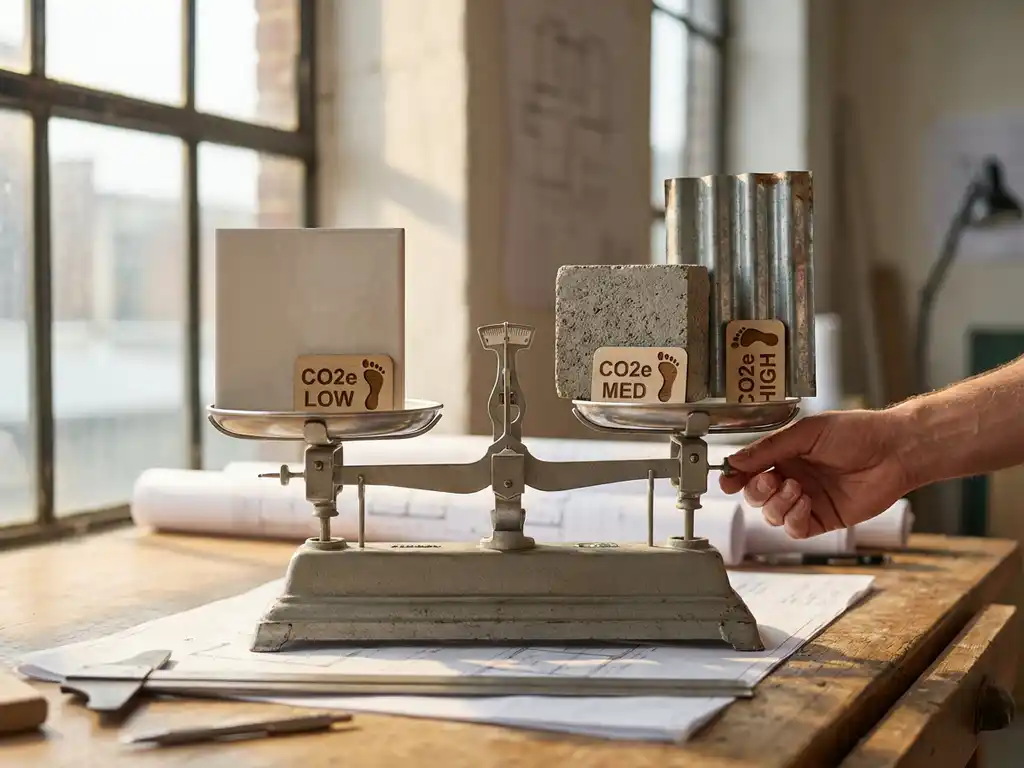
Why Embodied Carbon Matters in Facade Selection
Embodied carbon represents the total greenhouse gas emissions produced during the manufacturing, transportation, and installation of building materials. For facade materials, this carbon footprint can account for 20–40% of a building’s total lifetime emissions, making it a critical factor in sustainable building design.
Understanding embodied carbon helps architects and developers make informed decisions that align with environmental goals and green building certifications. Modern construction increasingly requires detailed carbon assessments to meet sustainability targets, and facade selection plays a particularly important role due to the large surface areas involved in most building projects.
What You Need to Calculate Embodied Carbon
Start by gathering Environmental Product Declarations (EPDs) for each facade material you’re considering. EPDs provide standardized carbon data measured in kilograms of CO2 equivalent per square meter or per kilogram of material. These documents are essential for accurate embodied carbon calculations.
You’ll also need detailed project specifications, including total facade area, material quantities, and transportation distances from manufacturing facilities to your construction site. Collect information about installation methods, as different mounting systems can significantly affect the overall carbon footprint of your facade system.
Essential Data Points to Collect
Document the material density and coverage rates for each facade option, as these affect the total material quantities required. Record the expected service life of each material, since longer-lasting materials distribute their embodied carbon over extended periods, improving their life-cycle performance.
Calculate Embodied Carbon for Each Facade Material
Begin your calculations by multiplying the material’s embodied carbon per unit (from the EPD) by the total quantity needed for your project. Add transportation emissions by calculating the distance from the manufacturing facility to the site, then multiplying by the carbon intensity of the transport method used.
Include installation-related emissions such as energy consumption for mounting systems, adhesives, or sealants required for each facade type. For ceramic facades and other durable materials, factor in their extended service life by dividing the total embodied carbon by the expected lifespan in years to get an annualized carbon impact.
Account for System Components
Calculate emissions for all supporting elements, including substructure materials, insulation layers, and fastening systems. These components can represent 15–30% of the total facade carbon footprint and vary significantly between different facade systems.
Compare Results Across Different Facade Options
Create a standardized comparison by expressing all results in the same units, typically kg CO2e per square meter of facade area. This normalization allows direct comparison between materials with different densities, thicknesses, and installation requirements.
Develop a comparison matrix that includes both upfront embodied carbon and annualized carbon impact based on expected service life. Consider the maintenance requirements over time, as materials requiring frequent cleaning, sealing, or replacement will accumulate additional carbon impacts throughout the building’s life cycle.
Factor in Long-term Performance
Evaluate each material’s durability characteristics such as UV resistance, thermal cycling performance, and maintenance needs. High-performance materials like ceramic facades often demonstrate superior long-term carbon efficiency despite potentially higher initial embodied carbon, due to their extended service life and minimal maintenance requirements.
Validate Your Carbon Calculations
Cross-reference your calculations with industry benchmarks and similar projects to ensure your results fall within reasonable ranges. Verify that your EPD data is current and comes from reputable sources, as embodied carbon values can vary significantly between manufacturers and production methods.
Document your calculation methodology and assumptions clearly, as this transparency supports design decision-making and may be required for green building certifications or environmental reporting. Consider engaging a qualified LCA professional to review your calculations, particularly for large or complex projects where accuracy is critical.
How TONALITY® Supports Low Embodied Carbon Design
TONALITY® ceramic facades offer an excellent solution for projects prioritizing low life-cycle carbon impact through their exceptional durability and maintenance-free performance. Our ceramic elements provide several carbon advantages:
- An extended service life exceeding 50 years distributes embodied carbon over decades.
- Zero maintenance requirements eliminate ongoing carbon impacts from cleaning or treatments.
- 100% recyclability enables complete material recovery at the end of service life.
- Local clay sourcing from Europe’s highest-quality deposits in the Westerwald reduces transportation emissions.
- A lightweight design of only 40 kg/m² minimizes substructure requirements and associated carbon.
Ready to calculate the embodied carbon advantages of ceramic facades for your next project? Contact our technical team for detailed EPD data and project-specific carbon impact assessments. You can also explore our portfolio of sustainable projects to see how other architects have successfully implemented low-carbon facade solutions.
Related Articles
- What makes a facade system genuinely circular by design?
- How do terracotta facades reduce a building's heat island effect?
- How do sustainable facade materials reduce maintenance costs?
- Can ceramic facades be considered sustainable materials?
- Is fiber cement or terracotta more durable for building facades?