

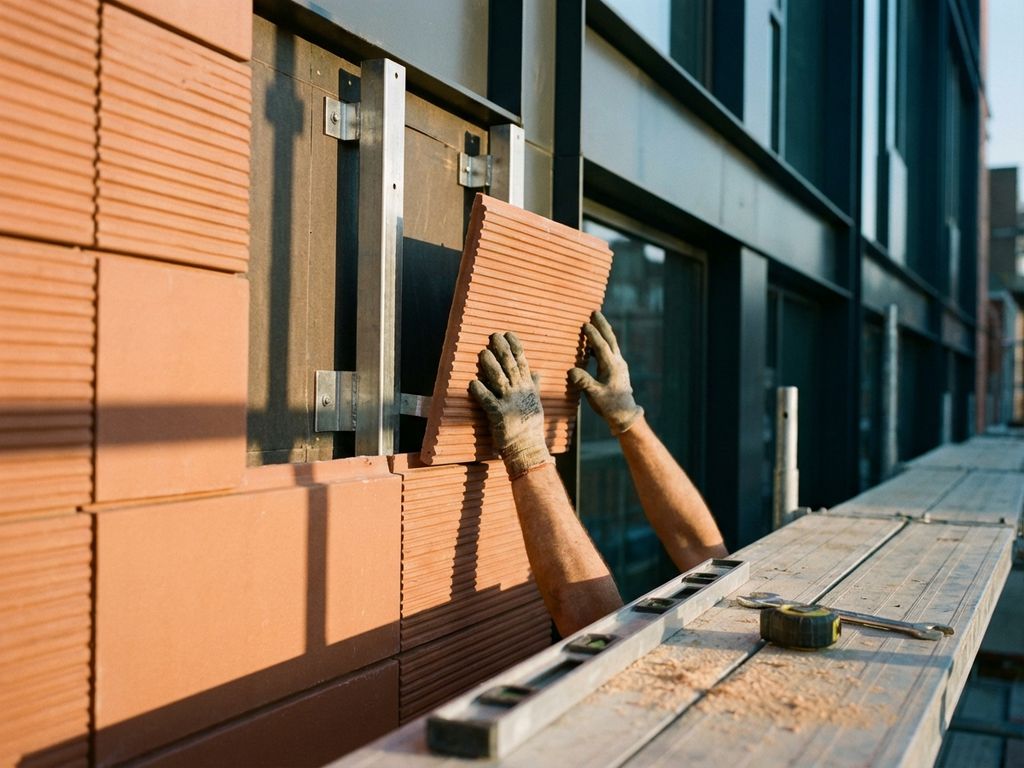
Installing terracotta facade panels involves mounting them to a prepared substructure using specialized fixing systems. The process requires careful planning, proper tools, and attention to thermal expansion requirements. Professional installation ensures optimal performance, weather resistance, and aesthetic appeal. This guide covers everything from preparation to common installation mistakes and how modern systems simplify the process.
What are terracotta facade panels and why are they popular?
Terracotta facade panels are fired clay building elements used as external cladding systems. They are manufactured by shaping clay into panels and firing them at high temperatures, typically exceeding 1,200 degrees Celsius, creating a dense, durable ceramic material with excellent weather resistance and dimensional stability.
The popularity of terracotta facades stems from their exceptional combination of aesthetic versatility and practical benefits. These panels offer extensive design possibilities through various colours, textures, and formats while providing superior durability that can last for decades with minimal maintenance. Their natural fire resistance classifies them as building material class A1, meaning they are completely non-combustible.
Sustainability drives much of the current demand for terracotta facades. The panels are 100% recyclable and can be deconstructed for complete reuse. Their thermal mass properties contribute to building energy efficiency, while their natural composition contains no harmful chemicals or volatile organic compounds.
The manufacturing process creates panels with consistent quality and precise dimensions, allowing for accurate installation and professional finishes. Modern terracotta systems also integrate seamlessly with contemporary construction methods, supporting both traditional masonry and lightweight timber construction approaches.
What tools and materials do you need for terracotta facade installation?
Professional terracotta facade installation requires specialized mounting hardware, precision measuring tools, and comprehensive safety equipment. The specific requirements depend on the panel system and building structure, but certain tools are essential for all installations.
Essential tools include:
- Laser level and spirit levels for accurate alignment
- Diamond-tipped cutting tools for panel modifications
- Torque wrenches for consistent fixing tension
- Measuring tapes, squares, and marking tools
- Power drills with masonry and metal bits
- Safety equipment including harnesses and hard hats
Required materials include the mounting system components, such as vertical and horizontal support rails, brackets, fixings, and weatherproofing materials. Insulation materials, vapour barriers, and sealants complete the installation package. High-quality fixings made from stainless steel or other corrosion-resistant materials ensure long-term performance.
Panel handling equipment becomes crucial for larger formats, including suction lifting devices and protective padding to prevent damage during installation. Weather protection materials may be needed to shield work areas during installation.
How do you prepare the building structure for terracotta facade panels?
Building structure preparation involves comprehensive structural assessment, insulation installation, and precise substructure mounting. This foundation work determines the entire facade system’s performance and longevity, requiring careful attention to load-bearing capacity and thermal bridging prevention.
The preparation process begins with a structural evaluation to confirm that the building can support the additional facade load. Even lightweight terracotta systems add considerable weight, requiring adequate structural capacity and appropriate fixing points. Load calculations must account for wind loads and seismic requirements where applicable.
Insulation installation follows structural confirmation, with continuous insulation layers applied to minimize thermal bridging. Vapour barrier application protects the building structure from moisture infiltration while allowing appropriate vapour permeability. These layers must be properly sealed and continuous.
Substructure mounting involves installing the primary support framework that will carry the terracotta panels. This typically consists of vertical rails or brackets fixed to the building structure at specified intervals. Precise alignment and levelling of this framework are critical, as any errors will be magnified in the final panel installation.
Weather protection during preparation prevents moisture infiltration that could compromise the building structure or insulation performance. Temporary coverings may be necessary during extended installation periods.
What is the correct installation sequence for terracotta facade panels?
The correct installation sequence follows a systematic bottom-up approach with careful panel positioning, precise alignment, and progressive quality checks. This methodology ensures consistent results and prevents accumulating errors that could compromise the entire facade system.
Installation begins with establishing reference lines and starting points, typically at building corners or other prominent features. The first row of panels sets the standard for the entire installation, requiring extra attention to alignment and level. Each panel must be positioned accurately before fixing.
Panel fixing methods vary by system but generally involve securing panels to the substructure through mechanical fixings or clip systems. Proper torque settings prevent over-tightening that could damage panels while ensuring adequate holding strength. Each fixing point should be checked and documented.
Joint sealing between panels requires appropriate sealants applied consistently to prevent water infiltration. Movement joints accommodate thermal expansion and building settlement, requiring specific detailing and materials. These joints are critical for long-term performance.
Quality control measures throughout installation include regular alignment checks, fixing verification, and weather seal integrity. Progressive inspection prevents problems from compounding and ensures each installation phase meets specifications before proceeding to the next level.
What are the most common installation mistakes and how do you avoid them?
Common installation mistakes include inadequate thermal expansion provision, improper fixing techniques, and insufficient weather sealing. These errors can lead to panel damage, water infiltration, and premature system failure, making prevention through proper planning and execution essential.
Improper spacing represents a frequent error where installers fail to account for thermal movement. Terracotta panels expand and contract with temperature changes, requiring specific joint widths and movement accommodation. Insufficient expansion joints can cause panels to crack or buckle under thermal stress.
Inadequate fixings occur when installers use incorrect fasteners or fail to achieve proper torque settings. Over-tightening can crack panels, while under-tightening allows movement that can cause wear and failure. Using inappropriate fixing materials can lead to corrosion and system failure over time.
Water ingress problems arise from poor joint sealing, inadequate weatherproofing, or incorrect installation sequences that trap moisture. Prevention requires attention to sealant application, proper overlap details, and ensuring all penetrations are adequately sealed.
Quality control prevents these mistakes through systematic checking at each installation stage. Regular training ensures installation teams understand proper techniques and current best practices. Having experienced supervision and clear installation procedures significantly reduces the likelihood of errors.
How does TONALITY® simplify terracotta facade panel installation?
TONALITY® revolutionizes terracotta facade installation through an innovative interlocking system with back-profiled ceramic elements that connect directly to vertical aluminium retaining profiles. This approach eliminates complex fixing procedures and reduces installation time while ensuring professional results.
Key installation advantages include:
- Simple mount-and-done installation process requiring fewer specialized tools
- Lightweight panels at approximately 40 kg per square metre, reducing substructure requirements
- Precise manufacturing tolerances within one millimetre, ensuring a perfect fit
- Integrated weather sealing and expansion joint management
- Comprehensive technical support and installation guidance
- Compatibility with both traditional and timber construction methods
The system’s low dead weight makes it particularly suitable for renovation projects and timber construction where structural loading is critical. The simplified installation process reduces labour costs and installation time while maintaining the highest quality standards.
TONALITY® provides complete technical support, including detailed installation manuals, training programmes, and on-site assistance when required. This comprehensive approach ensures successful installations and long-term facade performance.
Ready to simplify your next terracotta facade project? Contact TONALITY® for technical specifications, installation support, and to discover how their innovative system can streamline your construction process while delivering exceptional results.
Ähnliche Artikel
- What are building codes and why do they matter?
- How long does custom terracotta manufacturing take?
- How do architects create parametric designs with terracotta facades?
- What are the cost differences between terracotta installation methods?
- What is the step-by-step process for terracotta facade assembly?