

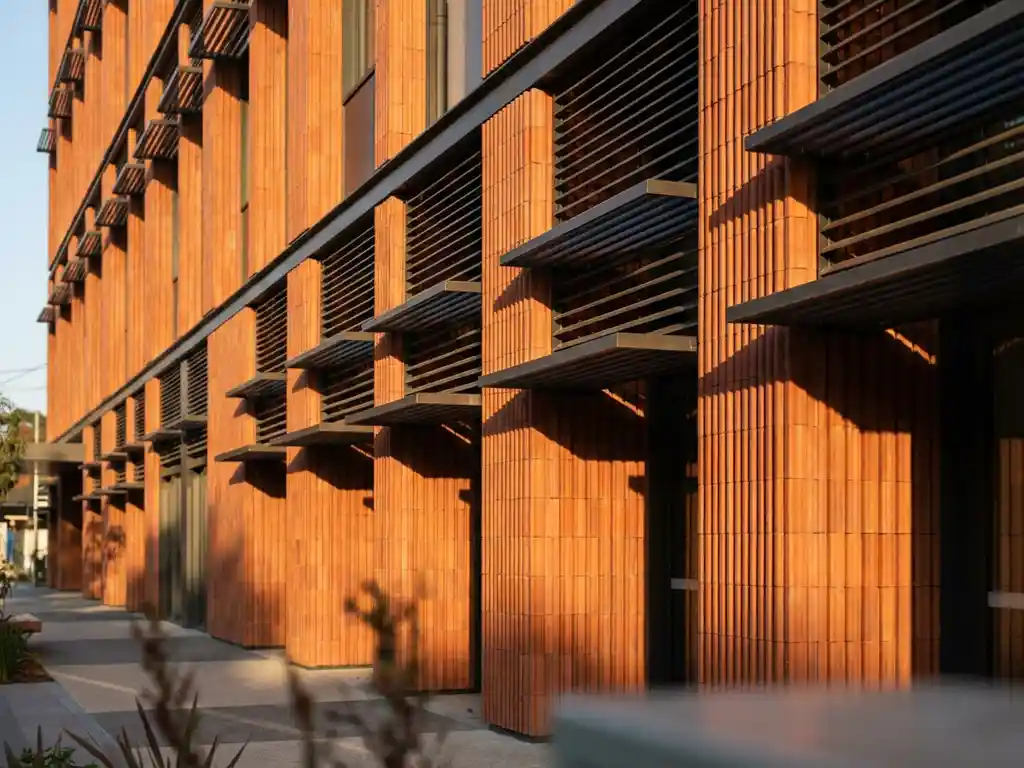
What are terracotta baguettes and louvers in solar shading systems?
Terracotta baguettes and louvers are specialized ceramic façade elements designed to control sunlight and heat gain in buildings. These elongated, profiled ceramic components are strategically positioned on building exteriors to block direct solar radiation while maintaining natural light and ventilation. Baguettes typically have rectangular profiles, while louvers have angled surfaces that redirect sunlight away from interior spaces.
These ceramic façade elements are manufactured through high-temperature firing processes that create dense, durable surfaces resistant to weathering and UV degradation. The natural clay composition provides excellent thermal properties, making them highly effective in building shading systems. Modern terracotta solar-control systems can be customized in various sizes, angles, and configurations to optimize sun protection for different building orientations and climatic conditions.
How do terracotta elements block and redirect sunlight effectively?
Terracotta elements control solar radiation through their geometric design and material properties, creating shade and reflecting heat away from building surfaces. The angled profiles of ceramic baguettes and louvers are precisely engineered to block high-angle summer sun while allowing beneficial low-angle winter sunlight to penetrate interior spaces.
The dense ceramic material absorbs and dissipates solar heat gradually, preventing rapid temperature fluctuations that can stress building façades. The smooth, fired surfaces of terracotta louvers reflect a significant portion of incident solar radiation, reducing heat transfer to the building envelope. This thermal-mass effect helps moderate temperature swings throughout the day, contributing to improved indoor comfort and reduced cooling loads.
The spacing and orientation of façade louvers can be calculated to achieve optimal shading performance for specific latitudes and building functions. Horizontal louvers excel at blocking overhead summer sun, while vertical ceramic baguettes effectively control low-angle morning and evening solar radiation.
What are the key benefits of using terracotta for solar shading?
Terracotta offers superior durability, thermal performance, and design flexibility compared to metal or synthetic shading materials. The ceramic composition provides natural fire resistance, permanent color stability, and maintenance-free performance over decades of exposure to harsh weather conditions.
Key advantages of ceramic façade louvers include:
- Exceptional longevity with minimal maintenance requirements due to the fired ceramic surface
- Natural thermal-mass properties that help regulate building temperatures
- Complete recyclability and environmental sustainability
- Design versatility with unlimited color and surface texture options
- Excellent acoustic properties that can reduce external noise transmission
The architectural shading potential of terracotta extends beyond pure functionality. Ceramic baguettes can be integrated seamlessly with the overall façade design, creating dynamic visual effects through shadow patterns and surface textures. Unlike metal alternatives, terracotta maintains a consistent appearance and structural integrity without corrosion, fading, or thermal-expansion issues.
How are terracotta baguettes and louvers installed on building facades?
Terracotta solar-control elements are typically mounted using lightweight aluminum support systems that attach to the building’s structural framework. The ceramic components feature precision-engineered profiles that interlock with vertical or horizontal retaining systems, ensuring secure attachment while allowing for thermal movement.
Installation begins with mounting the aluminum substructure at predetermined spacing intervals calculated for the specific dimensions of the ceramic baguettes. The terracotta elements then clip or slide into position, creating continuous shading lines across the façade. This modular approach enables efficient installation and future maintenance access if required.
The relatively low weight of ceramic façade elements compared to traditional masonry allows for lighter substructures and faster installation times. Professional installation teams can typically complete large façade areas efficiently due to standardized mounting systems and the precise manufacturing tolerances of high-quality terracotta components.
How TONALITY® ceramic facades enhance solar shading performance
TONALITY® ceramic façade systems provide advanced solar-control solutions through precision-engineered baguettes and louvers manufactured in Germany’s premier clay region. Our ceramic elements deliver superior shading performance through several key features:
- Precise dimensional accuracy within one millimeter for optimal light control
- Special sinter-firing process creating ultra-dense surfaces for maximum durability
- Lightweight design at only 40 kg per square meter, ideal for efficient installation
- A1 fire classification providing non-combustible solar shading solutions
- Integrated UV and color stability ensuring lasting aesthetic performance
- 100% recyclable composition supporting sustainable building practices
Our interlocking ceramic façade systems simplify installation while delivering maintenance-free solar control for decades. You can explore our successful project implementations and contact TONALITY® today to discover how our ceramic baguettes and louvers can optimize solar shading for your next architectural project.
Ähnliche Artikel
- How do engineers prevent thermal bridging in rear-ventilated terracotta systems?
- How to Integrate Terracotta Facades into Revit and BIM Workflows
- What is biophilic design and why is terracotta ideal for it?
- Terracotta vs Porcelain Facade Panels: A Specifier's Guide
- Can terracotta facades withstand extreme weather conditions?