

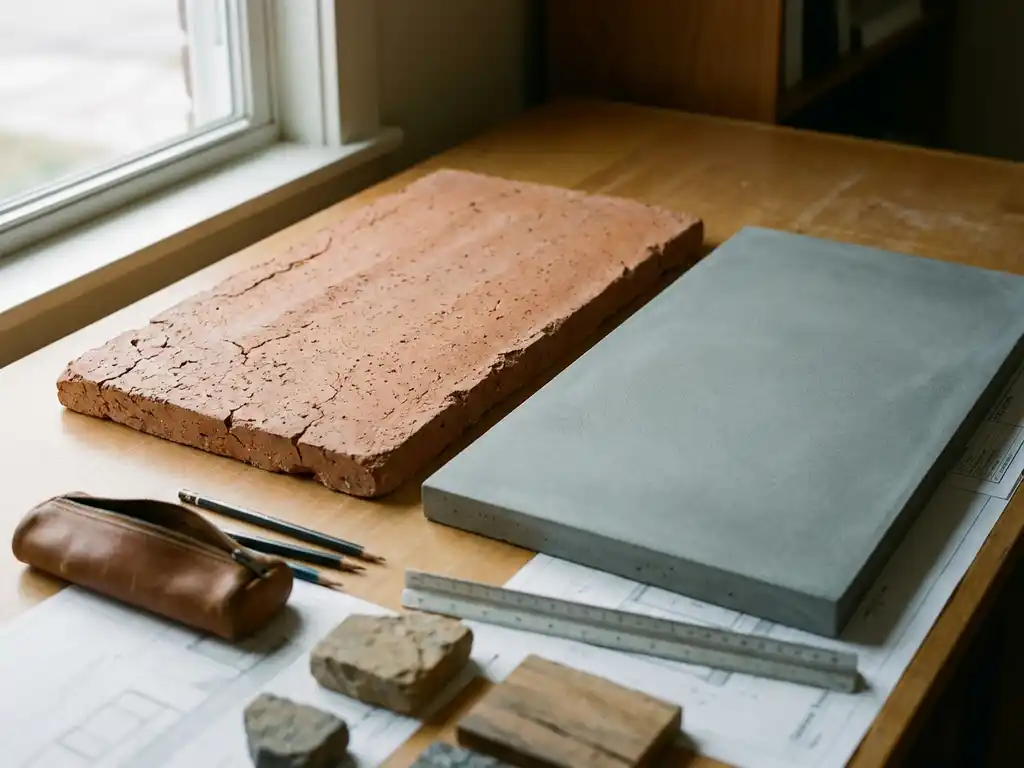
What’s the Difference Between Terracotta and GFRC Panels?
Terracotta panels are fired ceramic elements made from natural clay, while GFRC (glass fiber–reinforced concrete) panels are composite materials that combine concrete with glass fiber reinforcement. The fundamental difference lies in their manufacturing processes and material compositions, which directly affect their performance characteristics.
Terracotta panels undergo a sinter-firing process at temperatures exceeding 1,200°C, creating dense, non-porous surfaces. This high-temperature manufacturing results in ceramic façade panels with exceptional durability and weather resistance. GFRC panels, by contrast, are cast using concrete mixed with alkali-resistant glass fibers and then cured under controlled conditions without extreme heat treatment.
These material properties create distinct advantages for each system. Ceramic panels achieve an A1 building-material classification, meaning they are completely non-combustible, while GFRC panels typically require additional fire-resistant treatments. Additionally, terracotta’s natural clay composition makes it 100% recyclable, whereas GFRC’s composite nature presents more complex recycling challenges.
How Much Do Terracotta Panels Weigh Compared to GFRC?
Terracotta panels typically weigh 40–50 kilograms per square meter, while GFRC panels generally range from 25–40 kilograms per square meter. However, terracotta’s weight advantage becomes apparent when considering complete system requirements and structural implications.
Despite GFRC’s potentially lower individual panel weight, terracotta’s superior strength-to-weight ratio often results in lighter overall façade systems. The dense ceramic structure allows for thinner-profile designs while maintaining structural integrity. This efficiency means less material volume is needed to achieve the same performance standards.
The weight comparison becomes more complex when factoring in substructure requirements. Terracotta’s consistent weight distribution and interlocking mounting systems can reduce the need for heavy structural supports. GFRC panels may require more substantial framing systems to accommodate different load-distribution patterns, potentially offsetting their lighter individual weight.
Which Costs More: Terracotta or GFRC Façade Panels?
The total cost of ownership typically favors terracotta panels, despite higher initial material investment, due to significantly lower maintenance requirements and a longer service life. GFRC panels may have lower upfront costs but can require more frequent maintenance and potential replacement over time.
Terracotta’s lifecycle cost advantages stem from its inherent durability and maintenance-free performance. The ceramic surface resists weathering, UV degradation, and staining without requiring protective coatings or regular cleaning treatments. These characteristics translate into substantial savings in building maintenance budgets over decades of service.
GFRC panels often require periodic sealing, potential repairs at fiber-to-concrete interfaces, and more frequent cleaning due to their porous surface texture. When evaluating façade material comparison from a financial perspective, architects and building owners increasingly focus on total cost of ownership rather than initial procurement costs. The extended service life of ceramic systems often provides a superior return on investment through reduced maintenance interventions and longer replacement cycles.
What Design Options Do Terracotta and GFRC Panels Offer?
Both terracotta and GFRC panels offer extensive design flexibility, but terracotta provides superior color permanence and tighter manufacturing tolerances. Ceramic panels can be produced to within one millimeter of the specified dimensions in sizes ranging from 150 × 300 mm up to 400 × 1,600 mm, with virtually unlimited color possibilities.
Terracotta’s design advantages include permanent color integration achieved during the firing process, ensuring UV resistance and fade-proof performance. The ceramic material accepts various surface textures, from smooth contemporary finishes to traditional rustic appearances. This versatility makes ceramic façade panels suitable for both modern architectural expressions and heritage-building renovations.
GFRC panels excel at creating complex three-dimensional forms and sculptural elements due to concrete’s moldability during casting. However, surface coloring typically relies on applied finishes or integral pigments that may fade over time. Architectural cladding systems using GFRC often require more frequent refinishing to maintain their intended appearance, particularly in challenging weather conditions.
How Do Installation Methods Compare Between These Panel Types?
Terracotta panels typically use interlocking systems with vertical aluminum retaining profiles, while GFRC panels commonly require mechanical anchoring or adhesive mounting systems. Installation complexity and time requirements differ significantly between these approaches.
Modern terracotta façade systems feature back-profiled elements that interlock with mounting rails, creating a „mount-and-done“ installation process. This system design reduces on-site labor requirements and minimizes installation errors. Precise manufacturing tolerances ensure consistent alignment and weather sealing without extensive field adjustments.
GFRC panel installation often involves more complex anchoring systems, requiring careful load calculations and multiple attachment points per panel. The façade panel installation process may include structural adhesives, mechanical fasteners, or hybrid mounting systems. Weather conditions can significantly affect GFRC installation schedules, particularly when adhesive systems are involved, whereas terracotta’s mechanical mounting systems perform reliably across a wide range of environmental conditions.
Which Façade Material Performs Better Long Term?
Terracotta panels demonstrate superior long-term performance through their non-porous ceramic structure, permanent color stability, and resistance to environmental degradation. The fired ceramic material maintains its properties indefinitely without requiring protective treatments or surface renewal.
The performance advantages of ceramic systems become most apparent after the first decade of service. Terracotta’s integrated graffiti protection, UV resistance, and self-cleaning properties help ensure a consistent appearance throughout the building’s lifecycle. The material’s thermal stability prevents expansion-related stress that can affect other façade materials over time.
GFRC panels may experience gradual degradation through freeze–thaw cycles, carbonation of the concrete matrix, and potential deterioration of the fiber-to-concrete bond. While high-quality GFRC systems can provide decades of service, they typically require more active maintenance management. Comparisons of building façade materials consistently show ceramic systems outperforming composite alternatives in long-term durability studies, making them particularly valuable for landmark buildings and structures that require minimal maintenance intervention.
How TONALITY® Ceramic Façades Deliver Superior Performance
TONALITY® ceramic façade systems combine the inherent advantages of terracotta with advanced manufacturing precision and innovative mounting technology. Our ceramic elements are produced using specialized sinter-firing processes that create unrivaled smooth, dense surfaces, ensuring a consistently high-quality appearance and lasting, maintenance-free performance.
Key advantages of TONALITY® ceramic façades include:
- Ultra-precise manufacturing tolerances within one millimeter for perfect alignment
- Lightweight design at only 40 kg/m², reducing structural requirements
- Simple interlocking installation system with vertical aluminum profiles
- Complete fire safety with A1 non-combustible classification
- 100% recyclable materials supporting sustainable construction goals
- Integrated graffiti protection and permanent UV resistance
Discover how TONALITY® ceramic façade systems can enhance your next project with superior performance, design flexibility, and long-term value. Contact our façade specialists to explore custom solutions tailored to your architectural vision and performance requirements, or view our successful project references to see ceramic façades in action.
Ähnliche Artikel
- How do sustainable building materials work?
- What makes terracotta inherently safer than ACM panels for high-rise buildings?
- 6 Performance Advantages of Terracotta vs Fiber Cement Cladding
- How do perforated terracotta screens balance light, privacy, and ventilation?
- How often should terracotta facades be inspected?