

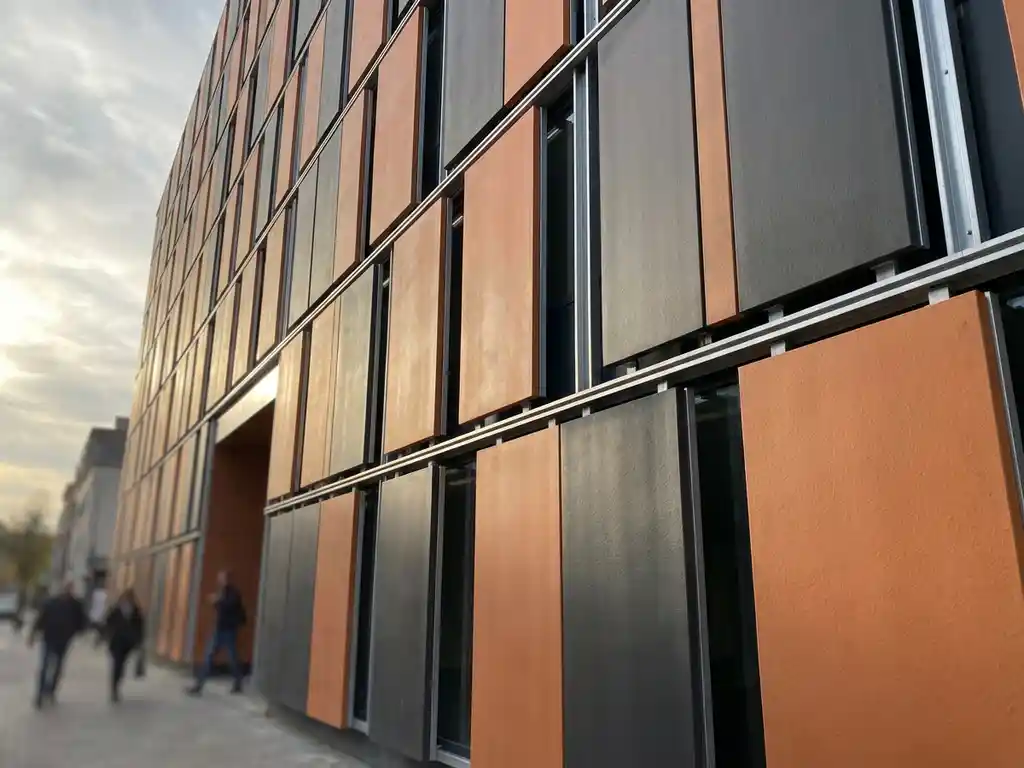
Modern architectural design increasingly demands building solutions that combine aesthetic appeal with structural efficiency. Lightweight façade systems have emerged as a game-changing approach that addresses multiple construction challenges simultaneously, from reducing structural loads to accelerating project timelines.
These innovative façade solutions offer architects and builders the flexibility to create stunning exteriors while maintaining practical benefits that extend throughout a building’s lifecycle. Understanding the comprehensive advantages of lightweight façades is essential for making informed decisions in contemporary architectural design.
What Are Lightweight Façade Systems and Why Do They Matter?
Lightweight façade systems are exterior cladding solutions that significantly reduce the dead load on building structures while maintaining or enhancing performance characteristics. These systems typically weigh between 30 and 50 kilograms per square meter, compared to traditional heavy façades, which can exceed 100 kilograms per square meter.
The importance of lightweight façades in modern architectural design stems from their ability to address multiple construction challenges simultaneously. They enable architects to specify lighter substructures, reduce foundation requirements, and expand design possibilities for various building types. This weight reduction becomes particularly crucial in timber construction, high-rise buildings, and renovation projects where existing structures have limited load-bearing capacity.
Contemporary lightweight façade systems achieve their reduced weight through advanced materials and manufacturing processes. Single-layer ceramic elements, aluminum composite panels, and engineered fiber-cement boards are common lightweight options that deliver exceptional performance without the structural burden of traditional materials.
How Do Lightweight Façades Reduce Construction Costs?
Lightweight façade systems reduce construction costs by minimizing structural requirements, decreasing transportation expenses, and streamlining installation processes. The reduced dead load allows for lighter substructures, smaller foundations, and less structural steel, creating significant savings in the building’s framework.
The cost benefits extend beyond initial material savings to encompass the entire construction process. Lighter façade elements require smaller cranes and less heavy equipment during installation, reducing rental costs and site logistics complexity. Transportation becomes more efficient, as trucks can carry larger quantities of lightweight materials per trip, decreasing delivery costs and project scheduling constraints.
Long-term cost advantages emerge through reduced maintenance requirements and enhanced durability. High-quality lightweight façade systems often incorporate advanced surface treatments and material compositions that resist weathering, UV degradation, and thermal cycling, minimizing ongoing maintenance expenses throughout the building’s lifecycle.
What Makes Lightweight Façade Installation Faster and Easier?
Lightweight façade installation is faster and easier due to reduced handling requirements, simplified mounting systems, and decreased safety risks associated with lighter materials. Installation teams can maneuver lightweight elements more efficiently, reducing labor time and physical strain during the mounting process.
Modern lightweight façade systems often incorporate innovative mounting mechanisms that streamline installation procedures. Interlocking profiles, clip-on systems, and pre-engineered mounting rails eliminate complex fastening procedures and reduce the skill level required for proper installation. These systems enable „mount-and-done“ approaches that significantly accelerate project completion.
The reduced weight also enhances job site safety by minimizing risks associated with handling heavy materials. Workers experience less fatigue, and the likelihood of lifting injuries decreases substantially. Additionally, lighter façades require less robust temporary support structures during installation, simplifying site preparation and reducing safety equipment requirements.
How Do Lightweight Systems Perform in Different Building Types?
Lightweight façade systems excel across various building types by adapting to specific structural and performance requirements. In timber construction, they provide essential fire protection while minimizing structural loads that could compromise the wooden framework’s integrity.
High-rise buildings benefit significantly from lightweight façades, as the cumulative weight reduction becomes substantial across multiple floors. This weight savings allows architects to add floors within the same structural budget or reduce overall structural system requirements. The reduced wind loads and seismic forces associated with lighter façades also enhance building stability in challenging environmental conditions.
Renovation projects particularly favor lightweight façade systems, as they can be applied to existing structures without requiring extensive structural reinforcement. Historic buildings, aging commercial structures, and residential renovations can achieve modern performance standards and aesthetic updates without compromising existing structural integrity.
Industrial and commercial buildings leverage lightweight façades to achieve large-span designs with minimal structural interruption. The reduced dead load enables longer spans between structural supports, creating more flexible interior spaces and reducing overall construction complexity.
What Are the Long-Term Performance Benefits of Lightweight Façades?
Lightweight façade systems deliver superior long-term performance through enhanced durability, reduced thermal-cycling stress, and improved weather resistance. The lower mass results in reduced thermal expansion and contraction, minimizing stress-related deterioration over time.
Advanced lightweight materials often incorporate superior surface treatments and material compositions that outperform traditional heavy façades in weather resistance. UV-stable surfaces, integrated graffiti protection, and non-combustible material classifications ensure consistent performance throughout the building’s service life. These characteristics maintain the façade’s appearance and functionality with minimal intervention.
The environmental benefits of lightweight façades extend to end-of-life considerations. Many lightweight systems offer complete recyclability and simplified deconstruction processes. Components can be sorted by material type and reused in new construction projects, supporting circular-economy principles and reducing environmental impact.
Energy performance often improves with lightweight façade systems, as they can accommodate enhanced insulation systems more easily than heavy alternatives. The reduced structural requirements create opportunities for continuous insulation and advanced thermal-bridge mitigation strategies.
How TONALITY® Delivers Lightweight Façade Excellence
TONALITY® ceramic façade systems exemplify lightweight performance, with surface weights of only 40 kilograms per square meter while maintaining exceptional durability and aesthetic versatility. Our single-layer ceramic elements combine the benefits of lightweight construction with the performance advantages of high-temperature-sintered ceramics.
Key advantages of TONALITY® lightweight façade systems include:
- Interlocking aluminum mounting profiles for simplified installation
- A1 non-combustible classification for superior fire safety
- Integrated graffiti protection and permanent UV resistance
- 100% recyclability with component-level deconstruction capability
- Precision manufacturing tolerances within one millimeter
- Flexible format options from 150 × 300 mm to 400 × 1,600 mm
Experience the advantages of lightweight ceramic façades that deliver lasting performance without compromising design flexibility. Contact our architectural design specialists to explore how TONALITY® can enhance your next project with innovative lightweight façade solutions. You can also view our successful project implementations to see these systems in action across various building types.