

Ceramic manufacturing has become an essential process across numerous industries, transforming raw clay materials into durable, high-performance products through controlled heating and firing techniques. From the buildings we live and work in to the smartphones we use daily, ceramic manufacturing plays a crucial role in creating materials that combine strength, durability, and specialized properties that other materials simply cannot match.
Understanding which industries rely most heavily on ceramic manufacturing reveals the versatility and importance of these materials in modern applications. Each sector leverages unique ceramic properties to solve specific challenges, from extreme temperature resistance to electrical insulation and aesthetic appeal.
What is ceramic manufacturing, and why is it so widely used?
Ceramic manufacturing is the process of shaping clay-based materials and firing them at high temperatures to create hard, durable products with specific physical and chemical properties. This process transforms malleable clay into materials that are non-combustible, corrosion-resistant, and capable of withstanding extreme conditions.
The widespread use of ceramic manufacturing stems from the unique combination of properties that ceramics offer. These materials provide exceptional durability, often lasting decades without significant degradation. They resist fire, moisture, chemicals, and UV radiation better than many alternatives. Additionally, ceramics can be precisely engineered to meet specific requirements, from electrical conductivity to thermal insulation, making them invaluable across diverse applications.
The manufacturing process itself allows for remarkable customization. Through controlled firing temperatures, material composition, and forming techniques, manufacturers can create ceramics with tailored properties for specific industrial needs.
Which construction industries use ceramic materials most?
The construction industry represents the largest consumer of ceramic materials, with architectural ceramics, façade systems, and structural components leading demand. Building façades, roofing tiles, flooring systems, and decorative elements rely heavily on ceramic manufacturing for both functional and aesthetic purposes.
Façade systems particularly benefit from ceramic manufacturing due to the materials’ weather resistance and design flexibility. Modern ceramic façade elements can be produced in precise dimensions and a variety of surface finishes while maintaining structural integrity for decades. These systems offer excellent fire-protection properties and are often classified as building material class A1, meaning they are completely non-combustible.
Interior applications also drive significant demand for ceramic manufacturing. Floor and wall tiles, sanitaryware, and decorative elements all rely on ceramic production processes. The construction industry values ceramics for their low maintenance requirements, hygienic properties, and ability to maintain their appearance over extended periods without replacement.
How does the automotive industry use ceramic manufacturing?
The automotive industry uses ceramic manufacturing primarily for engine components, brake systems, and exhaust applications where extreme heat resistance and durability are essential. Ceramic brake discs, spark plug insulators, and catalytic converter substrates are major applications of ceramic technology in vehicles.
Engine applications benefit significantly from ceramic materials due to their ability to withstand high temperatures while maintaining dimensional stability. Ceramic components in turbochargers, engine blocks, and exhaust systems help improve fuel efficiency and reduce emissions. These materials can operate at temperatures that would damage traditional metals.
Advanced automotive applications increasingly rely on technical ceramics for sensors, electronic components, and lightweight structural elements. As electric vehicles become more prevalent, ceramic manufacturing supports battery technology and electrical insulation requirements that are critical to vehicle safety and performance.
What role do ceramics play in electronics and technology?
The electronics and technology industries depend heavily on ceramic manufacturing for components that provide electrical insulation, heat dissipation, and precise dimensional control. Ceramic substrates, capacitors, resistors, and semiconductor packaging all rely on specialized ceramic materials produced through controlled manufacturing processes.
Smartphone and computer manufacturing uses ceramics extensively for circuit boards, antenna components, and protective housings. The materials’ ability to maintain electrical properties while resisting environmental factors makes them ideal for sensitive electronic applications. Ceramic manufacturing enables the production of components with the extremely tight tolerances required for modern miniaturized electronics.
Advanced technology applications, including medical devices, telecommunications equipment, and renewable energy systems, increasingly rely on ceramic components. Solar panel manufacturing, for example, uses ceramic materials for electrical connections and protective elements that must withstand decades of outdoor exposure.
Which aerospace and defense industries rely on ceramic materials?
The aerospace and defense industries use ceramic manufacturing for applications requiring extreme performance under harsh conditions, including thermal protection systems, armor plating, and engine components. These sectors demand materials that can withstand extreme temperatures, impacts, and corrosive environments while maintaining structural integrity.
Aircraft engines incorporate ceramic components in turbine blades, heat shields, and combustion chambers where traditional materials would fail. The lightweight nature of ceramics compared with metals provides additional benefits for aerospace applications, where weight reduction directly impacts fuel efficiency and performance.
Defense applications rely on ceramic manufacturing for ballistic protection, radar systems, and electronic warfare equipment. Advanced ceramic armor provides superior protection while reducing weight compared with traditional materials, making it essential for modern military vehicles and personal protective equipment.
How is ceramic manufacturing evolving across different industries?
Ceramic manufacturing is evolving through advanced production techniques, digital manufacturing processes, and sustainable practices that reduce environmental impact while improving product performance. Industries are increasingly adopting precision manufacturing methods that enable tighter tolerances and more complex geometries.
Sustainability has become a driving force in the evolution of ceramic manufacturing. Modern processes focus on energy efficiency, waste reduction, and recyclability. Many ceramic products can now be fully recycled and reused, supporting circular-economy principles across industries.
Digital technologies are transforming ceramic manufacturing through automated quality control, predictive maintenance, and customized production capabilities. These advances allow manufacturers to produce smaller batches of specialized ceramics economically, opening up new applications across emerging industries and technologies.
How TONALITY® helps with ceramic manufacturing excellence
TONALITY® represents the pinnacle of ceramic manufacturing innovation, using Europe’s highest-quality clay deposits from the Westerwald region to create superior façade systems. Our specialized sinter-firing process at temperatures exceeding 1,200°C produces ceramic elements with unmatched density and surface quality, delivering lasting performance across demanding applications.
Our ceramic manufacturing capabilities offer distinct advantages:
- Precision production with millimeter-accurate dimensions from 150 x 300 mm up to 400 x 1,600 mm
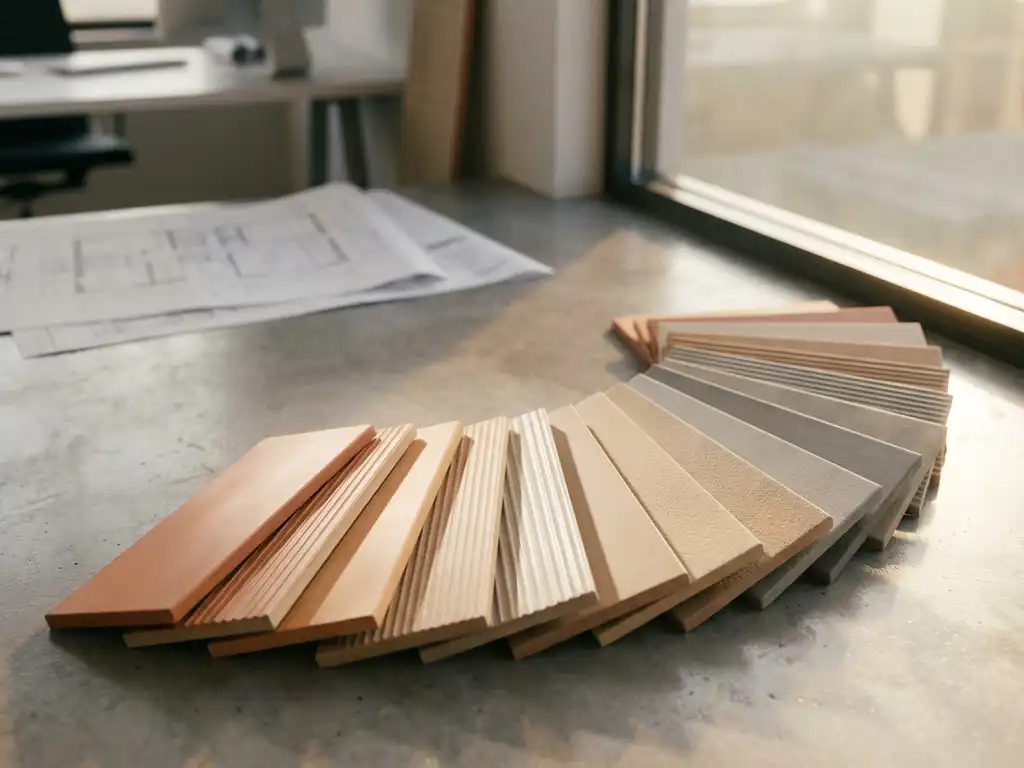
- Over 50 color options with a variety of surface finishes, from smooth to textured
- Lightweight design at only 40 kilograms per square meter, reducing structural requirements
- A1 fire classification for superior safety performance
- 100% recyclable materials that support sustainable construction practices
Ready to explore how advanced ceramic manufacturing can enhance your next project? Contact our team to discuss your specific requirements and discover the TONALITY® difference in ceramic façade solutions.
Related Articles
- What surface finishes are possible in ceramic manufacturing?
- How do you choose the right facade textures for a commercial building?
- What role does facade texture play in architectural design?
- Can terracotta facades be installed without adhesive for easier recovery?
- What sustainable materials work best for timber construction?