

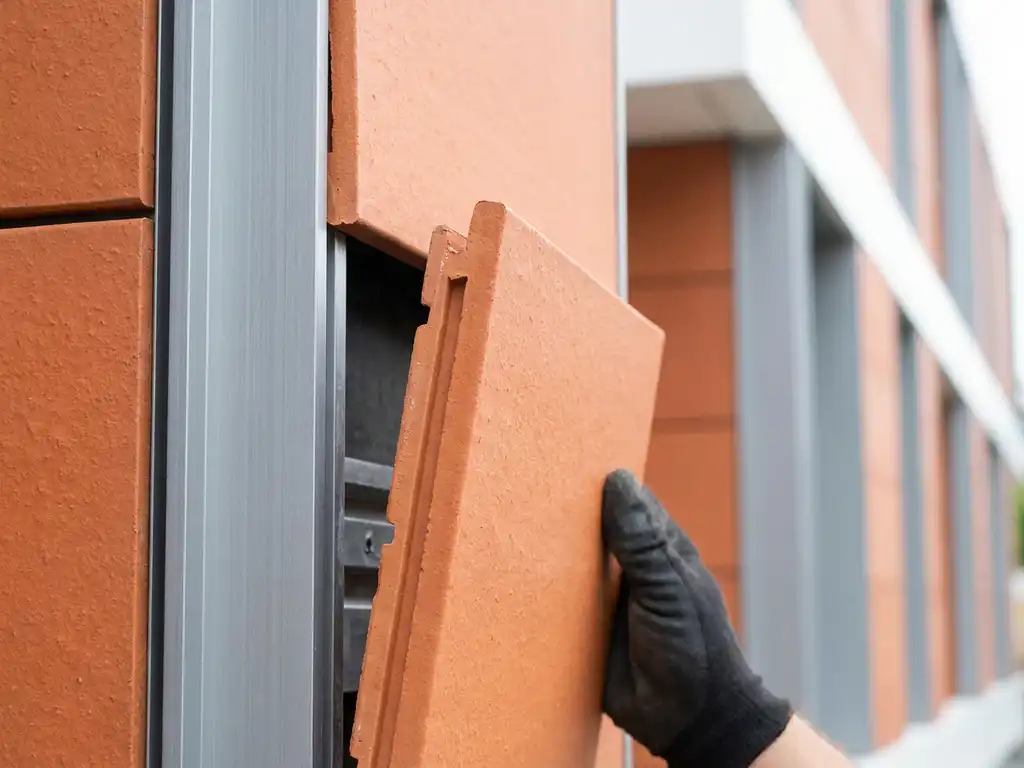
Yes, terracotta and ceramic facade tiles can be installed without adhesive using a dry-fix, ventilated facade system. In this approach, ceramic elements clip or slot into aluminum retaining profiles mounted to a substructure, keeping every component mechanically separated and fully accessible. This makes future recovery, sorting, and reuse straightforward rather than a demolition challenge.
Adhesive-free facade installation is particularly well suited to projects where long-term flexibility matters: renovations, timber-frame buildings, or any structure where the facade may need to be updated or removed without damaging the substrate. The sections below walk through the key questions contractors and project managers typically raise about this installation method.
What makes adhesive-free facade systems easier to dismantle?
An adhesive-free facade system is easier to dismantle because every component remains mechanically independent. Ceramic tiles clip into aluminum retaining profiles rather than being bonded to the substrate, so each element can be removed individually without breaking the tile or damaging the wall behind it. There is no cured adhesive to chip away, no residue to clean, and no risk of tearing the substrate surface.
This mechanical separation also means that the substructure, the retaining profiles, and the ceramic tiles are three distinct material streams. When the time comes to remove the facade, whether for refurbishment, recladding, or end-of-life deconstruction, each layer can be taken apart in sequence and sorted by material type with minimal effort. Aluminum profiles go to metal recycling, ceramic elements remain intact for reuse or ceramic recycling, and the primary structure is left undamaged.
For project managers working to sustainability targets or building certification schemes, this clean separation is a meaningful advantage. It supports circular construction principles and significantly reduces the labor intensity of future facade work compared to adhesive-bonded systems, where tiles and mortar beds often have to be broken off together. To get a clearer picture of how this looks in practice, completed terracotta facade projects illustrate the range of applications and disassembly-friendly detailing used across different building types.
Can terracotta and ceramic facade tiles be reused after removal?
Yes, ceramic and terracotta facade tiles removed from a dry-fix system can be reused, provided they were installed without adhesive and come away undamaged. Because the tiles are held mechanically rather than bonded, removal does not stress the material. Tiles that are intact after disassembly retain their full structural and aesthetic properties and can be reinstalled on a new or refurbished facade.
The material itself supports reusability. High-fired ceramic tiles produced through a sinter firing process at temperatures above 1,200 degrees Celsius are extremely dense and dimensionally stable. They do not absorb moisture, degrade with UV exposure, or lose surface integrity over time. A tile removed after decades of service looks and performs the same as when it was first installed. Exploring the available terracotta surfaces and formats gives a useful sense of the material range and how different finishes hold up over the long term.
Ceramic facade elements are also 100% recyclable at end of life, meaning any tiles that cannot be directly reused can still be processed as a clean ceramic material stream rather than going to landfill. This lifecycle approach significantly reduces the environmental footprint of the facade over the full building lifespan.
How does a dry-fix facade system get installed?
A dry-fix ventilated facade system is installed by first mounting vertical aluminum retaining profiles to the building’s substructure, then engaging the profiled backs of the ceramic tiles directly into those profiles. No adhesive, mortar, or wet trade is involved. The process is essentially mechanical assembly: mount the profiles, clip in the tiles, and the facade is complete.
The sequence in practice follows these key stages:
- Substructure installation: Brackets and vertical aluminum profiles are fixed to the load-bearing wall or frame, creating a ventilated cavity between the wall and the facade skin.
- Tile engagement: Ceramic elements, which are profiled on the back, interlock with the retaining profiles. No wet mixing, no curing time, no adhesive application.
- Alignment and completion: Tiles are checked for alignment and the installation is complete. The ventilated cavity remains open at the top and bottom to allow airflow.
The low surface weight of single-layer ceramic tiles, around 40 kilograms per square meter, means the substructure does not need to be heavily engineered to carry the load. This reduces material requirements for brackets and profiles, speeds up the overall installation timeline, and lowers the structural demands on the building frame. For timber construction in particular, this weight advantage is a decisive factor. Detailed technical documentation is available via the downloads and samples section for those specifying or planning a dry-fix installation.
What are the fire protection properties of adhesive-free ceramic facades?
Ceramic facade tiles installed in a dry-fix ventilated system carry the highest fire classification available for building materials: class A1, which means they are non-combustible and contain no combustible components whatsoever. This classification applies to the ceramic tile itself, which does not ignite, melt, or contribute fuel to a fire under any building fire scenario.
The A1 rating is particularly significant for timber-frame construction, where the primary structure is combustible. A non-combustible ceramic facade provides an outer layer that resists ignition from external fire sources, helping to contain fire spread and protect the structure behind it. This makes adhesive-free ceramic cladding a strong choice for multi-story timber buildings, where fire performance requirements are stringent.
The ventilated cavity in a dry-fix system does require careful detailing at horizontal fire barriers to prevent chimney effects, but this is standard practice in ventilated facade engineering and does not reduce the inherent fire resistance of the ceramic material itself. The combination of A1-rated tiles and a properly detailed substructure delivers reliable, code-compliant fire performance.
Are adhesive-free ceramic facades suitable for renovation projects?
Adhesive-free ceramic facades are well suited to renovation projects because the dry-fix system can be installed over existing substrates without requiring the complete removal of the original facade. The aluminum substructure is fixed to the load-bearing wall and the new ceramic cladding is mounted onto it, effectively creating a new facade layer without a full strip-out. This reduces disruption, construction waste, and project duration.
The low dead weight of the ceramic system is a particular advantage in renovation contexts. Older buildings often have limited capacity to carry additional facade loads, and a lightweight ceramic cladding system places far less demand on the existing structure than heavier stone or concrete alternatives. This can make the difference between a facade upgrade being structurally feasible or requiring costly structural reinforcement.
Renovation projects also benefit from the flexibility of the ceramic facade system in terms of format and color. Tiles can be produced to precise dimensions, which allows the new facade to align cleanly with existing window reveals, corners, and architectural features. The result is a building that looks purpose-designed rather than retrofitted, with the long-term durability and maintenance-free performance that makes the investment worthwhile over the building’s remaining lifespan.
How TONALITY® supports adhesive-free facade projects
TONALITY® provides a complete dry-fix ventilated facade system purpose-built for the requirements described throughout this article. Whether the priority is circular construction, fire performance, renovation feasibility, or long-term material reusability, the system is engineered to deliver on all of these fronts in a single integrated solution. Specifically, TONALITY® offers:
- Mechanically fixed ceramic facade tiles that can be removed, sorted, and reused without adhesive residue or substrate damage
- A1-rated non-combustible terracotta elements suitable for timber-frame and multi-story construction where fire performance is a regulatory requirement
- Lightweight single-layer tiles at approximately 40 kg/m², reducing structural demands and making the system viable for renovation projects with limited load capacity
- A broad range of surfaces, formats, and colors that allow precise coordination with existing architectural features and project-specific design requirements
- Full technical documentation and physical samples to support specification, planning, and approval processes
If you are planning a project that calls for an adhesive-free ceramic facade, get in touch with the TONALITY® team to discuss your requirements, request samples, or arrange a technical consultation.