

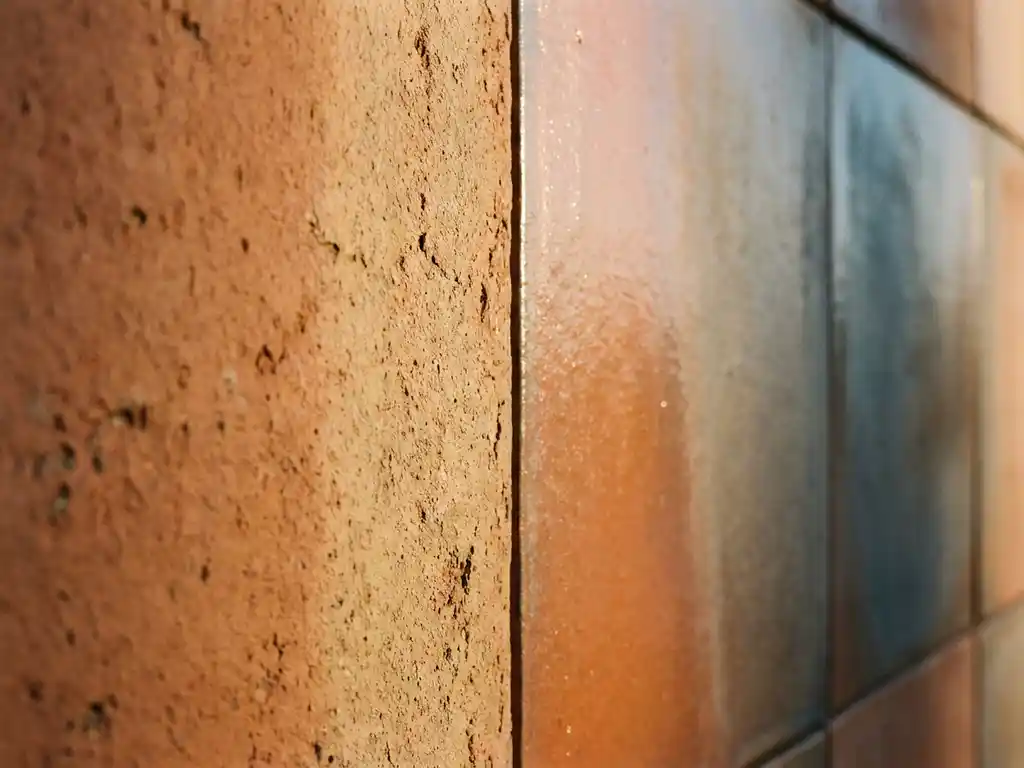
Glazed and unglazed terracotta facades differ primarily in their surface treatment: glazed tiles have a vitrified coating fused to the clay body during firing, creating a sealed, reflective surface, while unglazed tiles retain the natural, porous texture of the fired clay. The right choice depends on the project’s climate, design intent, and long-term maintenance expectations.
How does the glazing process change a terracotta facade’s surface?
The glazing process applies a mineral-based coating to the tile surface before high-temperature firing, which melts the glaze into a dense, glass-like layer that bonds permanently to the clay body. This transforms the surface from a naturally porous, matte material into a sealed, smooth finish with significantly reduced water absorption.
During production, the glaze is applied as a liquid or powder compound containing silica, metal oxides, and flux materials. When fired at temperatures exceeding 1,000 degrees Celsius, these compounds vitrify and fuse with the ceramic substrate. The result is a surface that is chemically distinct from the clay beneath it, offering a controlled appearance that the natural clay body alone cannot achieve.
Unglazed terracotta, by contrast, develops its surface characteristics entirely through the clay composition and firing conditions. The color, texture, and slight variation across tiles come directly from the mineral content of the raw material and the heat treatment applied. This is why unglazed terracotta tends to show more natural tonal variation from tile to tile, a quality many architects deliberately specify for its organic character. To explore the full range of available terracotta surfaces and formats, it is worth reviewing manufacturer specifications in detail before finalizing a design concept.
Which finish performs better in harsh weather conditions?
Glazed terracotta generally performs better in environments with heavy rainfall, freeze-thaw cycles, or coastal salt exposure because the sealed surface resists water penetration more effectively than unglazed clay. However, high-quality unglazed ceramic tiles fired at very high temperatures can also achieve low water absorption rates that make them highly weather-resistant in their own right.
The key performance variable is water absorption. Glazed tiles present a near-impermeable surface layer, which limits moisture ingress and reduces the risk of frost damage in cold climates. In regions where temperatures regularly drop below freezing, this matters because water trapped within a porous material expands as it freezes and can cause surface spalling over time.
That said, the durability of unglazed terracotta should not be underestimated when the tiles are produced using a dense sinter-firing process. Tiles fired at temperatures exceeding 1,200 degrees Celsius develop a compact, low-porosity structure that resists moisture absorption and weathering naturally, without relying on a glaze layer. This type of high-fired ceramic facade tile delivers long-term performance even in demanding northern European or alpine climates.
One practical consideration for glazed tiles in harsh weather is the glaze layer itself. While it protects the clay beneath, any micro-cracking of the glaze over decades of thermal movement can create entry points for moisture. Unglazed tiles with dense sintered bodies avoid this risk entirely because there is no separate surface layer to delaminate or crack. Reviewing completed facade references from comparable climate zones can help project teams assess real-world performance before specifying either finish.
What are the main aesthetic differences between glazed and unglazed terracotta?
The most visible aesthetic difference is surface character: glazed terracotta produces a smooth, consistent, often reflective finish with precise color control, while unglazed terracotta offers a matte, textured appearance with natural tonal variation that gives facades a more tactile, earthy quality. The choice shapes the entire visual language of a building’s exterior.
Glazed finishes expand the color palette significantly. Metal oxide additions to the glaze compound allow manufacturers to produce deep blues, greens, whites, blacks, and custom colors that would be impossible to achieve through clay composition alone. This makes glazed terracotta attractive for projects where a bold or highly specific color specification is central to the design concept.
Unglazed terracotta draws its palette from the natural iron, silica, and mineral content of the clay. Colors typically range from warm ochres and terracotta reds through to buff, grey-brown, and charcoal tones depending on the clay source and firing atmosphere. These naturally occurring colors tend to age gracefully, developing subtle patina over time rather than fading or yellowing.
For facades where texture and depth of surface matter as much as color, unglazed options often win out. The slight surface irregularities and directional textures achievable in unglazed ceramic interact with natural light in ways that flat glazed surfaces cannot replicate, creating a facade that reads differently at different times of day and in different light conditions. Ordering physical samples is strongly recommended before making a final decision, as photographs rarely capture the full depth and tonal range of either finish.
Does the choice of finish affect facade installation or substructure requirements?
The glazed or unglazed finish itself does not significantly change installation method or substructure requirements. Both types of terracotta facade tile are installed using the same ventilated facade systems with aluminum retaining profiles. What matters more for substructure design is tile format, thickness, and surface weight rather than whether a glaze has been applied.
Ceramic facade systems use profiled tile backs that interlock with vertical aluminum retaining profiles, making installation consistent regardless of surface finish. The structural demands on the substructure are driven by the dead load of the tiles, which is a function of tile thickness and density, not glazing. A lightweight ceramic facade tile with a surface weight of around 40 kilograms per square meter places far less load on the substructure than heavier stone or concrete cladding alternatives, enabling lighter and more economical supporting frameworks.
One practical installation note: glazed tiles can be slightly more susceptible to surface scratching during handling and installation because the glaze layer, while hard, can show marks more visibly than a matte unglazed surface. This means glazed tiles benefit from careful site handling procedures, though this does not affect the system design or structural engineering calculations.
When should a project specify glazed over unglazed terracotta?
Specify glazed terracotta when the project demands precise, consistent color across a large facade area, requires a color outside the natural clay palette, or is located in a high-pollution urban environment where the easy-clean properties of a sealed surface reduce long-term maintenance. Specify unglazed when the design calls for natural texture, organic tonal variation, or a material that ages authentically over time.
Glazed ceramic facade systems are particularly well suited to commercial and cultural buildings where architectural identity relies on a specific, controlled color expression. The sealed surface also makes glazed tiles the better choice in environments with heavy atmospheric pollution or industrial particulates, since dirt and grime release more easily from a smooth, non-porous surface during rainfall or routine cleaning.
Unglazed terracotta is often the preferred specification for residential developments, educational buildings, and projects where the brief calls for warmth, materiality, and a connection to natural building traditions. The natural surface variation means no two sections of facade look identical, which works in favor of designs that value authenticity over uniformity.
From a lifecycle perspective, both finishes offer strong long-term value. High-fired ceramic tiles of either type are UV stable, frost resistant when properly specified, and require minimal maintenance over decades of service. The decision between glazed and unglazed ultimately comes down to design intent and environmental context rather than one finish being categorically superior to the other.
How TONALITY® helps you choose the right terracotta facade finish
Choosing between glazed and unglazed terracotta involves balancing performance requirements, aesthetic goals, and long-term maintenance considerations — and TONALITY® provides the expertise and product range to support that decision at every stage. Here is how:
- Comprehensive surface and format range: TONALITY® offers both glazed and unglazed terracotta facade tiles across a wide selection of formats, colors, and textures, giving design teams the flexibility to find the right solution for any project brief.
- Physical samples on request: Before committing to a specification, you can request physical samples to evaluate color, texture, and finish under real lighting conditions — an essential step that no digital reference can replace.
- Proven performance in demanding climates: TONALITY® facade systems have been installed on projects across a range of climatic zones, with a track record of long-term durability in both high-rainfall and freeze-thaw environments.
- Technical support from specification to installation: The TONALITY® team works directly with architects, facade engineers, and contractors to ensure the right product is specified and that installation details are correctly planned from the outset.
Whether your project calls for the bold, precise color of a glazed finish or the natural warmth of unglazed ceramic, contact the TONALITY® team to discuss your requirements and request samples or technical documentation.