

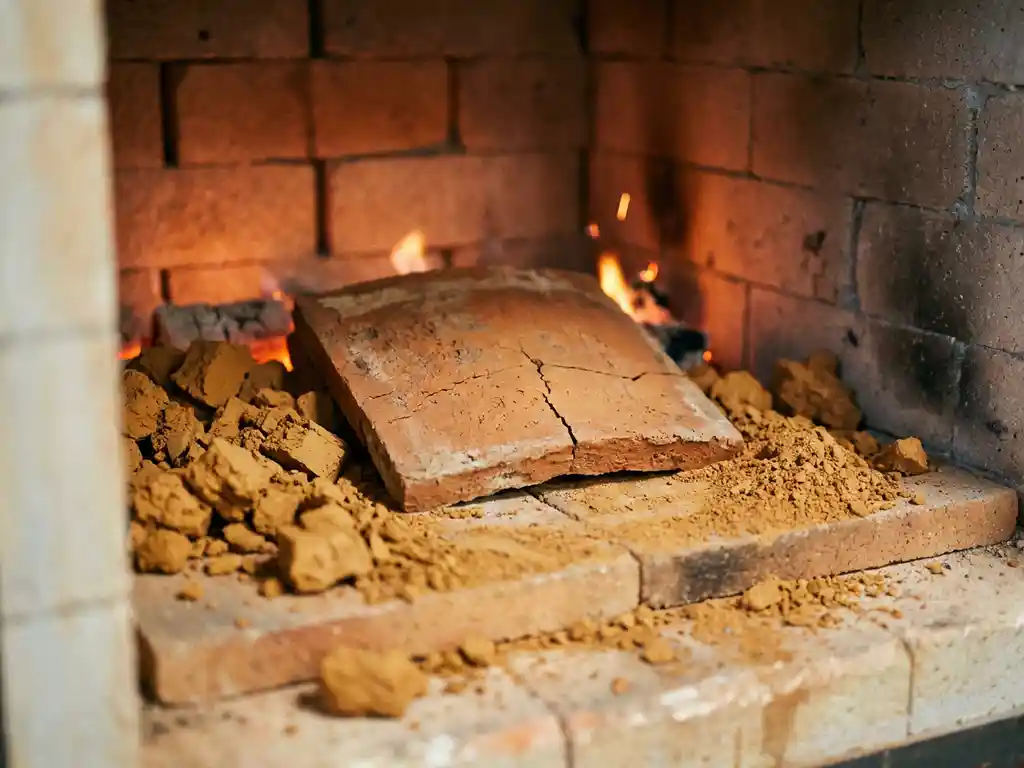
Yes, terracotta facade tiles can be recycled at the end of a building’s life. Because terracotta is a fired clay material with no synthetic binders or coatings, it can be separated from its substructure and processed back into raw material or repurposed in other construction applications. For project teams working toward sustainability targets, this full recyclability is one of terracotta’s most compelling lifecycle credentials.
The sections below unpack how that recycling process actually works, what makes terracotta stand out against competing facade materials, and how end-of-life recyclability connects to formal green building certifications.
How is terracotta facade material actually recycled?
Terracotta facade material is recycled by crushing the fired clay tiles into granulate, which can then be reintroduced into ceramic production processes, used as aggregate in construction fill, or repurposed in landscaping and drainage applications. Because the material contains no synthetic binders or composite layers, it separates cleanly from aluminum substructure components, making sorting straightforward.
The recycling pathway for ceramic facade systems typically follows a few clear stages. First, the facade tiles are removed from the retaining profiles during deconstruction. Modern ventilated facade systems are designed so that tiles interlock with vertical aluminum profiles rather than being bonded to the substrate, which means removal is largely the reverse of the installation process. The tiles and the aluminum components come apart as distinct material streams.
Once separated, the ceramic material enters a crushing and grinding process. The resulting granulate is chemically stable and inert, meaning it poses no environmental hazard during processing or in its reused form. Depending on particle size, recycled terracotta granulate is used in road base layers, drainage substrates, or as a secondary raw material fed back into new ceramic tile production. The aluminum profiles, being a separate stream, go through their own established metal recycling routes. To get a better sense of how these systems are specified and detailed in practice, exploring the full range of terracotta surfaces and formats is a useful starting point.
What makes terracotta a sustainable facade material?
Terracotta is a sustainable facade material because it is made from naturally occurring clay, fired without synthetic additives, and is fully recyclable at the end of its life. Its durability means it rarely needs replacement during a building’s operational lifetime, and its inert surface requires no chemical treatments or coatings to maintain performance over decades.
Sustainability in facade materials is not only about what happens at end of life. It also depends on how the material performs across its entire service period. Terracotta tiles fired at temperatures above 1,200 degrees Celsius develop a dense, vitrified surface that resists UV degradation, moisture ingress, and biological growth. This means the facade retains its appearance without the need for repainting, sealing, or surface treatments that would otherwise generate ongoing maintenance waste.
The raw material itself, clay, is one of the most abundant naturally occurring minerals on Earth. High-quality clay deposits, such as those found in the Westerwald region of Germany, allow manufacturers to produce tiles with consistent material properties directly from the earth without relying on petrochemical inputs. Combined with the material’s non-combustibility (ceramic facade elements are classified as building material class A1, meaning they contain no combustible components), terracotta offers a strong overall sustainability profile across extraction, production, use, and end-of-life stages.
Can terracotta facade tiles be removed and reused on another building?
Yes, terracotta facade tiles can be removed and reused on another building, provided they are taken down carefully and remain structurally intact. Because ventilated ceramic facade systems use mechanical fixing rather than adhesive bonding, individual tiles or complete sections can be dismantled without damage and reinstalled on a new substructure.
The feasibility of direct reuse depends on a few practical factors. Tile format and profile geometry need to be compatible with the new building’s substructure system. If the original tiles were produced to a standard format and the retaining profiles are available, reinstallation is technically straightforward. Custom or project-specific formats may have fewer reuse opportunities, but the material can always enter the recycling stream described above.
From a project management perspective, planning for deconstruction at the design stage significantly improves reuse outcomes. Specifying a mechanical fix system rather than adhesive-bonded cladding, documenting tile formats and fixing details, and retaining component data across the building’s lifecycle all make future deconstruction and reuse far more practical. This kind of design-for-disassembly thinking is increasingly expected in sustainable construction frameworks and supports circular economy principles across the full building lifecycle. Technical documentation and material samples can support this planning process from the earliest design stages.
How does terracotta compare to other facade materials for recyclability?
Terracotta compares favorably to most other facade materials for recyclability because it is a single-material, inorganic product with no composite layers or chemical coatings that complicate end-of-life processing. Materials like fiber cement, composite aluminum panels, and glass-reinforced concrete are harder to separate into clean material streams, while terracotta crushes into inert granulate with straightforward handling.
Consider the main alternatives in context:
- Fiber cement panels contain cellulose fibers bonded into a cement matrix, which makes material separation difficult and limits recycling options to downcycled fill applications.
- Composite aluminum panels (ACPs) consist of aluminum skins bonded to a polymer core. Separating these layers for recycling requires specialist processing, and some core materials have faced scrutiny for fire safety reasons independent of recyclability.
- Natural stone is similarly inert and recyclable, but its high dead weight creates greater structural demands and increases transport-related environmental impact.
- High-pressure laminate (HPL) panels are a composite of paper and resin layers, making clean recycling essentially impossible with current technology.
Terracotta’s low surface weight, roughly 40 kilograms per square meter for single-layer produced ceramic facades, also reduces the structural and logistical burden compared to heavier cladding materials, which contributes to a lower overall environmental footprint across the building’s lifecycle.
Does recycling terracotta facades affect a building’s sustainability certification?
Yes, the recyclability of terracotta facades contributes positively to a building’s sustainability certification score under frameworks such as LEED, BREEAM, and DGNB. These systems award credits for material selection based on recycled content, recyclability at end of life, and the use of materials that support circular economy principles, all of which terracotta addresses directly.
The specific contribution depends on which certification system is being pursued and how the project team documents material properties. In general, the following attributes support certification credits:
- 100% recyclability at end of life, with clean material separation from the substructure
- Non-combustibility (building material class A1), which supports fire safety credits independently of recyclability
- Durability and low maintenance, which reduce the material replacement cycles counted in lifecycle assessments
- Deconstruction potential, supported by the mechanical fix system that allows component-by-component disassembly
For project managers and contractors targeting specific certification thresholds, it is worth working with the facade supplier early in the design phase to obtain Environmental Product Declarations (EPDs) and material data sheets. These documents provide the verified lifecycle data that certification assessors require. Seeing how these principles translate into completed projects can also be instructive — a review of realized facade references illustrates how ceramic systems perform across a range of building types and sustainability briefs.
Ultimately, choosing a facade material that performs well across its full lifecycle, from raw material through decades of service to clean end-of-life recovery, strengthens both the environmental credentials of a project and its long-term value. Terracotta’s combination of durability, inert composition, and recyclability makes it one of the more straightforward materials to position within a circular construction strategy.
How TONALITY® helps with terracotta facade recyclability
TONALITY® ceramic facade systems are engineered from the ground up to support circular construction principles — making it straightforward for project teams to specify a facade that performs at end of life as well as it does in service. Here is how TONALITY® delivers on the recyclability and sustainability requirements covered in this article:
- 100% recyclable fired clay tiles with no synthetic binders, composite layers, or chemical coatings that would complicate end-of-life material separation
- Mechanical fixing systems designed for clean deconstruction, allowing tiles and aluminum substructure components to be separated into distinct recyclable material streams
- Building material class A1 certification, confirming non-combustibility and supporting fire safety credits within LEED, BREEAM, and DGNB assessments
- Environmental Product Declarations (EPDs) and full technical documentation, providing the verified lifecycle data that sustainability certification assessors require
- A broad range of surfaces and formats produced from high-quality natural clay, enabling durable, low-maintenance facades that reduce replacement cycles across a building’s operational lifetime
Whether you are designing for a specific certification threshold, planning for long-term deconstruction, or simply specifying a material with strong environmental credentials, TONALITY® provides the technical foundation and documentation support to meet those goals. Contact the TONALITY® team to discuss your project requirements and receive tailored guidance on facade specification, material data, and sustainability documentation.
Related Articles
- Which buildings are suitable for prefabricated facade renovation?
- Can terracotta facades reduce noise pollution in buildings?
- What is the difference between recyclable and truly circular facade materials?
- How does terracotta facade weight compare to natural stone cladding?
- How do BAS terracotta installation methods work?