

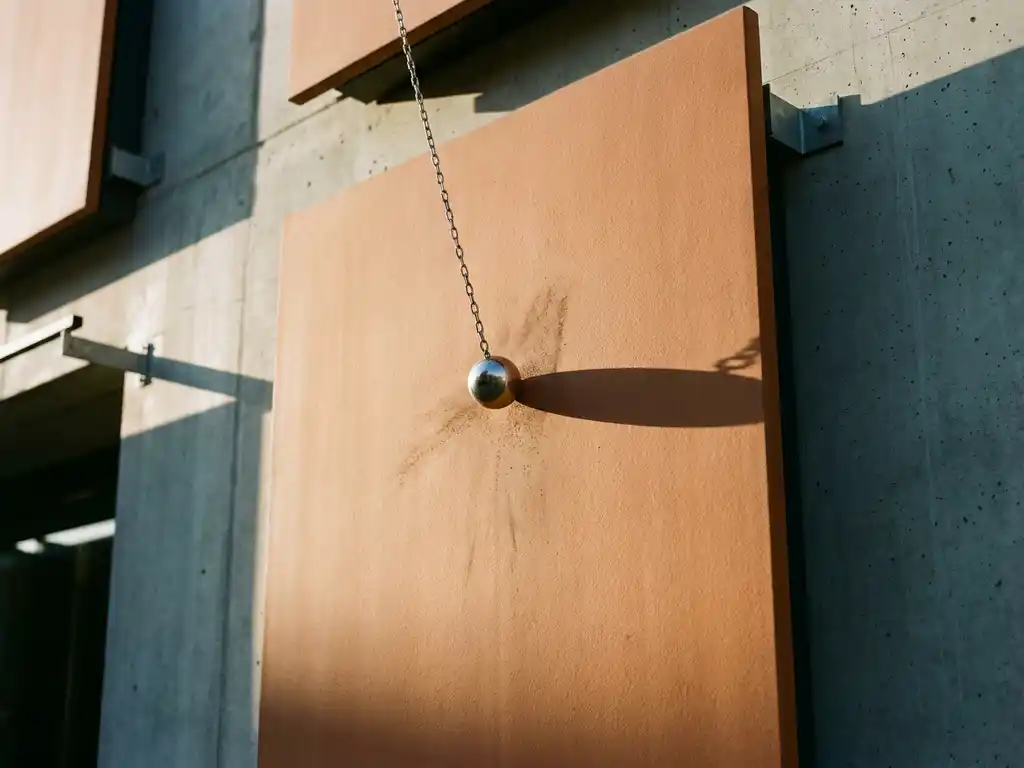
Terracotta facades are highly impact resistant under normal conditions, including wind-driven debris, hail, and everyday physical contact. The material’s dense, sintered ceramic structure gives it a hardness and resilience that make it well suited to exposed exterior applications. The sections below explore exactly how that resistance works, how it is measured, and what it means for long-term performance.
What makes terracotta facades resistant to physical damage?
Terracotta facades resist physical damage because of the dense, vitrified structure created during high-temperature firing. When ceramic clay is fired at temperatures exceeding 1,200 degrees Celsius, the mineral particles fuse together into a hard, low-porosity mass that resists scratching, chipping, and surface abrasion far better than softer cladding materials. The result is a surface that is genuinely tough, not just decorative.
This sintering process is the key to impact performance. Unlike materials that rely on surface coatings or laminates for protection, terracotta’s resistance runs through the full depth of the tile. There is no coating to chip away or delaminate under stress. The hardness is structural.
A second factor is density. High-fired ceramic facade tiles have a very low water absorption rate, which means the material does not weaken over time through freeze-thaw cycles or moisture ingress. A tile that stays structurally sound through repeated seasonal stress is also a tile that holds up better under sudden physical impact. If you want to explore the range of available surfaces and formats, you can find a broad selection suited to different exposure conditions and design requirements.
How is impact resistance measured in facade materials?
Impact resistance in facade materials is typically measured using standardized tests that simulate real-world loading conditions. The most widely applied method for cladding systems is the hard body and soft body impact test, where weighted projectiles are dropped or swung at the facade surface from defined heights to assess deformation, cracking, and penetration resistance.
For ceramic facade tiles specifically, hardness is often assessed using the Mohs scale, which ranks materials by their ability to resist scratching. Fired ceramic typically scores between 6 and 7 on the Mohs scale, placing it harder than most metals and significantly harder than materials like fiber cement or composite panels.
At the system level, facade assemblies are also tested for wind load resistance and dynamic pressure cycling, which indirectly reflect how well the cladding system absorbs and distributes force. A well-engineered substructure that allows slight movement without transferring concentrated stress to individual tiles is an important part of overall impact performance. An interlocking aluminum retaining profile system designed with this kind of load distribution in mind is one example of how engineering choices at the system level directly support tile-level durability.
Can terracotta facade tiles crack or break under heavy impact?
Yes, terracotta facade tiles can crack or break under sufficiently heavy or concentrated impact, as is true of any rigid material. However, the threshold for damage is high, and the consequences are manageable. Ceramic is hard but not infinitely ductile, so a sharp, concentrated blow from a heavy object at close range can cause a fracture. Distributed impacts from hail, gravel, or wind-driven debris rarely cause damage under normal conditions.
The practical implication for construction projects is that individual tiles in a ventilated facade system can be replaced without dismantling the surrounding cladding. When ceramic elements interlock with vertical retaining profiles rather than being bonded permanently to the substrate, a damaged tile can be removed and swapped out with minimal disruption. This replaceability significantly reduces the long-term cost and labor burden of any isolated impact damage that does occur. Reviewing completed reference projects gives a clear picture of how this system performs across a wide variety of building types and exposure conditions.
It is also worth noting that the geometry of modern large-format ceramic tiles plays a role. Tiles that are produced to tight dimensional tolerances and installed with proper clearance are less likely to experience stress concentrations at edges and corners, which are the most vulnerable points in any rigid panel.
How does terracotta compare to other facade materials for impact resistance?
Terracotta compares favorably to most common facade materials for impact resistance. It is harder than fiber cement, HPL panels, and most composite cladding products. It is comparable to natural stone in surface hardness but typically lighter in weight. Compared to glass facades, terracotta is substantially more resistant to point impact and does not shatter in the same way.
The comparison with fiber cement is particularly relevant for contractors. Fiber cement can be scratched, dented, and surface-damaged by hail or construction activity in ways that are visible and difficult to repair cleanly. Terracotta’s fired surface does not dent, and surface scratches are largely invisible because the color runs through the material rather than sitting as a coating on top.
Metal cladding systems, such as aluminum composite panels, can deform plastically under impact, creating permanent dents that affect appearance even if structural integrity is maintained. Ceramic does not deform in this way. The trade-off is that ceramic can fracture under extreme load, while metal bends. For most facade applications, the ceramic’s scratch and abrasion resistance make it the better choice for long-term appearance retention. Ordering physical samples is a practical way to assess surface quality and hardness firsthand before specifying a product.
Does impact resistance affect the long-term maintenance of a terracotta facade?
Impact resistance directly reduces the long-term maintenance burden of a terracotta facade. A material that resists scratching, chipping, and surface damage from everyday environmental exposure requires far less intervention over its service life than softer alternatives. The dense, non-porous surface of high-fired ceramic also resists dirt adhesion and biological growth, which means cleaning cycles are less frequent and less intensive.
Terracotta facades also benefit from integrated graffiti resistance as a natural consequence of their surface density. Unlike painted or coated surfaces that require chemical treatment for graffiti protection, the smooth, low-absorption ceramic surface makes cleaning significantly easier without special coatings that can degrade over time.
From a lifecycle perspective, the durability of ceramic facade systems means that the initial investment in a high-quality cladding solution pays back over decades of reduced upkeep. Facades that hold their appearance without repainting, recoating, or frequent panel replacement deliver genuine long-term value. For project managers and contractors evaluating total cost of ownership, the low maintenance profile of ceramic facade systems is one of the most compelling arguments in their favor.
In short, a material that resists impact also resists the gradual surface degradation that drives most facade maintenance programs. The two properties are closely linked, and terracotta’s performance on both counts makes it one of the most durable and cost-effective choices available for long-term facade applications.
How TONALITY® helps with terracotta facade impact resistance
TONALITY® ceramic facade systems are engineered specifically to deliver the impact resistance and long-term durability that demanding exterior applications require. The combination of high-fired ceramic tiles and a precision aluminum substructure addresses every layer of the performance picture:
- Full-depth hardness: TONALITY® tiles are fired at high temperatures to achieve a dense, sintered structure with a Mohs hardness of 6–7, ensuring resistance to scratching, abrasion, and surface impact throughout the full tile depth — not just at the surface.
- Low water absorption: With minimal porosity, TONALITY® tiles resist freeze-thaw damage and maintain structural integrity across decades of seasonal cycling, preserving impact performance over the long term.
- Replaceable tile system: The interlocking aluminum retaining profile system allows individual tiles to be removed and replaced without disturbing adjacent cladding, keeping repair costs low if isolated damage does occur.
- Wide format and surface options: A broad range of tile geometries and surface finishes allows specifiers to select configurations optimized for the exposure conditions of each project.
Whether you are specifying a new build or evaluating cladding options for a retrofit, TONALITY® provides the technical performance and practical flexibility to meet the challenge. Contact the TONALITY® team to discuss your project requirements and find the right solution.