

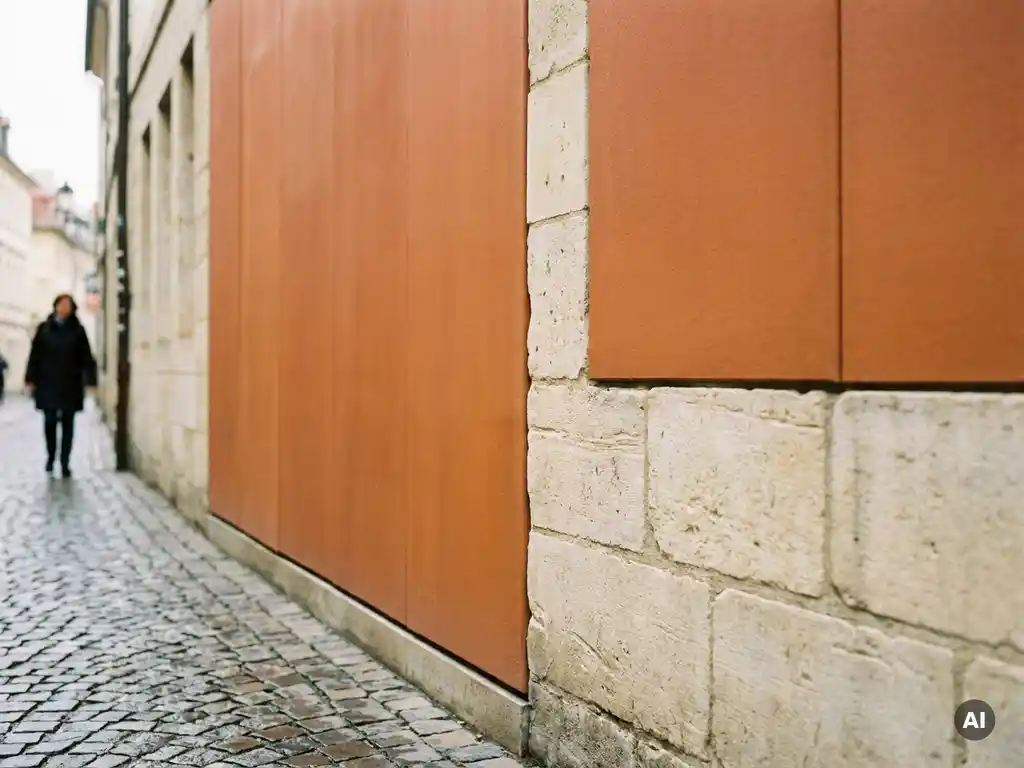
Terracotta has a long memory. Long before glass curtain walls and steel frames became the language of modern construction, fired clay shaped the faces of cities across Europe and beyond. Today, architects working on extensions, infill plots, and renovation projects are rediscovering what builders always knew: terracotta reads as both ancient and contemporary at the same time. That quality makes it one of the most versatile tools available when the goal is to add something new without erasing what already exists. The following examples show how a terracotta facade can do exactly that across a range of building types and heritage contexts.
How terracotta bridges old and new architecture
The challenge of inserting modern architecture into established streetscapes is one of the most debated questions in contemporary design. Too much contrast and a new building becomes a visual interruption. Too little and it risks becoming pastiche. Terracotta cladding occupies a productive middle ground: it shares the warmth, texture, and tonal range of traditional brick and stone while offering the precision and flexibility of a modern facade system.
Ceramic facade materials are fired at extreme temperatures, which produces surfaces with a depth and variation that synthetic cladding cannot replicate. The material ages gracefully, resisting UV degradation and retaining its color over decades. This means that a building clad in terracotta today will still read coherently alongside its historic neighbors twenty or thirty years from now, without the bleaching or staining that affects lesser materials.
Architects also benefit from a wide range of format options. Modern ceramic production allows tiles to be cut precisely to within a millimeter, opening up possibilities for coursing patterns, shadow gaps, and surface relief that can echo the rhythm of surrounding masonry without copying it directly. The result is a facade that is clearly of its time while remaining in genuine conversation with the past.
Extensions that echo historic brick and stone
Rear and side extensions on historic buildings present a recurring design problem: how do you add usable space without compromising the character of the original structure? Terracotta cladding offers a direct answer by drawing on the same material family as the brick and stone it sits beside.
A well-designed extension clad in ceramic tiles can pick up the color palette of an existing facade without mimicking its exact texture. Warm ochres, deep reds, and buff tones are all achievable through the natural variation of fired clay. Architects often choose a slightly smoother or more refined surface finish for the new element, signaling that the addition is contemporary while keeping the overall composition harmonious.
This approach works particularly well on Victorian and Edwardian terraces, where the original brickwork has a strong tonal identity. A ceramic extension that respects that identity while introducing cleaner lines and larger-format panels creates a dialogue between periods rather than a conflict. The low surface weight of modern ceramic systems also means that structural modifications to the existing building are often minimal, which matters greatly when working within conservation constraints.
Infill buildings that respect the street wall
Infill development, where a new building occupies a gap between existing structures, demands particular sensitivity to scale, proportion, and material. The new building must hold its place in the street wall without dominating its neighbors or disappearing entirely.
Terracotta facade systems give designers precise control over the visual weight of an infill building. The format and orientation of ceramic panels can reinforce or subtly reinterpret the vertical rhythm of adjacent facades. A narrow infill between two tall stone buildings, for example, might use vertically oriented terracotta planks to maintain the sense of upward movement while introducing a contemporary texture.
Color matching is another area where ceramic production offers real advantages. Because tiles can be produced to a specific brief, it is possible to develop a custom palette that references the surrounding context without replicating it. This gives infill buildings a distinct identity while ensuring they contribute positively to the overall streetscape. Projects in protected townscape areas have used this approach to satisfy planning requirements while producing genuinely innovative facade designs.
Cultural institutions with terracotta additions
Museums, galleries, and civic buildings occupy a special place in urban heritage. They are often located in historic cores and carry symbolic as well as functional significance. When these institutions need to expand, the pressure to get the facade right is intense.
Terracotta has a strong precedent in cultural architecture. Many of the great museum buildings of the nineteenth century used terracotta extensively for decorative and structural purposes. Contemporary additions to these institutions can draw on that lineage while expressing a clearly modern sensibility. The material provides a visual connection to the original building without requiring literal reproduction of its ornament.
Large-format ceramic panels are particularly suited to the bold, confident gestures that cultural buildings often demand. They can be used to create expansive, uninterrupted surfaces that read as monumental from a distance while revealing subtle texture and variation up close. The durability and low-maintenance requirements of ceramic cladding are also well matched to the long ownership horizons of public institutions, where lifecycle value matters as much as initial appearance. You can explore completed projects to see how these principles translate into finished buildings.
Residential conversions with ceramic re-cladding
Older residential buildings, whether former industrial structures, postwar housing blocks, or Victorian terraces, often need significant facade upgrades to meet current energy and aesthetic standards. Ceramic re-cladding is an increasingly popular approach that can transform the appearance of a building while improving its long-term performance.
The appeal of terracotta in this context goes beyond aesthetics. A ventilated ceramic facade system creates a rainscreen that protects the underlying structure from moisture, reducing the risk of long-term degradation. The air gap behind the cladding also contributes to thermal performance, which is a meaningful consideration in residential refurbishment projects where energy efficiency is a priority.
For buildings in historic neighborhoods, the choice of ceramic material helps the converted structure sit more comfortably within its surroundings than a render or metal-cladding alternative would. The warmth of fired clay reads as sympathetic to older built environments, even when the format and detailing are entirely contemporary. Residents and planners tend to respond positively to this combination of improved performance and contextual sensitivity.
Commercial facades that complement historic neighbors
Commercial buildings in established town centers face a particular set of pressures. They need to attract attention and communicate brand identity while operating within planning frameworks that protect the character of the surrounding area. Terracotta cladding can satisfy both requirements simultaneously.
The material is inherently dignified. Unlike some cladding systems that can read as temporary or lightweight, ceramic facades carry a sense of permanence that suits commercial buildings aiming to project confidence and stability. At the same time, the range of available surfaces and formats means there is ample scope for distinctive design within a contextually appropriate palette.
Retail and office buildings in historic streetscapes have used terracotta to negotiate successfully between commercial imperatives and heritage constraints. A ground-floor retail frontage in terracotta, for example, can introduce a contemporary material language at street level while the upper floors maintain a scale and tone that respects the surrounding buildings. This kind of layered approach demonstrates that commercial viability and urban sensitivity are not mutually exclusive.
What makes terracotta the right choice for heritage contexts
Several qualities combine to make terracotta particularly well suited to work in and around historic buildings. Understanding these qualities helps explain why the material keeps appearing in sensitive urban contexts across different building types and scales.
- Material continuity: Terracotta belongs to the same material family as the brick and tile that built most European cities. Its presence in a historic streetscape feels earned rather than imposed.
- Tonal range: Fired clay produces a spectrum of warm, natural colors that harmonize with stone, brick, and render without requiring exact color matching.
- Texture and depth: The surface of a ceramic facade has a physical presence that reads well alongside the texture of historic masonry, unlike flat or reflective alternatives.
- Durability: Terracotta does not fade, stain easily, or require frequent maintenance. A building clad in ceramic will continue to look well-considered long after installation, which matters in contexts where the surrounding fabric has already proven its longevity.
- Design flexibility: Modern production methods allow ceramic tiles to be produced in a wide range of formats and profiles, giving architects genuine creative latitude within a contextually appropriate material.
- Sustainability credentials: Ceramic is a natural material that can be fully recycled at end of life. In an era when the environmental impact of construction is under increasing scrutiny, this matters both practically and symbolically.
These qualities do not exist in isolation. They reinforce one another to produce a facade material that is simultaneously rooted in tradition and aligned with contemporary design values. That combination is exactly what heritage contexts demand.
How TONALITY® supports sensitive facade design in historic settings
TONALITY® ceramic facade systems are designed for exactly the kind of contextually demanding work described throughout this article. Whether the project involves a residential extension in a conservation area, an infill building on a protected street, or a cultural institution seeking to expand without overshadowing its historic core, TONALITY® offers the material quality, format range, and technical performance to meet the brief.
- Precise production: Tiles are manufactured to within one millimeter, enabling coursing patterns and shadow gaps that echo the rhythm of surrounding masonry with genuine accuracy.
- Wide format range: From 150 x 300 mm up to 400 x 1,600 mm, the available formats cover everything from fine-grained residential work to bold institutional facades.
- Natural color palette: The range of warm, fired-clay tones allows architects to develop palettes that respond to specific historic contexts without resorting to pastiche.
- Low surface weight: At around 40 kilograms per square meter, TONALITY® ceramic is well suited to retrofit and conversion projects where structural loading is a constraint.
- Non-combustible classification: Building material class A1 means TONALITY® facades meet the highest fire protection standards, which is particularly relevant for residential conversions and timber-framed extensions.
- Integrated graffiti protection and UV resistance: Long-term appearance is maintained without the need for surface treatments or frequent maintenance, supporting the lifecycle value that heritage projects demand.
If you are working on a project where the facade needs to earn its place in a historic streetscape, we would be glad to help you explore the right approach. Get in touch with our team to discuss your project, or request samples to see the material quality and color range for yourself.
Related Articles
- Can terracotta facades reduce noise pollution in buildings?
- How do ceramic cladding solutions perform in high-traffic urban environments?
- What are the structural risks of designing facades for disassembly?
- What terracotta colors work best for different building types?
- What does terracotta facade cladding do for buildings?