

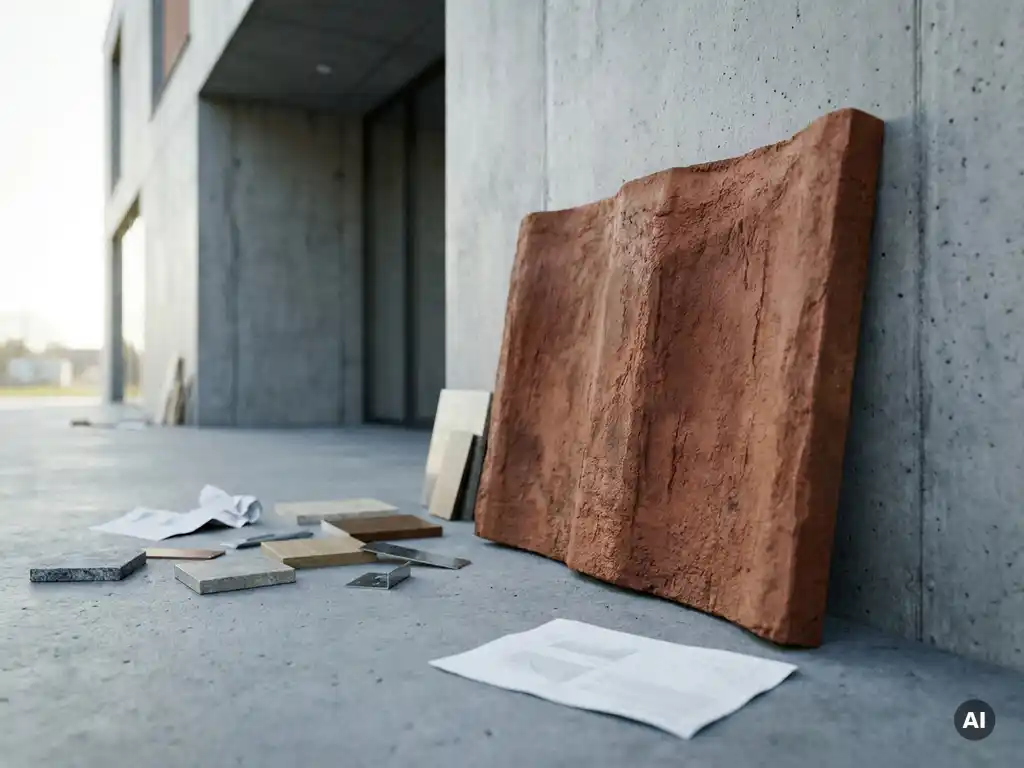
Facade material choice has a direct and measurable impact on a building’s BREEAM score, primarily through credits awarded in the Materials, Energy, and Pollution categories. Materials that combine low embodied carbon, high recyclability, and non-combustibility give design teams the strongest foundation for a high BREEAM rating. The sections below unpack each of the key factors, from material selection and fire performance to recyclability and long-term maintenance.
Which facade materials earn the most BREEAM credits?
Facade materials that perform best under BREEAM are those with low embodied carbon, high durability, verified recyclability, and responsible sourcing credentials. No single material automatically earns credits; BREEAM evaluates a combination of lifecycle performance, manufacturer transparency, and environmental product declarations (EPDs). Materials that can demonstrate all of these qualities across multiple categories tend to contribute the most to a building’s overall BREEAM rating.
In practice, the materials that consistently support strong BREEAM outcomes share several characteristics:
- Low embodied carbon across the full production lifecycle
- Verified environmental data through EPDs or comparable declarations
- High durability and low maintenance requirements that reduce lifetime environmental impact
- End-of-life recyclability or reusability with minimal processing
- Non-combustibility, which supports safety and reduces risk-related credits being withheld
Ceramic facade cladding, natural stone, and certain metal systems tend to perform well across these criteria. Composite panels and plastics, by contrast, often face scrutiny under BREEAM’s Materials category due to their chemical complexity and limited recyclability. When selecting facade cladding options, it is worth reviewing each material against the full set of BREEAM criteria rather than optimising for just one category.
How does embodied carbon in facade cladding affect a BREEAM score?
Embodied carbon in facade cladding directly influences a building’s BREEAM score through the Materials category, specifically credits tied to lifecycle carbon assessment. BREEAM rewards projects that can demonstrate a reduced whole-life carbon profile using recognized tools such as the RICS Whole Life Carbon Assessment framework. The lower the embodied carbon of the facade system, the more favourably it contributes to these credits.
Embodied carbon in facade materials comes from several stages: raw material extraction, manufacturing, transportation, installation, and eventual demolition or disposal. A facade system that uses locally sourced raw materials, requires minimal processing, and can be disassembled and reused at end of life will carry a significantly lower embodied carbon footprint than one that requires energy-intensive manufacturing and ends up in landfill.
Design teams should request EPDs from facade manufacturers as a baseline. EPDs provide independently verified, product-specific carbon data that BREEAM assessors can use directly. Without this data, assessors may apply conservative default values that understate the material’s actual performance, potentially costing the project credits it would otherwise earn.
Does facade recyclability count toward BREEAM certification?
Yes, facade recyclability contributes to BREEAM certification through credits in the Materials and Waste categories. BREEAM specifically recognizes materials that can be recovered, sorted, and reused or recycled at end of life without significant degradation of quality. A facade system that supports a circular material flow strengthens a building’s case for higher certification levels.
Under BREEAM’s Materials category, assessors look at the Green Guide to Specification rating or equivalent lifecycle data, which takes end-of-life recyclability into account as part of the overall environmental profile. In the Waste category, projects can earn credits for designing facades that allow components to be deconstructed and sorted by material type, a concept known as design for disassembly.
Practically, this means facade systems that use a single material type, avoid bonded or laminated assemblies, and can be removed without damaging surrounding components score better than complex composite systems. A facade that is 100 percent recyclable and can be deconstructed component by component offers a clear advantage in BREEAM assessments, both at the design stage and when demonstrating end-of-life credentials during certification.
How does facade fire performance influence BREEAM ratings?
Facade fire performance influences BREEAM ratings primarily through the Health and Wellbeing and Materials categories, where non-combustible cladding systems reduce risk and support credits related to occupant safety and responsible material specification. While BREEAM does not award credits solely for fire classification, using materials classified as non-combustible (building material class A1 under EN 13501-1) removes a significant barrier to achieving higher scores and simplifies compliance with fire safety regulations that assessors must verify.
The regulatory context matters here. Following high-profile building fire incidents across Europe, building regulations in many countries now restrict or prohibit combustible cladding on buildings above certain heights. A facade material that meets A1 classification is non-combustible and contains no combustible components, which means it satisfies these restrictions without requiring additional fire engineering solutions. This simplifies the overall building compliance picture, which BREEAM assessors consider as part of the broader sustainability and safety evaluation.
From a BREEAM perspective, specifying a non-combustible facade also reduces the risk of costly remediation work later, which aligns with the long-term value focus that underpins sustainable building design. Projects targeting BREEAM Excellent or Outstanding ratings benefit from removing any potential compliance gaps early in the specification process.
What role does facade maintenance play in long-term BREEAM performance?
Facade maintenance plays a significant role in long-term BREEAM performance because BREEAM’s Management and Materials categories both reward designs that minimize the need for ongoing intervention. A facade system that requires frequent cleaning, recoating, or component replacement increases a building’s lifetime environmental impact and operational burden, both of which work against a strong BREEAM profile over time.
BREEAM assessments consider the full lifecycle of a building, not just its performance at handover. A facade that degrades quickly, fades under UV exposure, or requires specialist chemical treatments adds to the building’s environmental footprint year after year. By contrast, a facade that is permanently colour-stable, UV-resistant, and resistant to biological growth (such as algae or mould) maintains its performance without intervention, reducing both resource use and environmental impact over the building’s lifespan.
Maintenance-free facades also support the BREEAM Man 02 credit, which rewards buildings designed for ease of maintenance and long-term performance. Specifiers who can demonstrate that a facade system will retain its appearance and structural integrity without chemical cleaning agents or frequent replacement are in a strong position when pursuing higher BREEAM ratings. Real-world building references from manufacturers can help assessors verify these long-term performance claims.
How TONALITY® supports your BREEAM goals
TONALITY® ceramic facade systems are designed to address precisely the factors that influence a building’s BREEAM score, from embodied carbon and recyclability to fire classification and long-term maintenance performance. Here is how TONALITY® delivers across each of these areas:
- Non-combustible by nature: TONALITY® ceramic elements are classified as building material class A1, meaning they contain no combustible components and meet the highest fire safety standards without additional engineering measures.
- 100% recyclable: The ceramic facade system can be fully deconstructed and sorted by component type, supporting circular material flows and contributing to BREEAM’s end-of-life recyclability criteria.
- Maintenance-free performance: Permanent UV and colour resistance, integrated graffiti protection, and a dense sintered surface mean the facade retains its appearance for decades without chemical treatments or frequent intervention.
- Low surface weight: At approximately 40 kilograms per square meter, TONALITY® facades are suitable for timber construction and require lighter substructures, reducing the overall material volume and associated embodied carbon.
- Precision manufacturing: Elements can be produced to within one millimetre across a wide range of formats, reducing waste on site and supporting efficient installation.
TONALITY® facades are produced from the highest-quality clay deposits in the Westerwald region of Germany, fired at temperatures exceeding 1,200 degrees Celsius to create surfaces that are exceptionally dense, durable, and long-lasting. This combination of natural raw materials and advanced manufacturing supports a strong environmental product profile that BREEAM assessors can work with directly. You can explore the full range of surfaces and formats to find the specification that fits your project’s design and sustainability requirements.
[cta_contact_form]
If you are specifying a facade for a BREEAM-rated project and want to understand how TONALITY® ceramic cladding can contribute to your target certification level, get in touch with the team to discuss your project in detail. You can also request samples and technical documentation to support your assessment process.
Related Articles
- How are terracotta facade panels fixed to a building structure?
- What is the difference between a ventilated facade and a rainscreen system for circularity?
- How do sustainable facade materials reduce maintenance costs?
- How do terracotta facades perform in coastal and high-salinity environments?
- Can ceramic facades improve building energy efficiency?