

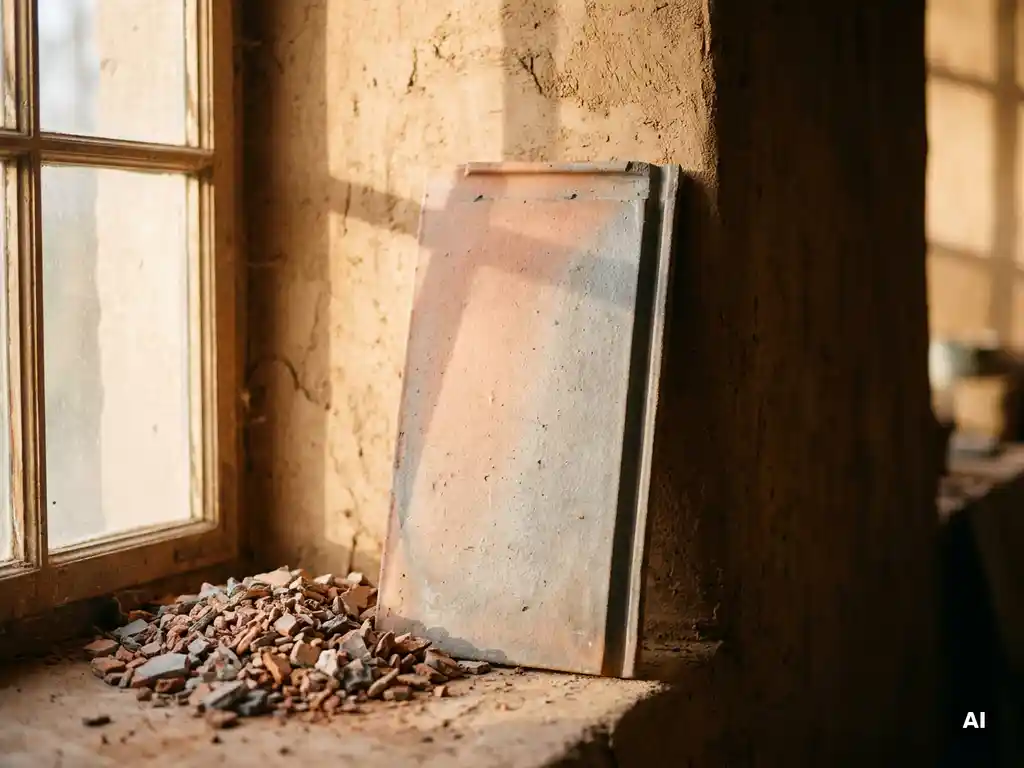
Reusing ceramic facade panels is better for the environment than recycling them because it preserves the embodied energy already invested in manufacturing the material. Recycling requires reprocessing, which consumes additional energy and often downgrades the material in the process. Reuse avoids both of those losses entirely, making it the higher-value option in a circular economy for facades. The sections below explore why this matters, how ceramic panels support reuse in practice, and when recycling becomes the right fallback.
Why does reusing facade panels save more carbon than recycling them?
Reusing facade panels saves more carbon than recycling them because reuse retains all the embodied carbon already locked into the material, while recycling requires energy-intensive reprocessing that generates additional emissions. Every kilogram of ceramic that can be reinstalled without remanufacturing represents a direct carbon saving compared to producing a replacement panel from raw materials.
The manufacturing of ceramic facade panels involves firing clay at temperatures exceeding 1,200 degrees Celsius. That process demands significant energy, and the resulting carbon footprint is embedded in the finished product. When a panel is removed from a building and reinstalled elsewhere in its original form, that embodied carbon stays productive. No new firing is needed, no raw material is extracted, and no reprocessing energy is consumed.
Recycling, by contrast, requires the material to be broken down and reprocessed before it can re-enter the supply chain. Even when done efficiently, this process uses energy and typically yields a lower-grade output than the original. From a lifecycle carbon perspective, reuse is almost always the preferred option when the material is structurally sound and dimensionally suitable for a new application.
What makes ceramic facade panels suitable for reuse after removal?
Ceramic facade panels are suitable for reuse after removal because they are dimensionally stable, non-porous, and resistant to degradation over time. Unlike organic or composite materials, fired ceramic does not absorb moisture, warp, or degrade when exposed to UV radiation, making panels removed from one building genuinely viable for installation on another.
Several material properties support this directly:
- Permanent UV and color resistance: Ceramic panels do not fade or chalk over time, so a panel removed after years of service looks the same as when it was installed.
- Dense, smooth surfaces: The sinter-firing process creates a surface that resists staining, biological growth, and weathering, reducing the need for any refurbishment before reuse.
- Dimensional precision: Panels produced to within one millimeter retain their exact geometry, which means they can be matched to compatible mounting systems without adjustment.
- Non-combustible classification: Building material class A1 status is inherent to the material, not a coating or treatment, so it carries through to any reuse application.
Together, these properties mean that a ceramic facade panel does not have a functional end-of-life in the way that many other cladding materials do. Its performance characteristics remain intact as long as the panel is physically undamaged.
How does a ventilated facade system make panel reuse practical?
A ventilated facade system makes panel reuse practical because the panels are mechanically fixed to a substructure rather than bonded directly to the wall. This means individual panels can be removed cleanly, without damage, and without disturbing adjacent panels or the building structure beneath.
In a typical ventilated facade, ceramic elements interlock with vertical aluminum retaining profiles. This mounting method is designed for straightforward installation, but it also works in reverse: panels can be released from the profiles systematically, component by component. Because the system is sorted by material type from the outset, deconstruction is organized rather than destructive.
This stands in sharp contrast to adhesively bonded or wet-applied cladding systems, where removal almost always damages the panel, the substrate, or both. With a mechanically fixed ventilated system, the panel arrives on site in the same condition it left the previous building. That makes the logistics of facade panel reuse far more predictable for architects and contractors planning a circular project.
The low surface weight of single-layer ceramic panels also helps. Lighter panels are easier to handle, store, and transport between sites, which reduces the practical barriers to organizing a reuse supply chain.
What is the difference between reuse, recycling, and downcycling for facade ceramics?
For facade ceramics, reuse means reinstalling an intact panel in a new location without reprocessing it. Recycling means breaking the material down and reintroducing it into a production process to create a new product of comparable quality. Downcycling means processing the material into a lower-value output, such as aggregate or fill, where the original manufacturing investment is largely lost.
These three outcomes represent a clear hierarchy of environmental value:
- Reuse preserves the full embodied energy and material quality of the original panel. No additional processing is required, and the panel performs identically in its new application.
- Recycling recovers the raw material but requires energy to reprocess it. The output can be used to produce new ceramic products, but the firing energy from the original manufacturing cycle is not recovered.
- Downcycling recovers the material in a degraded form. Crushed ceramic can be used as aggregate in construction, for example, but this represents a significant loss of the value embedded in the original panel.
Ceramic is 100% recyclable, which means it never needs to reach landfill. But the most environmentally responsible outcome is always to keep the material at its highest functional level for as long as possible, which means prioritizing reuse over recycling, and recycling over downcycling. This hierarchy is central to circular economy thinking in facade design.
When should ceramic facade panels be recycled rather than reused?
Ceramic facade panels should be recycled rather than reused when they are physically damaged, dimensionally incompatible with available mounting systems, or when the quantity and condition of recovered panels cannot meet the requirements of a new project. Recycling is the appropriate next step when reuse is not feasible, not a first choice.
Specific situations that make recycling the right decision include:
- Cracked or chipped panels: Structural damage compromises both the appearance and the weatherproofing function of a facade panel. These panels cannot be reinstalled and should enter the recycling stream.
- Obsolete formats or profiles: If a panel’s dimensions or back profile are incompatible with current mounting systems, reuse becomes technically impractical even if the panel itself is undamaged.
- Mixed or unidentified batches: When panels from a demolition cannot be sorted, matched, or traced to a specific specification, the uncertainty may make reuse impractical for a project requiring consistent performance.
- Insufficient quantities: A small number of recovered panels may not justify the logistics of a reuse project. In those cases, recycling ensures the material still re-enters the supply chain productively.
The key principle is that recycling should be a fallback, not a default. Before committing panels to reprocessing, it is worth assessing whether a reuse pathway exists, even a partial one. Every panel that avoids reprocessing represents a genuine environmental gain.
How TONALITY® supports ceramic facade sustainability and circular reuse
TONALITY® ceramic facade systems are designed from the ground up to support the full circular economy hierarchy described above. The material properties, system architecture, and production precision all contribute directly to making reuse and responsible end-of-life management practical rather than theoretical.
Specifically, TONALITY® facades offer:
- Building material class A1 certification, confirming the panels are non-combustible and free of any coatings or treatments that would complicate reuse or recycling
- 100% recyclability, ensuring that panels which cannot be reused can still re-enter the material cycle without going to landfill
- Mechanical fixing systems that allow deconstruction and sorting by component type with minimum effort, preserving panel integrity for reuse
- Dimensional precision to within one millimeter, supporting compatibility and consistency across reuse applications
- Permanent UV and color stability, so panels retain their original appearance and performance characteristics through multiple use cycles
- Low surface weight of approximately 40 kilograms per square meter, making handling, transport, and reinstallation practical at scale
If you are specifying a facade with long-term environmental performance and end-of-life flexibility in mind, TONALITY® is ready to support your project from design through deconstruction. Get in touch with the TONALITY® team to discuss your project requirements, or request samples and technical documentation to evaluate the system for your application.
Related Articles
- Can ceramic cladding solutions meet passive house facade performance requirements?
- Are terracotta facades more durable than aluminium cladding?
- Can terracotta facades prevent water ingress into a building?
- How do building codes affect terracotta facade installation?
- Can terracotta facade panels be recycled or reused at end of life?