

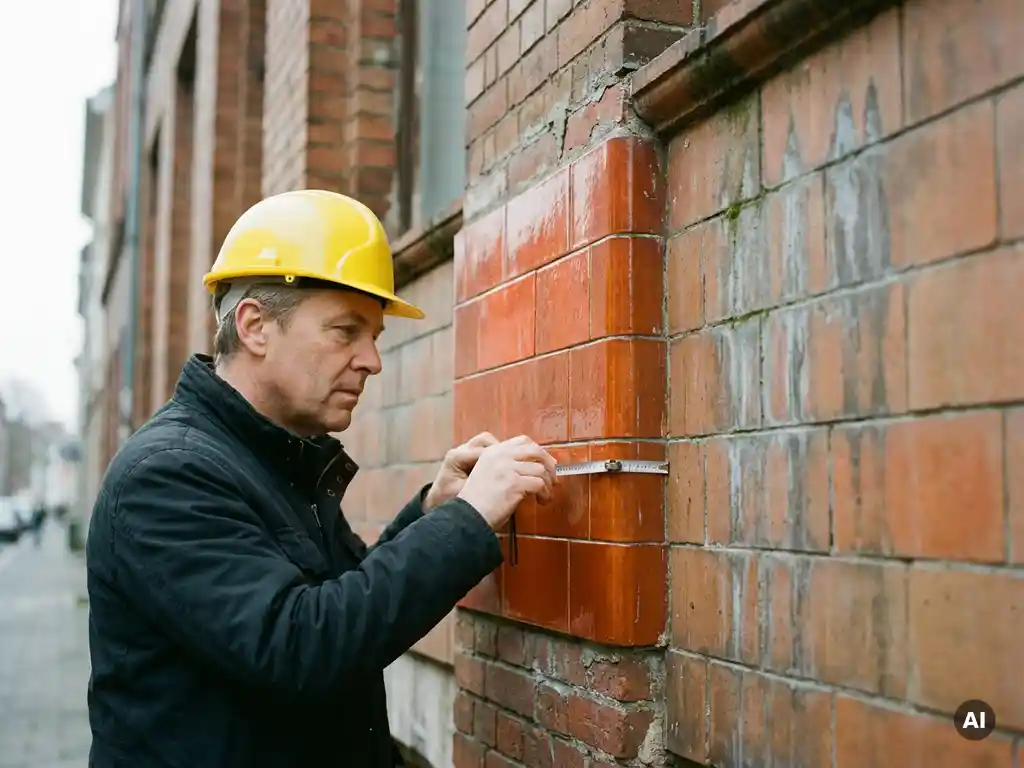
After 20 years of exposure, a facade should still perform structurally, look presentable, and require minimal intervention, but whether it does depends almost entirely on the material chosen at specification stage. Some materials age gracefully with little more than an occasional rinse; others accumulate staining, fading, and surface degradation that demands costly remediation. The questions below unpack what architects should realistically expect across the full lifespan of a building envelope.
How does weathering actually change a facade over two decades?
Weathering changes a facade through a combination of thermal cycling, moisture ingress, UV radiation, and airborne particulates, and the cumulative effect over 20 years is far greater than any single season suggests. The material’s porosity, surface density, and firing quality determine how much of that stress is absorbed versus resisted.
Porous materials such as untreated render or certain natural stones absorb water repeatedly through freeze-thaw cycles. Over two decades, this leads to micro-cracking, surface spalling, and, in some climates, structural compromise at the cladding layer. Metals oxidize or require protective coating renewal. Composite panels can delaminate at joints. The facade after 20 years of exposure often tells the story of decisions made long before the building was occupied.
Dense, low-absorption materials behave very differently. When a facade surface resists water penetration from the outset, the freeze-thaw cycle has far less to work with. Surface integrity is preserved, and the visual appearance remains close to its original condition. This is why material density, not just surface treatment, is the most reliable predictor of long-term facade performance.
What maintenance costs should architects plan for over 20 years?
Maintenance costs over a 20-year facade lifespan vary dramatically by material, but architects should plan for at least three categories: periodic cleaning, surface treatment renewal, and component replacement. For many conventional cladding systems, these costs accumulate to a significant share of the original specification budget.
Painted or coated surfaces typically require recoating every seven to ten years, depending on UV intensity and climate. Sealants at joints need inspection and periodic replacement. Some materials require specialist cleaning products to remove biological growth or staining without damaging the surface. When planning a facade specification, total cost of ownership, not upfront material cost, is the figure that matters most to a building’s long-term economics.
Materials that require no surface treatment renewal and resist biological growth and staining without chemical intervention shift the maintenance equation entirely. The lifecycle cost advantage of a genuinely low-maintenance facade compounds over time, particularly on large-format commercial or residential projects where access scaffolding alone represents a substantial recurring expense. Architects can review real-world building references to understand how different facade systems perform across building types and climates.
Which facade materials retain their color and surface after long-term UV exposure?
Fired ceramic and natural stone are the most reliable facade materials for long-term color and surface retention under UV exposure. Their color is not applied as a coating, it is formed through the material itself during manufacture, which means UV radiation has no pigment layer to degrade.
Painted metals, fiber cement panels, and polymer-based cladding all rely on a surface finish that sits on top of the substrate. UV radiation breaks down the chemical bonds in these finishes over time, leading to chalking, fading, and color shift. In high-UV environments or south-facing elevations, this process accelerates noticeably within the first decade.
Ceramic facade durability under UV exposure is a function of how color is integrated into the material. When pigmentation is achieved through mineral composition and fixed at firing temperatures above 1,200 degrees Celsius, the result is a surface that neither fades nor requires UV-protective treatment. The color an architect specifies is the color the building retains, across 20 years and beyond.
How does a facade perform in fire safety terms after years of ageing?
A facade’s fire safety classification does not degrade with age if the base material is non-combustible, but the same cannot be said for all facade systems. Some materials that meet fire standards at installation can become more hazardous as adhesives, coatings, or insulation layers age and dry out.
Building regulations in most European markets classify facade materials by their reaction to fire. Materials classified as A1 are non-combustible and contain no combustible components at all. This classification is intrinsic to the material, not dependent on surface treatments that might age or fail. Ceramic elements that carry an A1 classification maintain that property regardless of how many years the building has been standing.
For timber-frame construction in particular, the fire performance of the outer cladding layer carries additional significance. A non-combustible outer skin provides meaningful protection for the structural layer behind it, and that protection does not diminish over the building’s service life. Architects specifying for timber construction should treat fire classification as a permanent material property, not a certification to be renewed.
What does a low-maintenance facade actually look like in practice?
A genuinely low-maintenance facade requires no recoating, no specialist cleaning products, no sealant renewal, and no surface treatment over its service life. In practice, this means the maintenance regime is limited to periodic rinsing, often achieved by rainfall alone, and visual inspection of fixings and substructure.
The practical difference becomes most visible at the ten-year mark. Buildings clad in high-maintenance materials begin to show the cost and visual consequences of deferred upkeep: staining that has set into porous surfaces, coating systems that have begun to chalk or peel, joints that have dried and cracked. Buildings clad in dense, non-porous materials with integrated surface protection look substantially similar to their original condition.
Integrated graffiti resistance is one practical feature that distinguishes truly low-maintenance facades in urban environments. When graffiti protection is built into the surface rather than applied as a separate coating, it cannot be removed by cleaning and does not need reapplication. For public-facing buildings in city locations, this detail alone can eliminate a recurring maintenance task entirely. Architects can explore the available surfaces and formats to understand how different finishes perform across use cases.
When should architects consider replaceability and recyclability in facade specification?
Replaceability and recyclability should be considered at specification stage, not at end of life. Buildings increasingly face regulatory requirements around material passports, deconstruction planning, and circular economy compliance, and retrofit or demolition decisions made decades later will reflect the choices made during original design.
A facade system that can be deconstructed and sorted by component type without demolition-grade intervention offers significant advantages at the end of building life. Individual element replaceability also matters during the service life itself: if a single panel is damaged, the ability to replace it without disturbing the surrounding cladding reduces both cost and disruption.
Recyclability is increasingly a factor in environmental certification schemes and client sustainability commitments. Materials that are 100% recyclable and free from composite bonding that prevents material separation score more favorably in lifecycle assessments. Architects specifying for clients with long-term sustainability targets should treat recyclability as a performance criterion alongside thermal and acoustic properties, not an afterthought.
How TONALITY® supports long-term facade performance
TONALITY® ceramic facade systems are designed to address every performance dimension covered in this article, from weathering resistance and UV stability to fire safety, low maintenance, and end-of-life recyclability. The combination of high-density sinter firing, A1 fire classification, and integrated graffiti protection means the system delivers on its specification promise across the full building lifespan.
Key performance characteristics of TONALITY® facades include:
- Permanent color and UV resistance — color is formed through the ceramic material itself, not applied as a surface coating, ensuring consistent appearance after 20 years and beyond
- A1 non-combustible classification — intrinsic to the material, maintained across the building’s entire service life, with particular advantages for timber-frame construction
- Low surface weight of approximately 40 kg per square meter — enabling lighter substructures, faster installation, and suitability for a wide range of construction types
- Integrated graffiti protection — built into the surface, not applied as a separate coating, eliminating a recurring maintenance task
- 100% recyclable and deconstructable by component type — supporting circular economy compliance and end-of-life planning
- Precision manufacturing from 150 x 300 mm to 400 x 1,600 mm — with tolerances to within one millimeter, giving architects reliable design control across large and complex elevations
TONALITY® facades are produced at the Weroth site in the Westerwald, drawing on the region’s exceptional clay deposits to achieve surface density and material consistency that define long-term facade durability. You can request samples and technical downloads to evaluate the material directly.
[cta_contact_form]
For architects working on projects where facade longevity, fire performance, and lifecycle value are central to the specification brief, TONALITY® offers a technically grounded answer. Get in touch with the sales team to discuss your project requirements and find the right system configuration for your design.