

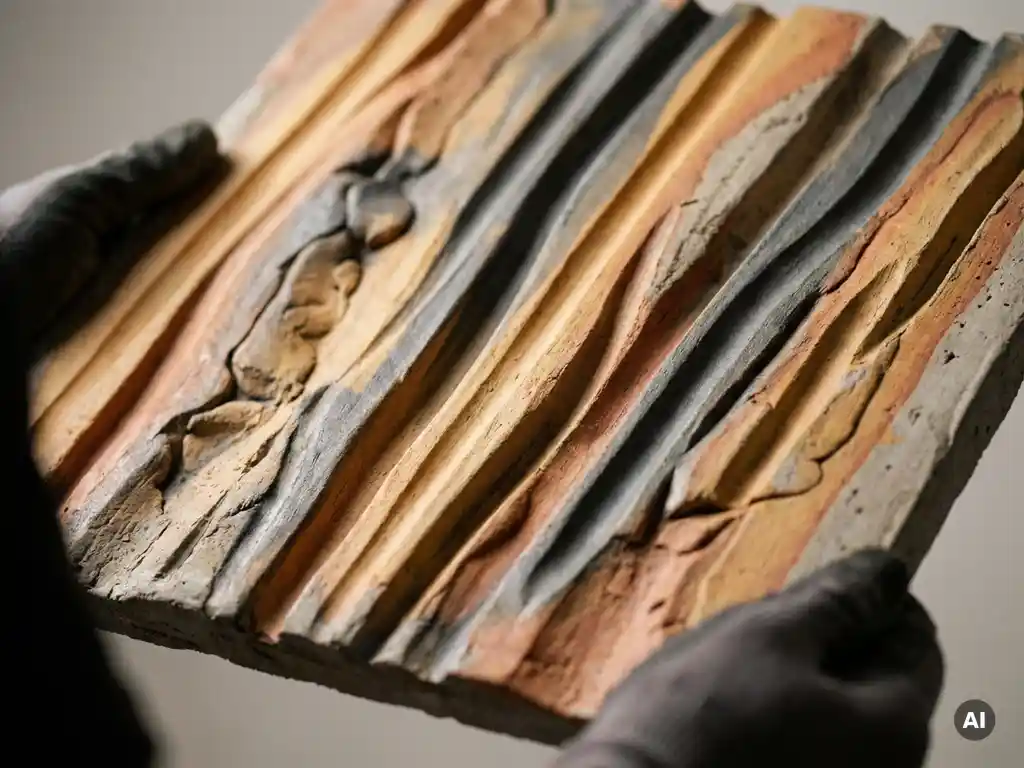
Deep profiling in ceramic facade design refers to the technique of creating pronounced, three-dimensional relief patterns directly in the surface of ceramic tiles during manufacturing. Rather than relying on flat, uniform panels, deeply profiled ceramics introduce shadow lines, ridges, grooves, or geometric recesses that give a building facade genuine visual depth and tactile character. The sections below explore how this technique works, what it looks like in practice, and what it means for durability and sustainability.
How does deep profiling change the look of a facade?
Deep profiling transforms a ceramic facade from a flat surface into a dynamic architectural element. By introducing raised ridges, recessed channels, or sculpted geometric patterns into the tile surface, profiling creates shifting shadow lines that change with the angle of natural light throughout the day. The result is a facade that reads differently in the morning sun than it does at dusk, giving the building a living, textured quality that flat panels simply cannot achieve.
Beyond the play of light and shadow, surface texture also affects how a facade integrates with its surroundings. A deeply profiled ceramic surface can echo the materiality of traditional masonry, reference the grain of natural stone, or take on a distinctly contemporary geometric language depending on the chosen profile pattern. This versatility makes profiled ceramic tiles a compelling tool for architects who want to express identity through the building envelope rather than relying solely on color or form.
Facade surface texture also influences perceived scale. Coarser, more pronounced profiles make large building faces feel more articulated and human in scale, breaking up expanses that might otherwise feel monotonous. Finer profiling adds refinement and detail legible at closer range. Both approaches can be combined across a single facade using ceramic surface formats calibrated to specific zones of the building.
What types of profiles are used in ceramic facade design?
Ceramic facade design uses several distinct profile types, each producing a different aesthetic and functional outcome. The most common categories are linear grooves, wave profiles, geometric relief patterns, and rusticated or brick-bond textures. Each type interacts differently with light and contributes a different character to the finished facade.
- Linear grooves and channels: Horizontal or vertical incisions that create strong directional shadow lines, often used to emphasize the height or breadth of a building.
- Wave and undulating profiles: Softly curved surfaces that produce a more organic, flowing texture with gradual light transitions rather than sharp shadow edges.
- Geometric relief patterns: Structured, repeating raised or recessed shapes such as diamonds, rectangles, or facets that create a bold, graphic quality at a distance and intricate detail up close.
- Rusticated and masonry-referencing textures: Profiles that evoke traditional brick or stone coursing, connecting contemporary ceramic construction to historical building traditions.
The choice of profile type is rarely made in isolation. It is typically developed alongside decisions about tile format, color, and installation pattern to produce a coherent overall facade composition. Architects often request custom profile geometries tailored to a specific project, which is possible when working with manufacturers who control the full production process from clay body to finished tile.
How is deep profiling applied during ceramic manufacturing?
Deep profiling in ceramic tiles is applied during the extrusion or pressing stage of manufacturing, before the tile is fired. At this stage, the clay body is still plastic and can be shaped by passing it through profiled dies or by pressing it into textured molds. The profile geometry is therefore built into the tile from the very beginning rather than added as a surface coating afterward.
Once the profile is formed, the tile goes through a drying phase to remove moisture before entering the kiln. The firing process, which in high-performance ceramic facades reaches temperatures above 1,200 degrees Celsius, sinters the clay particles together into a dense, hard body. At these temperatures, the profiled surface becomes fully integrated with the tile structure. There is no risk of the texture delaminating, flaking, or wearing away over time because the profile is not a surface treatment but a physical property of the ceramic body itself.
This manufacturing approach also means that the profile tolerances are consistent across production runs. Tiles can be produced to precise dimensional specifications, which matters when complex profile geometries must align across adjacent tiles on the installed facade. Tight manufacturing tolerances are essential for achieving clean, continuous shadow lines and maintaining the intended visual rhythm across a large facade surface.
Does deep profiling affect the structural performance of ceramic tiles?
Deep profiling does not negatively affect the structural performance of ceramic facade tiles when the profile is designed within appropriate parameters. In fact, certain profile geometries, particularly those that add material to the tile cross-section through raised ribs or ridges, can increase the tile’s resistance to bending forces. The critical factor is that the profiling is engineered as part of the overall tile design rather than introduced arbitrarily.
One area where profiling does have a measurable effect is surface weight. More complex profiles that add material volume will increase the weight per square meter slightly compared to a flat tile of the same base thickness. However, single-layer ceramic facade systems are already engineered for low surface weight, which means that even profiled tiles remain well within the load limits appropriate for lightweight substructures, including timber frame construction.
Fire performance is unaffected by profiling. Ceramic tiles are classified as building material class A1, meaning they are non-combustible regardless of their surface geometry. The profile shape does not introduce any combustible components and does not alter the tile’s fundamental material classification. This makes deeply profiled ceramic tiles as suitable for fire-sensitive construction types as their flat counterparts.
Can deeply profiled ceramic tiles still be recycled and maintained?
Yes, deeply profiled ceramic tiles are fully recyclable and require no more maintenance than flat ceramic tiles. Because the profile is formed from the same homogeneous ceramic body as the rest of the tile, there are no composite layers, coatings, or adhesive bonds that would complicate end-of-life processing. The entire tile, profile and all, is a single material that can be returned to the production cycle.
From a maintenance perspective, the profiled surface texture is permanent and does not require recoating, repainting, or surface treatment to retain its appearance. The same sinter-fired density that gives ceramic facades their UV resistance and color stability applies equally to profiled surfaces. Graffiti protection, where integrated into the ceramic body rather than applied as a topcoat, remains effective across the full surface geometry, including recessed areas.
One practical consideration is cleaning. Deeply recessed profiles can accumulate more airborne particulate than flat surfaces, and cleaning methods should account for the geometry. However, the dense, low-porosity surface of high-fired ceramics resists the adhesion of dirt and biological growth, which means that even profiled tiles tend to stay visually clean over extended periods with minimal intervention. For architects and building owners focused on lifecycle performance, this combination of durability and low upkeep makes profiled ceramic tiles a sound long-term investment.
How TONALITY® brings deep profiling to life on your facade
TONALITY® offers architects and specifiers a full range of deeply profiled ceramic facade elements produced from the high-quality clay deposits of the Westerwald region. Every profiled tile is manufactured using the same sinter-firing process at over 1,200 degrees Celsius, ensuring that surface texture, color stability, and structural integrity are built in from the start rather than applied afterward.
Working with TONALITY® for profiled ceramic facade design means access to:
- A broad format range from 150 x 300 mm up to 400 x 1,600 mm, giving architects flexibility to match profile scale to building geometry
- Precise manufacturing tolerances down to one millimeter, essential for achieving consistent shadow lines and profile alignment across large facade surfaces
- A1 non-combustible classification, making profiled TONALITY® tiles suitable for timber construction and other fire-sensitive building types
- Integrated graffiti protection and permanent UV resistance, so the profiled surface retains its intended appearance without ongoing maintenance
- Full recyclability, supporting circular construction principles and long-term sustainability targets
- A simple mount-and-done installation system with interlocking aluminum retaining profiles, compatible with lightweight substructures
Whether you are developing a bespoke profile geometry for a landmark project or selecting from established surface options, the TONALITY® team can support the process from specification through to installation. Explore completed facade projects to see how profiled ceramic elements perform in real-world applications, or browse available surfaces and formats to begin narrowing down the right solution for your design.
[cta_contact_form]
To discuss your project requirements or request material samples, get in touch with the TONALITY® team directly. Bringing a profiled ceramic facade from concept to completion starts with the right conversation.