

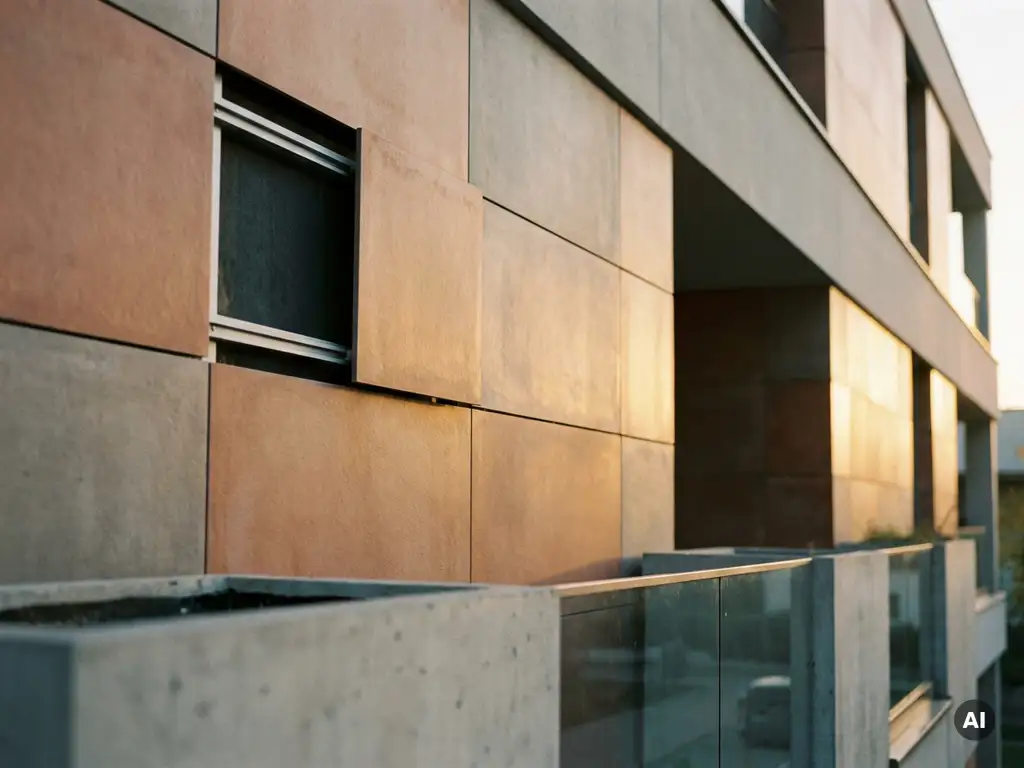
Single-layer ceramic facades have become a compelling choice for architects, builders, and developers who want a cladding system that performs as well as it looks. Unlike multi-layer composite systems, single-layer ceramic facade tiles combine structural simplicity with outstanding technical properties, making them well-suited for everything from residential timber construction to large-scale commercial projects. Here are six concrete advantages that explain why this approach to ventilated facade cladding continues to gain traction in modern building design.
1. Ultra-Low Weight for Lighter Substructures
Weight is one of the most practical concerns in facade engineering, and single-layer ceramic facades address it directly. With a surface weight of around 40 kilograms per square meter, these elements are significantly lighter than many alternative cladding materials, which reduces the load placed on the building’s structure and substructure alike.
This low dead weight has real consequences for project planning. Lighter substructures mean less material, faster assembly, and greater flexibility when working with buildings that have limited load-bearing capacity. Timber construction is a particularly strong fit here, since wood-frame structures benefit enormously from reduced facade loads without sacrificing performance or aesthetics.
For retrofit projects on existing buildings, the reduced weight also opens up options that heavier cladding systems would rule out entirely. Architects gain more flexibility in their material choices without needing to redesign the structural frame to accommodate the facade.
2. Non-Combustible A1 Fire Protection Rating
Fire safety is a non-negotiable requirement in most building codes, and ceramic facade cladding meets the highest standard available. Single-layer ceramic elements are classified as building material class A1, which means they are fully non-combustible and contain no combustible components whatsoever.
This classification is not a coating or a treatment that can degrade over time. It is a fundamental property of the fired ceramic material itself. In the event of a fire, the facade will not contribute to flame spread, smoke development, or structural weakening through material decomposition.
For timber construction in particular, this fire protection advantage is especially relevant. Combining a combustible structural system with a non-combustible A1-rated facade cladding creates a meaningful layer of protection that satisfies stringent fire regulations while still allowing the use of sustainable wood-based construction methods. Completed building projects across different typologies demonstrate how this combination works in practice.
3. Permanent UV and Color Resistance
Facade materials are exposed to sunlight, temperature swings, and weather cycles every single day. Many cladding systems handle this well initially but show fading, discoloration, or surface degradation within a decade. Ceramic facades take a different approach: the color is not applied to the surface but fired into the material at temperatures exceeding 1,200 degrees Celsius.
This sinter firing process creates a dense, smooth surface structure that resists UV radiation without any additional protective layer. The color you specify at the design stage is the color the building will show twenty or thirty years later, without touch-ups, recoating, or maintenance cycles.
For building owners and developers, this translates directly into lifecycle cost advantages. A facade that maintains its appearance without intervention reduces both planned maintenance expenditure and the risk of unplanned remediation work. It also keeps the building looking intentional and well-maintained, which matters for commercial properties, residential developments, and public buildings alike.
4. Built-In Graffiti Protection
Graffiti is a practical concern for buildings in urban environments, and dealing with it repeatedly adds up in both effort and long-term upkeep costs. Single-layer ceramic facades address this challenge through the same dense, smooth surface that provides UV resistance: the non-porous structure makes it difficult for paint and marker inks to penetrate the material.
Because the graffiti sits on the surface rather than soaking in, removal is straightforward and does not require aggressive chemical treatments that could damage the facade. This integrated protection is not a separate coating that wears off over time. It is a structural property of the fired ceramic surface itself.
For property managers, housing associations, and municipalities responsible for high-traffic facades, this characteristic reduces both the frequency and the cost of graffiti remediation. It also means the facade retains its intended appearance without repeated intervention.
5. Precision Formats for Unlimited Design Freedom
Design flexibility is one of the most compelling aspects of ceramic facade tiles. Elements can be produced to within one millimeter of precision across a wide range of formats, from compact 150 x 300 mm tiles to large-format panels measuring up to 400 x 1,600 mm. This range allows architects to work at very different scales and achieve very different visual effects with the same base material.
Beyond format, the combination of surface textures, finishes, and a broad color palette means that ceramic facades can be adapted to almost any architectural language, whether the goal is a refined monochromatic skin, a textured natural appearance, or a bold graphic composition. Available surfaces and formats give a clear sense of the range of possibilities.
This precision also matters during installation. Elements that are manufactured to tight tolerances fit together consistently, which simplifies the work on site and reduces the risk of alignment issues or visible inconsistencies in the finished facade. The result is a cladding system that delivers on its design intent reliably, at scale.
6. 100% Recyclable and Fully Deconstructable
Sustainability in building materials is increasingly evaluated not just at the point of manufacture but across the full material lifecycle. Single-layer ceramic facades perform well on this measure. The elements are 100% recyclable and designed to be deconstructed and sorted by component type with minimal effort at the end of life.
The ventilated facade system, in which ceramic elements interlock with aluminum retaining profiles, supports this approach by keeping the different material types clearly separated throughout the building’s service life. When the time comes for renovation or demolition, the components can be removed and sorted without complex separation procedures.
For projects pursuing sustainability certifications or working toward circular construction principles, this end-of-life performance is a meaningful contribution. It also aligns with the broader direction of the construction industry in 2026, where material reusability and responsible sourcing are becoming standard expectations rather than optional extras. You can request material samples to evaluate the product firsthand before specifying it.
Which Advantage Matters Most for Your Project?
The six advantages above are not equally weighted for every project. A timber construction developer will prioritize the low surface weight and A1 fire rating. An urban property manager will focus on graffiti resistance and maintenance-free performance. An architect working on a landmark building will lead with design precision and color permanence. A developer committed to sustainable construction will value recyclability and deconstruction planning.
In most cases, the strongest argument for single-layer ceramic facade cladding is not any single property but the way these advantages reinforce each other. A material that is lightweight, non-combustible, UV-stable, low-maintenance, and fully recyclable does not require trade-offs between performance categories. That combination is what makes ceramic building materials at this level of quality a genuinely long-term investment rather than a short-term specification decision.
How TONALITY® Delivers on All Six Advantages
TONALITY® ceramic facades are engineered to deliver each of these six advantages as standard, not as optional upgrades. Manufactured in Weroth in the Westerwald region using some of Europe’s highest-quality clay deposits, and fired using a specialized sinter process at over 1,200 degrees Celsius, every element is built to perform across the full lifecycle of the building. Here is what that means in practice:
- Low weight: approximately 40 kg per square meter, enabling light substructures and timber-compatible installation
- Fire safety: A1 non-combustible classification with no combustible components
- Color permanence: UV-resistant, maintenance-free surfaces that hold their appearance without recoating
- Graffiti resistance: integrated into the dense ceramic surface, not applied as a separate layer
- Design precision: formats from 150 x 300 mm to 400 x 1,600 mm, manufactured to within one millimeter
- Sustainability: 100% recyclable, fully deconstructable, and sorted by component type at the end of life
[cta_contact_form]
Whether you are specifying a ventilated facade for a new-build timber structure, a commercial retrofit, or a public building with demanding fire and sustainability requirements, TONALITY® offers a concrete solution backed by material science and manufacturing precision. Get in touch with the team to discuss your project requirements and find the right ceramic facade system for your application.
Related Articles
- How do you verify sustainable building materials origin claims
- What BIM data should be included when specifying ceramic cladding solutions in 2026?
- How do you future-proof a terracotta facade system against tightening regulations?
- What sustainable materials work best for timber construction?
- 5 Stunning Examples of Terracotta Combined with Glass, Steel, and Wood