

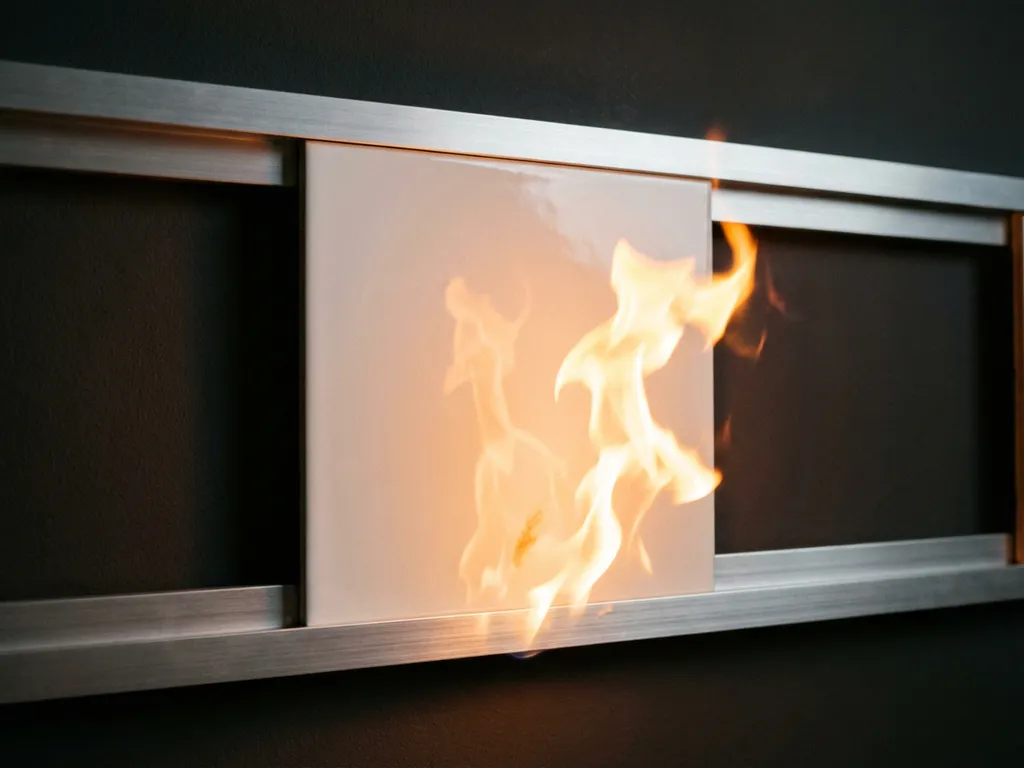
Fire safety in construction has become increasingly critical as building codes evolve and architects seek materials that provide both aesthetic appeal and superior protection. In ceramic manufacturing, the process itself produces inherently fire-resistant materials that offer exceptional safety benefits for building applications.
The unique properties of ceramic materials, combined with advanced manufacturing techniques, result in products that not only resist fire but also actively contribute to building safety. Understanding how ceramic manufacturing creates these fire-resistant characteristics helps explain why ceramic façades and building elements are increasingly specified for projects where fire protection is paramount.
What makes ceramic materials naturally fire resistant?
Ceramic materials are naturally fire resistant because they are composed of inorganic compounds that have already undergone high-temperature transformation during manufacturing. The clay minerals used in ceramic production contain silicates, alumina, and other compounds that remain stable at extreme temperatures, making them inherently non-combustible.
The molecular structure of ceramic materials contributes significantly to their fire resistance. During the initial firing process, organic materials are completely burned out, leaving behind a purely inorganic matrix. This structure contains no combustible components that could fuel a fire, unlike many synthetic building materials, which can release toxic gases or contribute to flame spread.
Additionally, ceramic materials possess excellent thermal stability. They maintain their structural integrity even when exposed to temperatures far exceeding those typically encountered in building fires. This stability prevents the material from degrading, cracking, or failing during fire exposure, helping maintain the building envelope’s protective barrier.
How does the ceramic manufacturing process create fire-resistant properties?
The ceramic manufacturing process creates fire-resistant properties through high-temperature sintering that fundamentally transforms the raw materials into a non-combustible, thermally stable product. During firing at temperatures exceeding 1,200 degrees Celsius, clay particles fuse together while all organic matter is completely eliminated.
This sintering process creates several key fire-resistant characteristics. The extreme heat causes physical and chemical changes in the clay structure, forming strong ceramic bonds that remain stable under fire conditions. Any potentially combustible organic compounds present in the raw clay are completely burned away during this initial firing, ensuring the finished product contains no flammable materials.
The controlled cooling process following high-temperature firing also contributes to fire resistance. Gradual cooling allows the ceramic structure to stabilize without internal stresses that could lead to failure under thermal shock. This results in a dense, uniform material that can withstand rapid temperature changes without cracking or spalling during fire exposure.
What fire safety classifications do ceramic building materials achieve?
Ceramic building materials typically achieve the highest fire safety classification, A1, according to European standards, meaning they are completely non-combustible and contribute no fuel to fires. This classification represents the most stringent fire safety rating available for construction materials.
The A1 classification requires materials to pass rigorous testing that evaluates combustibility, heat release, and smoke production. Ceramic materials excel in all these areas because they produce no flames, release no heat during fire exposure, and generate no smoke or toxic gases. This performance stems directly from their inorganic composition and high-temperature manufacturing process.
Beyond the basic non-combustibility rating, ceramic materials also demonstrate excellent performance in fire spread and flame penetration tests. Their dense structure and thermal stability help prevent fire from spreading through building assemblies, while their dimensional stability maintains protective barriers even under extreme heat exposure.
Why are ceramic façades considered superior for fire protection?
Ceramic façades are considered superior for fire protection because they provide a completely non-combustible exterior barrier that prevents fire spread while maintaining structural integrity throughout fire exposure. Unlike many façade materials that can contribute to fire propagation, ceramic elements actively resist flame spread and provide thermal protection to underlying structures.
The superior fire protection of ceramic façades stems from several key advantages. Their A1 fire classification means they add no fuel to external fires, helping prevent the rapid façade fire spread that has caused catastrophic building failures with other materials. The thermal mass of ceramic elements also provides insulation that protects structural components from heat damage.
Installation characteristics further enhance fire protection benefits. Ceramic façade systems can be designed with proper ventilation and fire stops that prevent flame and smoke penetration behind the façade. The dimensional stability of ceramic elements ensures that protective gaps and barriers remain effective even under fire conditions, maintaining the building’s overall fire safety strategy.
How TONALITY® Delivers Superior Fire Protection
TONALITY® ceramic façades provide exceptional fire protection through our specialized manufacturing process, which creates A1-classified, completely non-combustible building elements. Our ceramic tiles are produced using premium Westerwald clay fired at temperatures exceeding 1,200°C, eliminating all organic compounds and creating a purely inorganic, fire-resistant product.
Key fire protection advantages of TONALITY® systems include:
- A1 fire classification with zero contribution to fire spread or toxic gas production
- Thermal stability that maintains protective barriers during fire exposure
- Lightweight construction at only 40 kg per square meter, reducing structural fire loads
- A precise installation system that maintains fire-safe gaps and ventilation
- Excellent thermal insulation properties that protect underlying structures
For architects and specifiers prioritizing fire safety in their projects, TONALITY® ceramic façades offer proven protection backed by rigorous testing and classification. Contact our technical team to discuss how our fire-resistant ceramic solutions can enhance your building’s safety performance while delivering outstanding aesthetic results.