

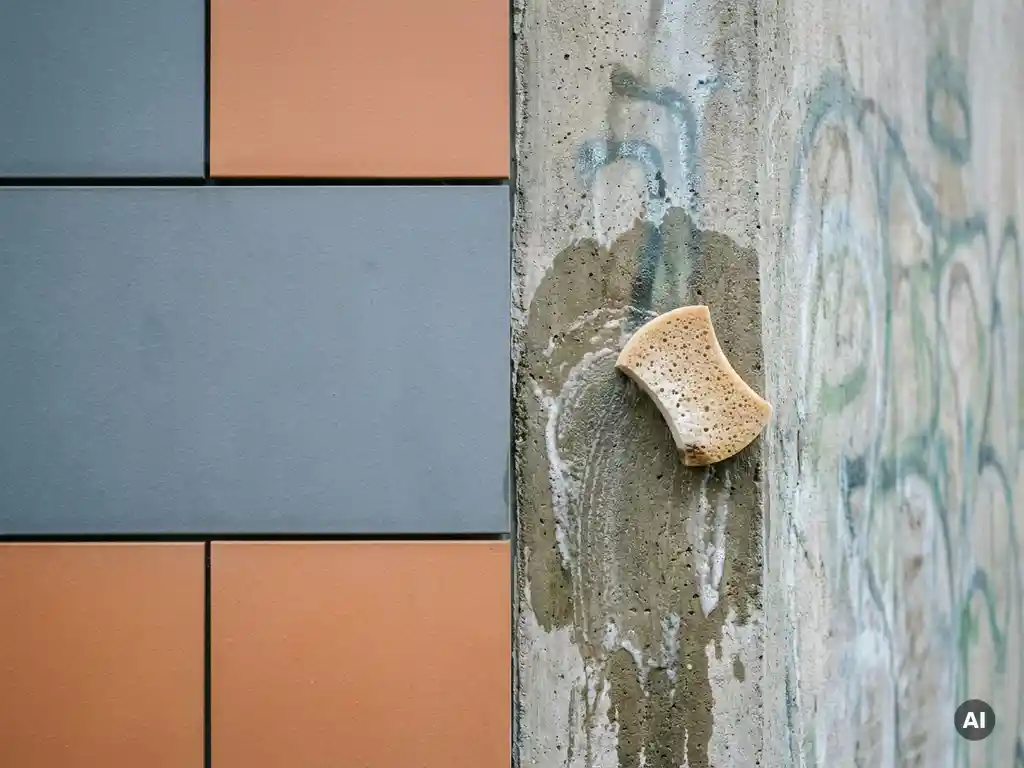
Graffiti removal can permanently alter a facade’s color or texture, but whether it does depends almost entirely on the facade material. Porous surfaces like untreated concrete, natural stone, and brick are the most vulnerable, as aggressive cleaning agents and abrasive methods can strip surface layers, bleach pigmentation, or leave uneven patches. Smooth, dense, and chemically resistant materials, by contrast, typically withstand repeated cleaning without visible degradation. The sections below walk through the specific risks, materials, and protective measures that determine whether graffiti removal leaves a lasting mark.
Does graffiti removal damage the surface underneath?
Yes, graffiti removal can damage the surface underneath, but the severity depends on the facade material and the removal method used. Solvent-based removers, high-pressure washing, and abrasive blasting can all penetrate or abrade the outermost surface layer, especially on porous or textured materials. The damage may range from subtle discoloration to visible surface erosion, and in some cases it is irreversible without resurfacing.
The core risk lies in the mismatch between the cleaning agent and the substrate. A solvent strong enough to dissolve spray paint may also dissolve a surface coating, lift a pigmented render, or drive chemical residue deeper into a porous material. High-pressure water, while seemingly neutral, can erode mortar joints, open micro-cracks, or strip weathered coatings. Understanding your facade material before selecting a removal method is the single most important step in avoiding collateral damage.
Which facade materials are most vulnerable to color fading after graffiti removal?
Rendered and painted facades are the most vulnerable to color fading after graffiti removal. Organic coatings, silicate paints, and acrylic renders can be chemically degraded by solvents, leaving bleached or patchy areas that do not match the surrounding surface. Natural stone and exposed concrete are also at risk, as their surface patina, which develops over years of weathering, can be stripped in a single cleaning session.
Brick and terracotta facades present a mixed picture. Unglazed, untreated brick is porous and can absorb both the graffiti paint and the cleaning agent, making full removal difficult without altering the surface tone. Glazed or high-fired ceramic materials sit at the opposite end of the spectrum: their dense, non-porous surface prevents paint from bonding deeply, and chemical removers have little effect on the underlying material itself.
Composite and metal cladding panels with factory-applied coatings are moderately vulnerable. The coating may be chemically compatible with many removers, but repeated cleaning cycles gradually thin the protective layer, eventually exposing the base material to UV degradation and surface wear.
What causes texture changes when removing graffiti from facades?
Texture changes after graffiti removal are caused by physical abrasion, chemical softening of the surface layer, or the reopening of pores that were previously sealed. Abrasive methods such as sandblasting or wire brushing remove thin layers of material along with the paint, smoothing raised textures or roughening previously smooth ones. Solvents can soften binders in renders and coatings, causing them to swell, flake, or become tacky before rehardening with a different surface profile.
High-pressure washing compounds the problem on textured surfaces by driving water into the texture relief and dislodging loose particles. On rough-cast or pebble-dash renders, this can pull aggregate from the surface, leaving pitting or bare patches. On fine-textured mineral coatings, repeated pressure washing gradually erodes the texture peaks, producing a progressively smoother and visually inconsistent finish.
The longer graffiti is left on a facade before removal, the harder it becomes to clean without texture damage. Paint that has fully cured and bonded to a porous substrate requires more aggressive treatment, which in turn increases the risk of surface alteration. Early intervention consistently produces better outcomes with less physical impact on the facade.
Does integrated graffiti protection prevent permanent facade damage?
Integrated graffiti protection significantly reduces the risk of permanent facade damage by creating a barrier between the spray paint and the substrate. Rather than allowing paint to bond directly with the facade material, a graffiti-resistant surface keeps the paint at the outermost layer, where it can be removed with milder cleaning agents and less mechanical force. This preserves both the color and the texture of the underlying material through multiple cleaning cycles.
There are two main categories of graffiti protection: sacrificial coatings and permanent systems. Sacrificial coatings are applied over the facade surface and removed along with the graffiti, then reapplied. They are effective but require ongoing maintenance. Permanent anti-graffiti systems, by contrast, are either chemically bonded to the substrate or intrinsic to the material itself. These do not need to be reapplied after each cleaning event, making them a more practical long-term solution for facades in high-exposure locations.
For architects and building owners specifying facades in urban environments, the distinction between an applied coating and a material with inherent graffiti resistance is important. An applied coating adds a step to the specification and a recurring maintenance task. A material that is intrinsically resistant, such as a fully vitrified ceramic with a dense, smooth surface, eliminates that variable entirely. You can explore completed projects to see how different facade systems perform in real urban conditions.
How many times can graffiti be removed before a facade shows wear?
The number of removal cycles a facade can withstand before showing visible wear depends on the material, the removal method, and whether any form of graffiti protection is in place. On unprotected porous surfaces, even two or three aggressive cleaning events can produce noticeable color variation or texture changes. On dense, non-porous materials with inherent surface resistance, the same cleaning process can be repeated many more times without measurable degradation.
For facades with applied anti-graffiti coatings, wear is determined partly by the coating itself and partly by the substrate beneath. Each removal cycle that requires the coating to be stripped and reapplied introduces variability in coverage and adhesion. Over time, inconsistencies in reapplication can create areas of uneven protection, making some zones more susceptible to damage than others.
Materials with intrinsic surface density, such as high-fired ceramics, do not accumulate wear in the same way because the cleaning agent interacts with a surface that is chemically stable and physically consistent. The total cost of ownership argument for such materials is straightforward: fewer incidents of surface damage mean fewer repair interventions, less remediation work, and a facade that retains its original appearance over a much longer service life.
How TONALITY® protects your facade against graffiti damage
TONALITY® ceramic facade tiles address the graffiti vulnerability problem at the material level, not as an afterthought. Because the tiles are fired at temperatures exceeding 1,200 degrees Celsius using a special sinter-firing process, the resulting surface is exceptionally dense and non-porous. Spray paint cannot penetrate the surface layer, which means removal requires only mild cleaning agents and minimal mechanical effort, leaving the facade color and texture completely intact.
Key properties that make TONALITY® facades inherently resistant to graffiti damage include:
- Integrated graffiti protection built into the material, requiring no additional coating or periodic reapplication
- Permanent UV and color resistance, so the facade retains its original appearance even after repeated cleaning cycles
- Dense, smooth surface produced by sinter firing, which prevents paint adhesion and simplifies removal
- Non-combustible A1 classification, combining graffiti resistance with excellent fire protection properties
- 100% recyclability, supporting a long-term, low-maintenance facade strategy aligned with lifecycle cost thinking
TONALITY® tiles are available in a wide range of surfaces and formats, making it straightforward to specify a graffiti-resistant facade without compromising on design freedom. Whether the project calls for a refined smooth finish or a more expressive surface profile, the underlying material performance remains consistent.
[cta_contact_form]
If you are specifying a facade for a location where graffiti exposure is a realistic concern, the most effective decision is to choose a material that does not require a separate protective layer to begin with. Get in touch with the TONALITY® team to discuss your project requirements and find out which system is the right fit for your building.
Related Articles
- Can prefabricated facade elements shorten renovation schedules?
- Can terracotta facades be integrated with green wall and living facade systems?
- Can terracotta facades reduce noise pollution in buildings?
- How do you prevent thermal bridging in ventilated terracotta facades?
- How do terracotta facades improve building energy efficiency?