

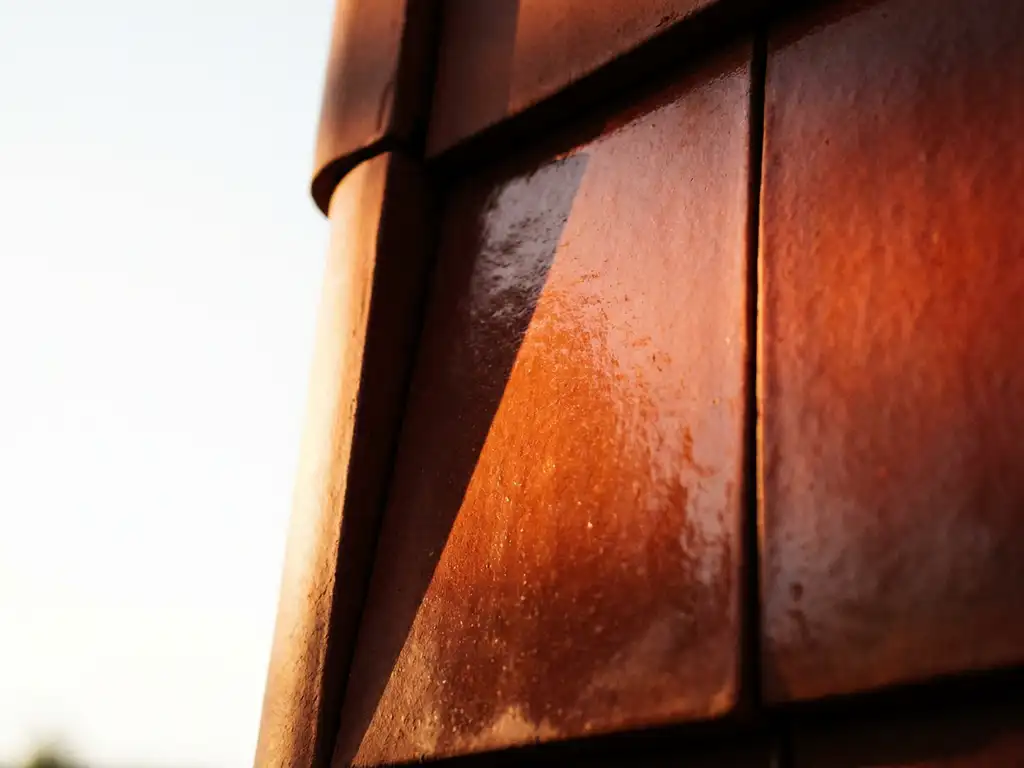
Yes, terracotta facades provide strong, natural UV protection. The material’s mineral composition and dense, vitrified structure make it inherently resistant to ultraviolet radiation without any added coatings or treatments. This UV resistance is a core property of high-quality ceramic and terracotta cladding, not an afterthought, and it directly contributes to the long-term performance and appearance of a facade. The sections below explore exactly how this protection works and what it means for your building project.
How does terracotta naturally resist UV radiation?
Terracotta naturally resists UV radiation because it is an inorganic, mineral-based material. Unlike organic materials such as paints, polymers, or wood, terracotta contains no carbon-based compounds that UV rays can break down. The clay minerals that form the body of a terracotta tile are chemically stable under sunlight, meaning the material does not degrade, discolor, or lose structural integrity when exposed to prolonged UV radiation.
This resistance is not a surface treatment applied after production. It is built into the material itself at a molecular level. The iron oxides, silicates, and other naturally occurring minerals in the clay body absorb and scatter UV energy without undergoing chemical change. As a result, the facade retains its appearance and structural properties regardless of how many hours of direct sunlight it receives over its service life.
For construction project managers specifying exterior cladding, this is a meaningful distinction. A material that resists UV intrinsically requires no recoating schedule, no protective maintenance cycles, and no concern about surface layer delamination over time. Exploring available terracotta surfaces and formats is a practical first step when evaluating options for a long-lasting facade solution.
Does UV exposure cause terracotta facades to fade over time?
No, UV exposure does not cause terracotta facades to fade in the way it affects painted or polymer-coated surfaces. The color in terracotta is not a surface pigment applied on top of the material. It is the result of the clay’s natural mineral content and the chemical transformations that occur during firing. Because the color is integral to the body of the tile, UV radiation has no mechanism to bleach or alter it.
This is a critical advantage over many competing facade materials. Painted metal panels, fiber cement boards with colored finishes, and certain composite cladding systems all rely on surface coatings that are vulnerable to UV-induced photodegradation. Over years of sun exposure, those coatings can chalk, fade, or peel. Terracotta simply does not share this vulnerability.
The practical outcome for a project is that the facade you install in 2026 will look essentially the same decades later, without intervention. That consistency of appearance is particularly valuable on high-visibility buildings where aesthetic continuity matters to clients and end users. Reviewing completed reference projects can give a clear sense of how terracotta cladding holds up visually across different building types and climates over time.
What role does the firing temperature play in UV and weather resistance?
Firing temperature is the single most important manufacturing factor in determining how UV- and weather-resistant a terracotta or ceramic facade tile will be. When clay is fired at temperatures exceeding 1,200 degrees Celsius, the minerals within it undergo sintering, a process that fuses the particles into a dense, vitrified matrix with very low porosity. This dense structure is what makes the material so stable under UV radiation, temperature cycling, moisture, and freeze-thaw stress.
At lower firing temperatures, the clay body remains more porous and the mineral transformation is incomplete. The result is a softer, more absorbent material that is more susceptible to surface weathering and staining over time. High-temperature sinter firing eliminates that vulnerability by producing a surface that is smooth, dense, and chemically inert.
High-quality ceramic facade elements are produced using precisely this high-temperature sinter firing process, resulting in surfaces that are consistently dense and resistant to the full range of outdoor weathering conditions, including UV, moisture ingress, and temperature extremes. The firing process is not a detail of production methodology. It is the foundation of the material’s long-term performance.
How does UV resistance affect the long-term maintenance costs of a terracotta facade?
UV resistance directly reduces the long-term maintenance burden of a terracotta facade by eliminating the need for periodic recoating, color restoration, or surface treatment. Materials that fade or degrade under UV exposure typically require maintenance interventions at regular intervals throughout their service life. Terracotta, because it does not fade or degrade under UV exposure, removes those maintenance cycles from the lifecycle cost equation entirely.
From a total cost of ownership perspective, this is one of the strongest arguments for ceramic and terracotta facade systems. The upfront investment in a durable, UV-stable material is offset over time by the absence of maintenance costs that accumulate with less durable alternatives. On a building with a service life of several decades, those avoided costs are substantial.
UV resistance also has indirect maintenance implications. A facade that retains its original appearance without fading or surface degradation is less likely to require early replacement driven by aesthetic deterioration. That means the structural and material investment in the facade continues to deliver value across the full intended lifespan of the building, rather than requiring premature renewal. Ordering physical samples and technical documentation is a straightforward way to assess material quality and long-term performance credentials before committing to a specification.
Are all terracotta and ceramic facade products equally UV resistant?
No, not all terracotta and ceramic facade products offer the same level of UV resistance. The degree of UV stability depends primarily on firing temperature, clay quality, and whether the product’s color is integral to the body or applied as a surface glaze or coating. Products fired at lower temperatures or finished with surface-applied color treatments will perform differently under prolonged UV exposure than fully sintered, body-colored ceramic elements.
When evaluating ceramic facade systems, it is worth examining the following factors:
- Firing temperature: Products fired above 1,200 degrees Celsius achieve full sintering and the associated density and stability. Lower firing temperatures produce a less vitrified body.
- Color origin: Integral color derived from the clay’s mineral content is inherently UV stable. Surface-applied glazes or coatings introduce a layer that can be vulnerable to UV degradation over time.
- Surface porosity: Lower porosity correlates with higher resistance to UV-related surface weathering and staining. Ask for technical data on water absorption rates as a proxy indicator.
- Clay source quality: The mineral composition of the raw clay affects both the fired color and the stability of the finished product. High-quality clay deposits with consistent mineral profiles produce more predictable, stable results.
For project managers and facade contractors comparing ceramic facade systems, requesting technical documentation on firing temperature and water absorption is a straightforward way to assess the UV and weather resistance credentials of any product under consideration. Not all products marketed as terracotta or ceramic deliver equivalent performance, and the differences become most visible over the long-term lifespan of a building.
How TONALITY® helps with UV-resistant terracotta facade cladding
TONALITY® ceramic facade systems are engineered specifically to deliver the UV stability, color permanence, and long-term performance described throughout this article. If you are specifying an exterior cladding solution that holds its appearance and structural integrity without ongoing maintenance, TONALITY® addresses every dimension of that requirement:
- High-temperature sinter firing above 1,200°C produces a dense, vitrified tile body with inherent UV resistance and minimal water absorption.
- Integral body color derived from natural mineral content ensures the facade appearance remains consistent over decades, with no surface coating to fade, chalk, or peel.
- Extensive surface and format range allows UV-stable terracotta cladding to be specified across a wide variety of architectural applications, from ventilated rainscreen systems to bespoke facade designs.
- Documented real-world performance is available through completed reference projects, giving specifiers direct evidence of how TONALITY® facades perform in service over time.
Contact the TONALITY® team to discuss your project requirements, request technical specifications, or arrange samples for evaluation.