

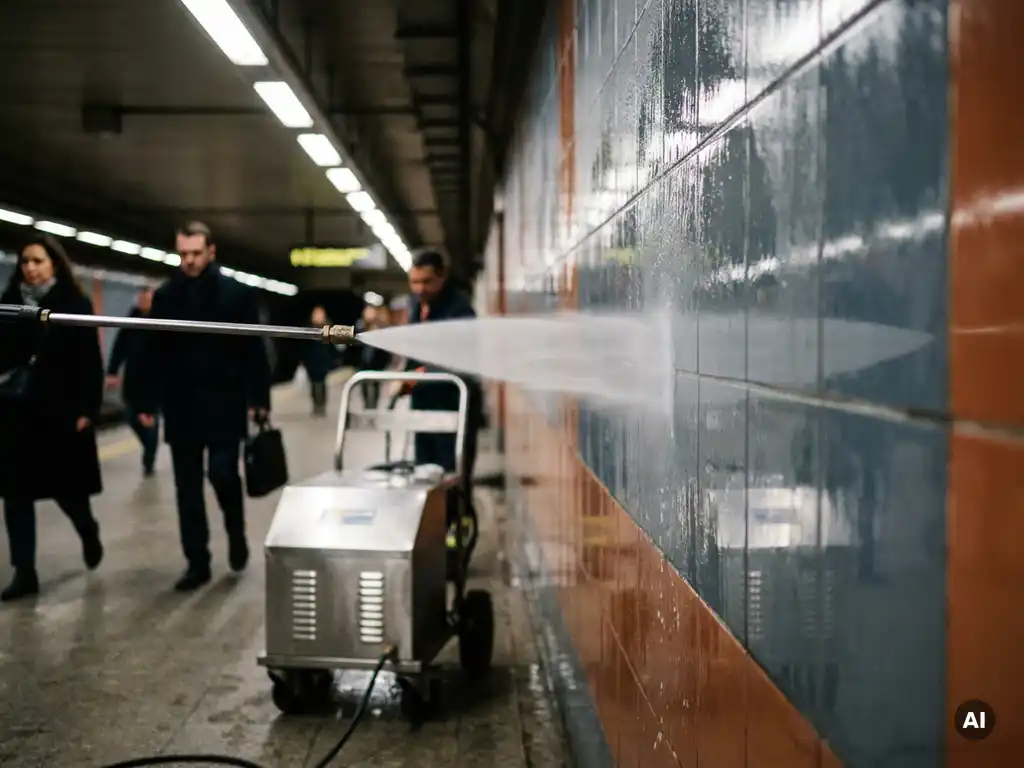
Ceramic surfaces withstand repeated cleaning in metro stations because of their dense, non-porous structure, which prevents dirt, moisture, and cleaning agents from penetrating the material. This physical resilience means the surface remains intact and visually consistent even after thousands of cleaning cycles over decades of service. The sections below explore the specific properties that make ceramic tiles the material of choice for demanding transit environments.
What makes ceramic surfaces resistant to frequent cleaning?
Ceramic surfaces resist frequent cleaning because they are fired at extremely high temperatures, which creates a dense, vitrified structure with virtually no open pores. This means cleaning agents, water, and contaminants cannot penetrate the material, so the surface stays structurally sound and visually consistent regardless of how often it is cleaned.
The key lies in the sintering process. When ceramic tiles are fired above 1,200 degrees Celsius, the raw clay minerals fuse together at a molecular level, eliminating the micro-gaps that allow liquids and chemicals to seep in. The result is a surface that is hard, smooth, and chemically stable. Unlike painted concrete, coated metal panels, or polymer-based cladding, there is no surface layer that can degrade, peel, or wear away under repeated scrubbing.
In a metro station environment, surfaces face daily exposure to skin oils, exhaust particulates, food residue, moisture, and mechanical contact from brushes and pressure washers. Ceramic tiles handle all of these without surface fatigue. The material does not soften, swell, or discolor in response to moisture cycles, which is a common failure mode for alternative materials in underground transit settings.
What cleaning agents can be used on ceramic tiles in metro stations?
Ceramic tiles in metro stations are compatible with a wide range of cleaning agents, including alkaline detergents, acidic cleaners, and disinfectants. Because the surface is chemically inert and non-porous, it does not react with most standard commercial cleaning products, giving maintenance teams significant flexibility in their cleaning protocols.
Routine cleaning typically involves neutral or mildly alkaline detergents applied with mechanical scrubbers or pressure washers. For heavier soiling, such as mineral deposits or biological growth in damp tunnel areas, diluted acidic solutions can be used without damaging the tile surface. This chemical tolerance is a direct result of the high-temperature firing process, which renders the ceramic resistant to both acidic and alkaline environments.
One practical consideration is that cleaning agents should be rinsed thoroughly after application to prevent residue buildup in grout joints. The tiles themselves require no special sealants or protective treatments before or after cleaning, which simplifies maintenance scheduling and reduces the total effort required to keep station surfaces looking clean. For maintenance teams managing large station networks, this low-complexity upkeep translates directly into long-term operational efficiency.
How does graffiti removal affect ceramic surface integrity?
Graffiti removal does not damage ceramic surface integrity when appropriate solvents are used, because the dense, non-porous structure of ceramic tiles prevents spray paint from bonding deeply to the material. Paint sits on the surface rather than penetrating it, so removal is mechanical and chemical rather than abrasive, and the tile underneath remains unaffected.
This is a significant advantage in public transit environments, where graffiti is a recurring maintenance challenge. On porous materials such as untreated concrete or natural stone, spray paint can soak into the substrate, making complete removal difficult and often leaving ghost stains. Ceramic tiles do not have this problem because the surface has no open capillary structure for paint to enter.
Many ceramic tiles used in public infrastructure also carry an integrated graffiti protection property as part of the material itself, not as an applied coating. This matters because coatings can wear off over time and require reapplication, whereas a surface that is inherently non-porous retains its graffiti-resistant properties throughout the tile’s entire service life. Maintenance teams can use standard graffiti removal solvents without risk of stripping a protective layer, because there is no separate layer to strip.
Exploring ceramic surface formats available for transit projects can help specifiers identify the right tile profile for areas most exposed to vandalism.
Why do ceramic tiles outperform other materials in high-traffic transit environments?
Ceramic tiles outperform other materials in high-traffic transit environments because they combine mechanical hardness, chemical resistance, dimensional stability, and non-combustibility in a single material. No coatings, treatments, or periodic refurbishment are required to maintain these properties, which makes ceramic the lowest-maintenance cladding option available for metro stations.
Consider the alternatives. Painted steel or aluminum panels offer good initial appearance but require periodic recoating as the paint layer degrades under UV exposure, cleaning chemicals, and physical contact. Polymer composites can warp or discolor in the temperature fluctuations common in underground stations. Natural stone is porous and requires sealing, which must be renewed regularly. Glass is durable but heavy and fragile at edges and corners under impact.
Ceramic tiles address all of these limitations simultaneously. The surface hardness resists scratching from luggage, equipment, and foot traffic. UV and color stability ensure that tiles look the same after ten years of exposure as they did on installation day. The material is classified as building material class A1, meaning it is non-combustible, which is a critical safety requirement in enclosed transit infrastructure where fire risk must be minimized.
For architects and transit authorities evaluating material options, real-world performance data from completed projects offers the most reliable benchmark. Reviewing completed ceramic facade references in public infrastructure gives a concrete picture of long-term durability across different climates and usage intensities.
How long do ceramic surfaces last under metro station conditions?
Ceramic surfaces can last for several decades under metro station conditions without requiring replacement or significant refurbishment. The material does not degrade through normal cleaning cycles, does not corrode, and does not lose its structural or aesthetic properties over time, making it one of the most durable surface materials available for transit infrastructure.
Longevity in this context depends on three factors: the quality of the ceramic itself, the quality of the installation, and the maintenance regime applied. High-quality ceramic tiles fired to full vitrification have no theoretical surface lifespan limitation under normal transit conditions. The tile does not wear out in the way that a coating or a composite panel does, because the material is homogeneous throughout its thickness.
From a total cost of ownership perspective, this durability profile is decisive. Materials that require periodic recoating, resealing, or panel replacement generate recurring expenditure over the life of a station. Ceramic surfaces eliminate these cycles. A station clad in ceramic tiles installed in 2026 should require nothing beyond routine cleaning for the foreseeable future, with no need for surface renewal treatments. This lifecycle advantage is why transit authorities and architects increasingly specify ceramic for new builds and refurbishment projects where long-term operational costs are a primary evaluation criterion.
Requesting material samples and technical documentation is a practical first step for project teams assessing ceramic tile performance against their specific station conditions.
How TONALITY® supports ceramic surface performance in metro stations
TONALITY® ceramic facade elements are engineered specifically to meet the demands of high-traffic public environments like metro stations. The combination of material properties, system design, and manufacturing precision makes TONALITY® a concrete answer to the cleaning durability and maintenance challenges described throughout this article.
- Sinter-fired density: Tiles are fired at over 1,200 degrees Celsius, producing a surface with virtually no open pores, which resists cleaning agents, moisture, and graffiti without any additional treatment.
- Integrated graffiti protection: The non-porous surface structure provides inherent resistance to spray paint adhesion, so graffiti can be removed with standard solvents without damaging the tile.
- Permanent color and UV stability: The appearance of TONALITY® tiles does not fade or shift under repeated cleaning cycles or prolonged exposure to artificial and natural light.
- Non-combustible classification: All TONALITY® elements are classified as building material class A1, meeting the fire safety requirements for enclosed public transit infrastructure.
- Precision manufacturing: Tiles are produced to within one millimeter, in formats ranging from 150 x 300 mm to 400 x 1,600 mm, allowing architects to specify exactly the right surface for each station zone.
- 100% recyclable: At end of life, TONALITY® elements can be deconstructed and sorted by material type, supporting circular construction principles increasingly required in public infrastructure procurement.
[cta_contact_form]
For transit authorities, architects, and specifiers evaluating ceramic surfaces for metro stations, TONALITY® offers the technical documentation, material samples, and project references needed to make a well-founded specification decision. Get in touch with the TONALITY® team to discuss your project requirements and receive tailored guidance on the right ceramic solution for your station environment.