

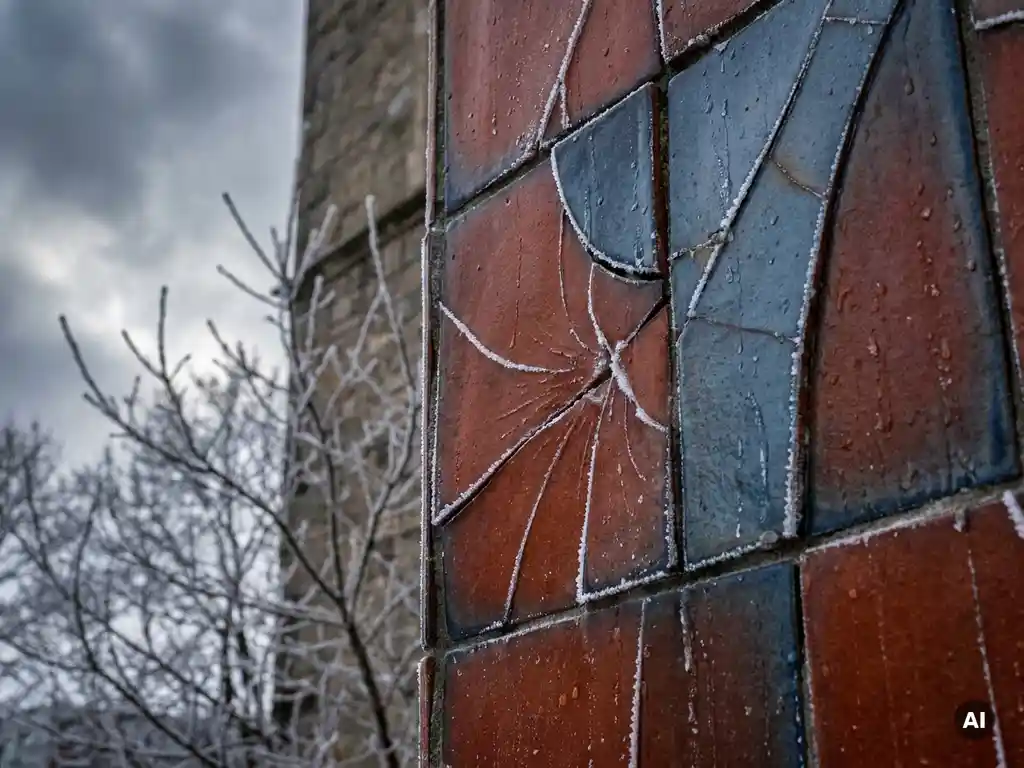
Freeze-thaw cycles damage colored facade surfaces by forcing water to repeatedly expand and contract inside the material. When moisture penetrates a facade and freezes, it expands by roughly 9%, generating internal pressure that cracks, flakes, and discolors the surface over time. The extent of the damage depends heavily on how dense and water-resistant the facade material is. The sections below address the most common questions about frost resistance, color durability, and material performance in cold climates.
What happens to facade surfaces during freeze-thaw cycles?
During freeze-thaw cycles, water that has been absorbed into a facade material freezes and expands, then thaws and contracts. This repeated mechanical stress gradually weakens the surface layer, leading to micro-cracks, spalling, and surface delamination. Over many cycles, even small amounts of absorbed moisture can cause visible structural damage and color degradation.
The process works in stages. First, rainwater or condensation finds its way into pores, joints, or surface imperfections. When temperatures drop below freezing, that water turns to ice and exerts pressure on the surrounding material. When temperatures rise again, the ice melts and the material contracts. Each cycle adds cumulative stress. Facades that go through dozens or hundreds of freeze-thaw events per year, which is common in Central European and northern climates, face significant long-term weathering pressure. The visible results range from hairline cracks and surface roughening to full-scale flaking and color loss.
Why do some facade colors fade faster than others in frost conditions?
Facade colors fade faster in frost conditions when the pigment is applied as a surface coating rather than being integrated into the material itself. Coatings sit on top of the substrate and are vulnerable to freeze-thaw stress that lifts, cracks, or peels the layer away. Once the protective coating breaks down, the underlying material is exposed and the color deteriorates rapidly.
Pigment depth matters enormously. Surface-applied paints and coatings have no structural bond with the substrate, so frost-induced micro-cracking quickly compromises adhesion. In contrast, materials where color is inherent to the body of the product, rather than added as a finish, maintain their appearance far longer because there is no separate layer to lose.
UV exposure compounds the problem. Frost weakens surface coatings, and UV radiation then accelerates the chemical breakdown of the exposed pigment. In climates where cold winters alternate with intense summer sun, the combination of freeze-thaw stress and UV degradation creates a particularly harsh weathering environment for any surface-applied color treatment.
How does surface density affect frost resistance in facade materials?
Surface density is one of the most important factors in frost resistance. The denser a facade material’s surface, the less water it can absorb, and the less water it absorbs, the less ice pressure it experiences during freezing. High-density surfaces with low water absorption rates are significantly more resistant to freeze-thaw damage than porous or open-textured materials.
Porosity and water absorption go hand in hand. A material with an open, porous surface acts like a sponge, drawing in moisture that then freezes inside the structure. Dense, sintered surfaces, such as those produced at very high firing temperatures, close off the pores at a microscopic level, leaving very little pathway for water to enter. This directly reduces the internal pressure generated during freezing and extends the material’s functional lifespan in cold climates.
Surface texture also plays a role. Rough or uneven surfaces tend to trap moisture longer, increasing the total time water is in contact with the material before it drains or evaporates. Smooth, dense surfaces shed water more effectively, reducing both absorption and freeze-thaw exposure. When evaluating facade surfaces and formats, surface density should be a primary consideration for any project in a frost-prone region.
What facade materials perform best in freeze-thaw climates?
Ceramic facade tiles, natural stone with low porosity, and high-density fiber cement are among the materials that perform best in freeze-thaw climates. Ceramic tiles produced through high-temperature sinter firing offer particularly strong frost resistance because the firing process creates an extremely dense, low-absorption surface that minimizes water uptake and internal ice pressure.
The key performance criteria for any facade material in a freeze-thaw climate are low water absorption, structural integrity under thermal cycling, and color stability that does not rely on a surface coating. Materials that meet all three criteria tend to maintain both their structural performance and their visual appearance across decades of seasonal temperature variation.
Brick and terracotta have long track records in cold-climate architecture, but quality varies considerably by firing temperature and clay composition. Higher firing temperatures produce denser products with lower absorption rates. Composite and polymer-based cladding systems can perform adequately in mild frost conditions but may become brittle at very low temperatures and are generally less resistant to repeated freeze-thaw cycling than fired ceramic materials.
How can you tell if a colored facade has freeze-thaw damage?
Freeze-thaw damage on a colored facade typically appears as surface flaking, hairline cracks, color fading in irregular patches, or visible spalling where chunks of the surface layer have broken away. Efflorescence, the white salt deposits that appear when water moves through a material and evaporates on the surface, is another common indicator of repeated moisture infiltration linked to freeze-thaw activity.
Early-stage damage is often subtle. Look for slight surface roughening, loss of sheen on previously smooth areas, or small cracks that follow no structural pattern. These signs indicate that freeze-thaw cycling has begun to break down the surface layer before more serious spalling occurs. Catching damage at this stage allows for earlier intervention.
More advanced damage is unmistakable. Larger cracks, sections where the surface layer has lifted away from the substrate, and significant color inconsistency across the facade all point to repeated freeze-thaw stress over multiple seasons. At this point, the material’s protective surface has been compromised and moisture is likely penetrating deeper into the structure with each subsequent cycle.
Does graffiti protection on facades affect freeze-thaw performance?
Graffiti protection coatings can affect freeze-thaw performance depending on the type of coating used and how it interacts with the facade substrate. Sacrificial coatings, which are removed along with graffiti during cleaning, need to be reapplied regularly and offer limited long-term protection. Permanent anti-graffiti coatings that seal the surface can actually improve frost resistance by reducing water absorption, provided they are properly applied and remain intact.
The risk arises when a coating is applied to an already porous or compromised substrate. If water has already penetrated the material before the coating is applied, sealing the surface can trap moisture inside, which then freezes and accelerates internal damage. Graffiti protection works best as a preventive measure on materials with inherently low absorption rather than as a remedy for porous substrates.
Facades where graffiti protection is integrated into the material rather than applied as an afterthought avoid this problem entirely. When the surface itself is dense enough to resist both graffiti absorption and water uptake, there is no separate coating layer to crack, peel, or trap moisture. This is the most reliable long-term approach for colored facades in freeze-thaw climates.
How TONALITY® protects colored facades in freeze-thaw conditions
TONALITY® ceramic facade tiles are engineered specifically to meet the demands of climates where freeze-thaw cycles are a regular part of the seasonal calendar. The combination of high-quality Westerwald clay and sinter firing at temperatures exceeding 1,200 degrees Celsius produces a surface that is exceptionally dense, with very low water absorption. This means ice pressure during freezing is minimized from the outset, and the structural integrity of the tile is maintained across decades of thermal cycling.
Key advantages of TONALITY® ceramic facades in frost-prone environments include:
- Integrated color stability: Color is inherent to the ceramic body, not applied as a coating, so there is no surface layer to crack, peel, or fade under freeze-thaw stress or UV exposure.
- Dense, sintered surface: The high-temperature firing process closes surface pores, dramatically reducing water absorption and the freeze-thaw damage it causes.
- Built-in graffiti protection: Integrated graffiti resistance means no additional coating layer that could trap moisture or degrade under frost conditions.
- Non-combustible classification (A1): Ceramic tiles contain no combustible components, making them safe across all building types, including timber construction projects.
- Long-term, maintenance-free performance: The combination of frost resistance and color durability reduces lifecycle maintenance requirements significantly, delivering strong total cost of ownership across the building’s lifespan.
- 100% recyclable and deconstructable: At end of life, TONALITY® ceramic elements can be sorted and fully reused, supporting sustainable building practices.
If you are specifying a facade for a project in a climate with regular frost, or simply want a colored facade that holds its appearance for decades without intervention, TONALITY® offers a technically robust and visually consistent solution. You can explore the full range of surfaces and formats or request samples through the downloads and samples page to evaluate the material directly.
[cta_contact_form]
For project-specific advice or technical questions about freeze-thaw performance and facade specification, the TONALITY® team is ready to help. Get in touch with the sales team to discuss your requirements and find the right ceramic facade solution for your climate and design goals.