

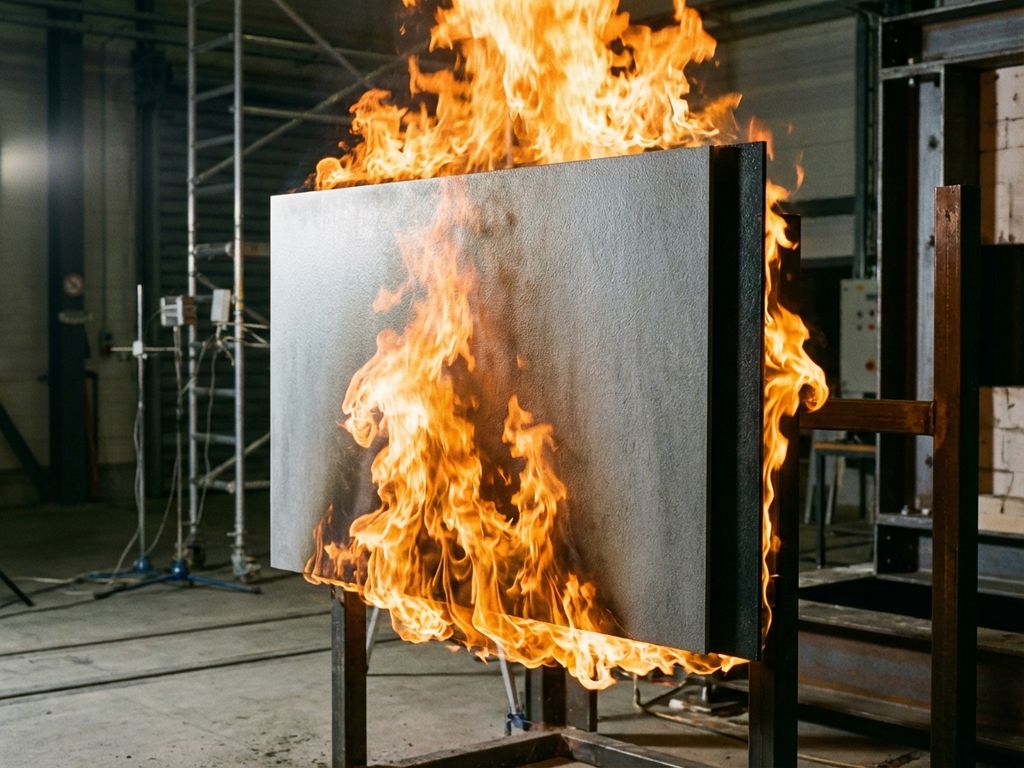
Ceramic facades offer excellent fire resistance due to their inorganic composition and high-temperature manufacturing process. Made from natural clay materials fired at over 1,200 degrees Celsius, ceramic facades are inherently non-combustible and maintain their structural integrity during fires. Their fire-resistant properties make them ideal for buildings requiring enhanced safety standards and compliance with strict fire regulations.
What makes ceramic facades naturally fire resistant?
Ceramic facades are naturally fire resistant because they’re made from inorganic clay materials that have already been subjected to extreme heat during manufacturing. The ceramic composition contains no combustible organic compounds, making it impossible for the material to ignite or contribute to the spread of fire.
The manufacturing process involves firing clay at temperatures exceeding 1,200 degrees Celsius, which is far higher than temperatures reached in typical building fires. This high-temperature treatment creates a vitrified surface that is completely stable under fire conditions. The ceramic material undergoes molecular changes during firing that eliminate any potential for combustion.
Key fire-resistant properties include zero organic content, complete thermal stability, and resistance to thermal shock. The dense, non-porous surface created during manufacturing prevents fire penetration and maintains structural integrity even under extreme heat exposure. These inherent characteristics make ceramic facades one of the safest cladding options available.
How do ceramic facades perform in actual fire situations?
During fires, ceramic facades maintain their structural integrity and don’t contribute to flame spread or smoke production. The material remains stable at temperatures well above those typically encountered in building fires, providing a protective barrier that helps contain fire rather than accelerate it.
Ceramic facades demonstrate excellent thermal resistance, withstanding direct flame contact without degradation. Unlike many cladding materials, they don’t release toxic gases when exposed to heat, helping to maintain indoor air quality during emergency situations. The material’s thermal mass also helps absorb and dissipate heat, reducing temperature transfer to the building structure.
Their non-combustible nature means ceramic facades won’t ignite, melt, or drip during fires. This behaviour is crucial for occupant safety and firefighting efforts, as falling debris from compromised cladding materials poses significant risks. Structural stability remains consistent throughout fire exposure, providing reliable protection for the building envelope and internal structure.
What fire safety standards do ceramic facades need to meet?
Ceramic facades must comply with building codes and fire safety regulations that vary by region and building type. Common standards include non-combustibility testing, flame spread ratings, and smoke development classifications. Most jurisdictions require testing according to established protocols such as ASTM, EN, or ISO standards.
Building regulations typically classify materials based on their reaction to fire, with ceramic facades generally achieving the highest safety ratings due to their non-combustible nature. For high-rise buildings, stricter requirements often mandate materials that won’t contribute to vertical fire spread or produce significant smoke.
Certification requirements include testing for surface burning characteristics, heat release rates, and toxic gas emissions. Installation standards also specify proper fixing methods and joint sealing to maintain fire-resistant performance. Regular compliance verification ensures ceramic facade systems meet evolving safety requirements and maintain their protective capabilities throughout the building’s lifespan.
How do ceramic facades compare to other cladding materials for fire safety?
Ceramic facades significantly outperform many alternative cladding materials in terms of fire safety. Unlike aluminium composite panels, which can combust and contribute to rapid fire spread, ceramic materials remain completely stable during fire exposure and provide superior protection for building occupants.
Compared to timber cladding, ceramic facades offer obvious advantages, as they cannot ignite or fuel fires. Natural stone provides similar fire resistance but often lacks the consistent performance and lighter-weight benefits of engineered ceramic systems. Fibre cement boards, while fire-resistant, may release harmful fibres when exposed to extreme heat.
This comparison highlights ceramic facades’ unique combination of complete non-combustibility, structural stability, and minimal smoke production. Performance advantages include zero contribution to fire load, excellent thermal barrier properties, and maintenance-free operation that preserves safety characteristics over time. These factors make ceramic facades particularly suitable for buildings where fire safety is paramount.
What additional fire safety benefits do ceramic facades provide?
Beyond basic fire resistance, ceramic facades offer thermal insulation properties that help prevent heat transfer during fires. The material’s low thermal conductivity creates an effective barrier that protects structural elements and helps maintain lower interior temperatures during external fire exposure.
The maintenance-free characteristics of ceramic facades ensure consistent fire safety performance throughout the building’s lifetime. Unlike materials that degrade or require protective coatings, ceramic surfaces maintain their fire-resistant properties without ongoing treatment or replacement concerns.
Design flexibility allows architects to achieve fire-safe buildings without compromising aesthetics or functionality. The wide range of available formats, colours, and surface textures means safety requirements don’t limit creative expression. Their lightweight nature also enables flexible installation methods while maintaining structural fire protection requirements.
How TONALITY® ceramic facades enhance fire safety
TONALITY® ceramic facades provide superior fire resistance through our advanced high-temperature manufacturing process and premium Westerwald clay materials. Our specialised firing technique at over 1,200 degrees Celsius creates exceptionally dense, non-combustible surfaces that exceed standard fire safety requirements.
Our ceramic facade systems offer enhanced fire protection through:
- Complete non-combustibility with zero organic content
- Superior thermal stability, maintaining integrity under extreme heat
- Lightweight construction reducing structural fire load
- Maintenance-free operation preserving safety performance
- Flexible installation options supporting fire-safe building design
- 100% recyclable materials supporting sustainable fire safety solutions
For buildings requiring the highest fire safety standards, TONALITY® Keramikfassaden provide proven protection with architectural flexibility. Contact us today to discuss how our advanced ceramic facade systems can enhance your project’s fire safety while achieving your design objectives.