

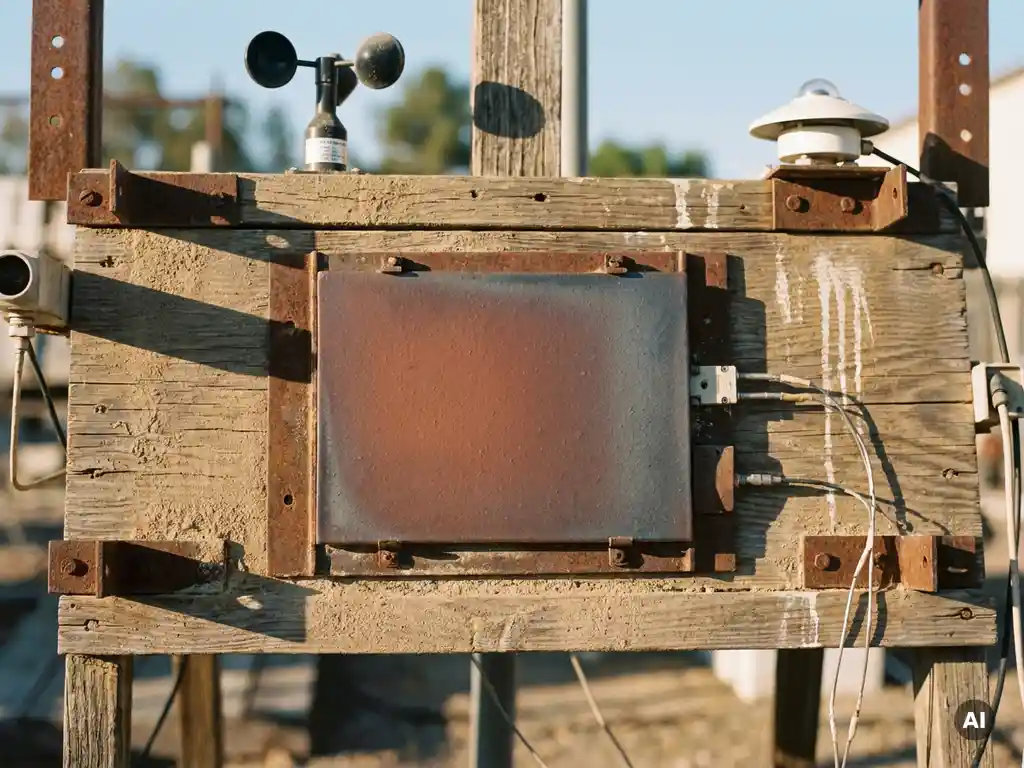
Facade colorfastness is tested through a combination of standardized laboratory methods, including accelerated UV weathering tests, salt spray exposure, and freeze-thaw cycling, which together simulate years of real-world exterior conditions in a controlled environment. The most widely used standard for facade materials is EN ISO 105-B06 for light fastness, alongside building-specific test protocols that assess color retention under combined weathering stressors. The sections below break down each key aspect of facade color stability, from how UV radiation causes fading to how you can verify a product’s performance before specifying it.
What tests are used to measure colorfastness in exterior facades?
Facade colorfastness is measured using a set of standardized tests that expose materials to concentrated UV radiation, moisture, temperature cycles, and chemical agents. The most common methods include xenon arc weathering tests (following ISO 4892-2), which simulate sunlight exposure at an accelerated rate, and QUV fluorescent UV testing, which targets the UV spectrum most responsible for color degradation. Results are measured using spectrophotometry to detect even minor shifts in color coordinates.
Beyond UV testing, exterior facade color stability is also assessed through:
- Salt spray testing (ISO 9227): Evaluates resistance to corrosive coastal or industrial atmospheres that can accelerate surface breakdown and color change.
- Freeze-thaw cycling: Measures how a material’s surface holds up through repeated expansion and contraction caused by temperature extremes, which can cause micro-cracking that affects appearance.
- Acid and alkali resistance tests: Determine how well a facade surface withstands cleaning agents, acid rain, and alkaline run-off from concrete structures above.
- Color measurement (CIE Lab): A precise numerical system used before and after weathering tests to quantify color change, even differences invisible to the naked eye are recorded.
These facade weathering tests are typically conducted by accredited third-party laboratories, and the results are expressed as a delta-E value (ΔE), where lower values indicate better color retention. For exterior applications, a ΔE below 1 is generally considered excellent, meaning the color shift is imperceptible under normal viewing conditions.
How does UV radiation cause facade colors to fade over time?
UV radiation causes facade colors to fade by breaking down the chemical bonds in pigments, binders, and surface coatings. When UV photons strike a colored surface, they transfer energy that destabilizes the molecular structure of pigment compounds, causing them to lose their ability to absorb and reflect specific wavelengths of light. The result is a gradual, cumulative shift toward lighter, washed-out, or altered hues.
The mechanism works differently depending on the material. In organic pigments, commonly used in paints, coatings, and polymer-based cladding, the carbon-based molecular chains are particularly vulnerable to photodegradation. In materials where color is applied as a surface layer rather than integrated throughout, UV damage is compounded because the protective layer erodes first, exposing the underlying substrate.
Climate and orientation intensify the effect. South-facing facades in high-altitude or low-latitude locations receive significantly more UV exposure than north-facing ones. Urban air pollution adds ozone and nitrogen oxides to the mix, which can further accelerate surface oxidation and color change. This is why facade surface choice matters so much for long-term appearance in demanding environments.
What’s the difference between glazed and unglazed ceramic facade colors?
The key difference is where the color lives. Glazed ceramic facades carry their color in a glass-like surface coating fused onto the tile, while unglazed ceramic facades derive their color from the clay body itself, fired uniformly throughout the material. This distinction has significant implications for long-term color stability under exterior conditions.
Glazed ceramic facade tiles
Glazed tiles offer a wide range of colors and finishes, including high-gloss and metallic effects that are difficult to achieve in raw clay. The glaze layer is highly resistant to moisture and staining because it creates a sealed, non-porous surface. However, if the glaze is physically damaged through impact or abrasion, the color layer can be compromised. The glaze itself is typically inorganic and UV-stable, so color fading from light exposure is minimal.
Unglazed ceramic facade tiles
Unglazed ceramics fired at high temperatures, such as those produced through a sinter firing process at over 1,200 degrees Celsius, achieve their color through the natural iron content of the clay and the addition of mineral pigments that are integrated throughout the body. Because the color runs through the entire thickness of the tile, surface wear or minor damage does not reveal a different underlying layer. This makes unglazed ceramic particularly robust for exterior facade applications where long-term UV resistance and color permanence are priorities.
In practice, both types perform well when produced to high standards, but unglazed, through-body ceramic offers an additional layer of resilience because color stability is not dependent on the integrity of a surface coating.
How long do ceramic facade colors last compared to other materials?
Ceramic facade colors are among the most durable of any cladding material, with well-manufactured ceramic tiles retaining their appearance for several decades without significant color change. This is because ceramic pigmentation is inorganic and fired at extreme temperatures, making it chemically stable and inherently resistant to UV degradation, moisture, and atmospheric pollutants.
Comparing ceramic to other common facade materials:
- Painted or coated metal panels: Surface coatings typically require repainting or recoating every 10 to 20 years, depending on exposure and coating quality. UV-induced chalking and fading are common.
- Fiber cement: Pigmented fiber cement can fade noticeably over 10 to 15 years, particularly in high-UV environments, and often requires repainting to maintain appearance.
- HPL (high-pressure laminate) panels: Quality HPL facades offer reasonable UV resistance, but the surface layer can degrade over time, affecting color consistency.
- Brick and natural stone: Like ceramic, these are inorganic materials with excellent color longevity, though natural stone is more variable in color consistency from the outset.
The lifecycle advantage of ceramic is substantial. A facade that retains its color without intervention for 40 or 50 years represents a meaningful reduction in total maintenance effort and lifecycle cost compared to materials that require periodic refinishing. You can explore real-world ceramic facade projects to see how ceramic performs across different climates and building types over time.
What environmental factors affect facade color stability most?
The environmental factors that most significantly affect facade color stability are UV intensity, moisture cycling, temperature extremes, and airborne pollutants. These factors rarely act in isolation, it is their combined and repeated action that drives color degradation in exterior facade materials over time.
- UV intensity and solar radiation: The single largest driver of color fading in most materials. Facade orientation, geographic latitude, and altitude all determine cumulative UV load. South-facing facades in sunny climates are the most demanding environment.
- Moisture and humidity: Water penetrating micro-pores or surface cracks can cause leaching of soluble pigments, efflorescence, and freeze-thaw damage that disrupts surface integrity and alters appearance.
- Temperature fluctuations: Repeated thermal expansion and contraction stresses surface coatings and adhesion layers, which can cause micro-cracking, delamination, and eventually visible color change.
- Acid rain and air pollution: Industrial emissions and vehicle exhaust create acidic precipitation that can chemically attack certain pigments and surface coatings, particularly in urban environments.
- Biological growth: Algae, moss, and lichen can colonize porous surfaces, staining them and altering the perceived color over time. Dense, low-porosity surfaces are far more resistant to biological colonization.
Understanding the specific environmental profile of a building’s location is essential when specifying exterior facade color stability. A coastal site combines UV, salt spray, and humidity in ways that demand materials tested under all three conditions simultaneously.
How can you verify a facade product’s colorfastness before specifying it?
To verify a facade product’s colorfastness before specifying it, request third-party test reports from accredited laboratories that document performance under standardized weathering protocols. Look specifically for results from xenon arc UV testing, freeze-thaw cycling, and acid resistance tests, along with delta-E color change values measured before and after exposure. Reputable manufacturers make these documents available on request.
Beyond test reports, consider the following verification steps:
- Request physical samples: Comparing a weathered sample (or a sample that has been UV-tested) against a fresh sample side by side gives a direct visual indication of color stability. Some manufacturers offer material samples and technical downloads for this purpose.
- Check for relevant certifications: Look for CE marking and compliance with EN 14411 (ceramic tiles) or equivalent facade-specific standards. Building material classification (such as A1 non-combustibility) can also indicate the inorganic, stable nature of the pigmentation.
- Review installed references: Visiting or reviewing documented projects where the same product has been installed for five or more years in a comparable climate provides real-world evidence of color performance that no laboratory test can fully replicate.
- Ask about production consistency: Color stability starts at manufacturing. Products produced with tight dimensional and color tolerances, fired at consistent high temperatures, are more likely to deliver uniform, long-lasting results across an entire facade.
- Evaluate surface porosity data: Water absorption rates (measured per EN ISO 10545-3 for ceramic) are a reliable proxy for long-term color stability, lower absorption means less vulnerability to moisture-driven degradation and biological staining.
Specifying a facade material without verified colorfastness data is a significant risk for any project. The effort to review documentation upfront is far smaller than managing a facade that shows visible color variation or fading within a few years of completion.
How TONALITY® supports long-term facade color stability
TONALITY® ceramic facade systems are engineered specifically for the demands of long-term exterior use, combining raw material quality with a high-temperature sinter firing process that locks color and surface performance in at a fundamental level. For architects, specifiers, and developers who need confidence in facade color stability over the full lifecycle of a building, TONALITY® offers a concrete, well-documented solution.
Key features that directly address the colorfastness challenges covered in this article include:
- Sinter firing above 1,200°C: Creates a dense, low-porosity surface that is inherently resistant to UV degradation, moisture infiltration, and biological colonization, the three main drivers of exterior color change.
- Permanent UV resistance: Color is integrated into the ceramic body and fired at temperatures that render pigments chemically stable, ensuring no surface coating to degrade or recoat over time.
- Integrated graffiti protection: The non-porous surface resists staining and simplifies cleaning without affecting color integrity.
- Building material class A1: Non-combustible classification confirms the inorganic, mineral nature of the material, the same properties that make it UV-stable and colorfast for decades.
- Precision manufacturing: Tolerances within one millimeter and consistent firing conditions ensure color uniformity across large facade surfaces and across production batches.
- 100% recyclable and deconstruction-ready: Long lifecycle performance is matched by end-of-life sustainability, supporting total cost of ownership thinking for the full building lifecycle.
[cta_contact_form]
If you are specifying a facade and want to verify colorfastness performance with technical documentation, physical samples, or project references, the team at TONALITY® is ready to support your decision. Get in touch with the sales team to discuss your project requirements and request the documentation you need to specify with confidence.
Related Articles
- Can terracotta facades be installed without adhesive for easier recovery?
- What is the lifespan of a terracotta facade system compared to brick?
- Why is sustainable architectural design important in 2026?
- 6 Common Terracotta Specification Mistakes (And How to Avoid Them)
- How often should terracotta facades be inspected?