

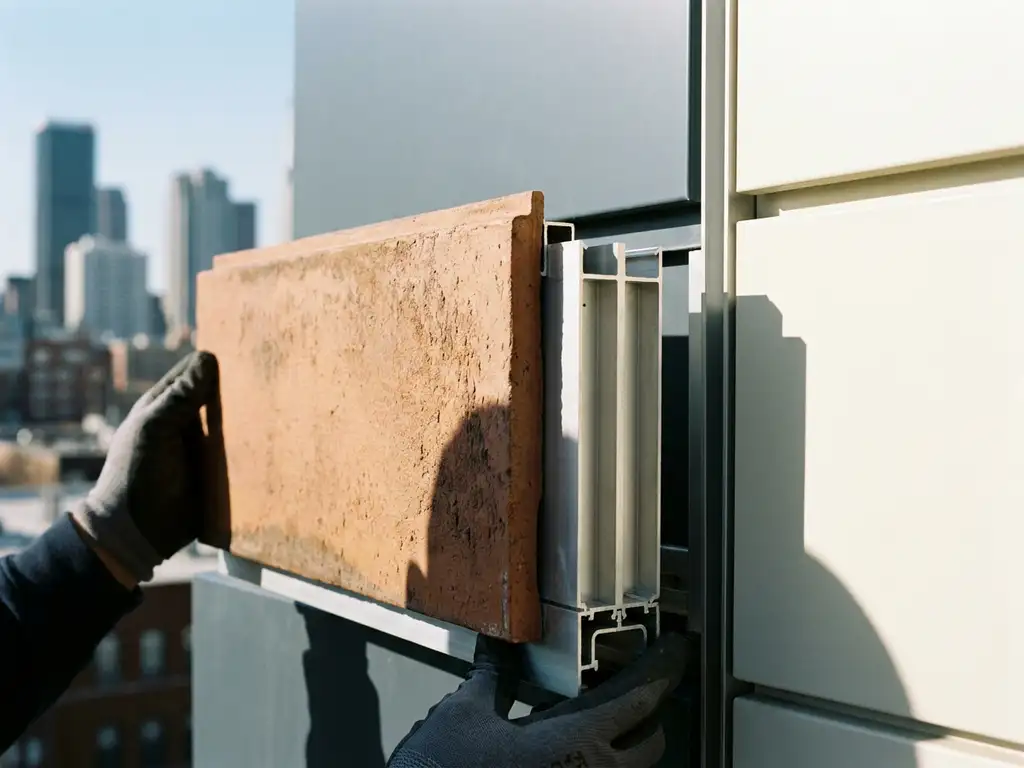
Terracotta and ceramic facade systems sold into the US market need to comply with a specific set of building codes, fire ratings, structural certifications, and third-party test standards before they can be legally specified and installed. The most important certifications center on fire performance, structural load capacity, and seismic resistance, and the exact requirements vary by state and project type. The sections below walk through each certification category so contractors and project managers can approach specifications with confidence.
Which US building codes apply to terracotta facade systems?
Terracotta facade systems in the US are primarily governed by the International Building Code (IBC), which most states adopt with local amendments. The IBC sets requirements for exterior wall assemblies, including fire resistance, structural loads, and material classification. Alongside the IBC, ASTM International standards and the codes of local authorities having jurisdiction (AHJ) define the technical benchmarks a ceramic facade system must meet.
In practice, the IBC references several ASTM test methods that apply directly to ceramic cladding, including standards for freeze-thaw resistance, water absorption, and modulus of rupture. Because each state can amend the base IBC, a facade system approved for a project in Texas may need additional documentation for a project in California or New York. Project managers should always confirm which edition of the IBC a jurisdiction has adopted and whether any state-specific amendments affect exterior cladding systems. Reviewing available terracotta surfaces and formats early in the design process can also help teams narrow down which product configurations will require documentation for a given jurisdiction.
Beyond the IBC, the International Energy Conservation Code (IECC) increasingly influences facade specification decisions, particularly for continuous insulation requirements in rainscreen assemblies. Ceramic facade systems installed as part of a ventilated rainscreen can contribute to the thermal performance requirements the IECC demands, which makes understanding both codes essential for compliant design.
What fire rating certifications are required for terracotta facades in the US?
US building codes require exterior cladding materials to meet specific fire performance classifications, and the most critical certification for terracotta facade systems is ASTM E136, which tests non-combustibility. Ceramic and terracotta elements that pass ASTM E136 are classified as non-combustible, which is the highest fire material classification available and satisfies IBC requirements for fire-rated exterior wall assemblies on most building types.
For full wall assembly testing, NFPA 285 is the standard most commonly required for multi-story buildings using combustible components anywhere in the wall system. Even when the ceramic tiles themselves are non-combustible, the overall cladding assembly, including insulation, air barriers, and substructure components, must be tested as a system under NFPA 285 to demonstrate that fire does not propagate vertically through the facade. This is particularly relevant for projects over 40 feet in height or those classified as Type I through Type III construction under the IBC.
High-quality ceramic facade systems, such as those produced using a sinter firing process at temperatures exceeding 1,200 degrees Celsius, are inherently non-combustible and classified as building material class A1 under European standards. When specifying such systems for the US market, manufacturers should provide ASTM E136 test reports or equivalent documentation that demonstrates the same non-combustibility performance recognized under IBC requirements. Requesting product samples and technical downloads ahead of the specification phase allows teams to review fire performance data before committing to a system.
What structural and seismic certifications does a terracotta facade system need?
Terracotta facade systems must demonstrate structural adequacy through testing and engineering documentation that covers dead load capacity, wind load resistance, and, in seismic zones, dynamic movement tolerance. In the US, ASTM C1405 and ASTM C1186 are commonly referenced for flat ceramic units, while wind resistance is typically validated through ASTM E330 or equivalent pressure testing of the full cladding assembly.
Wind load and dead load requirements
Wind load requirements are derived from ASCE 7, the standard for minimum design loads in buildings, which sets wind pressure values based on geographic location, building height, and exposure category. Facade manufacturers need to provide test data or engineered calculations showing their system meets the wind pressures applicable to the project’s location. Dead load documentation is equally important: lighter facade systems reduce demands on the primary structure and substructure, which can simplify engineering and accelerate approvals.
Seismic performance documentation
In seismic design categories C through F, which cover much of California, the Pacific Northwest, and parts of the central US, facade systems must accommodate inter-story drift without failure. This typically requires either seismic test data or engineering analysis demonstrating that the attachment system can deflect and recover without the ceramic elements detaching. Aluminum retaining profile systems with engineered tolerances are generally well suited to meeting these requirements, provided the manufacturer can supply the necessary drift accommodation data.
How does third-party testing differ from manufacturer self-certification?
Third-party testing means an independent, accredited laboratory conducts the performance tests and issues the test report, with no involvement from the manufacturer in the outcome. Manufacturer self-certification means the company declares compliance based on its own internal testing or calculations. For US building permit submissions, third-party test reports from accredited labs are almost always required and carry significantly more weight with building officials than self-certified documentation.
Accredited testing laboratories in the US are typically recognized under the International Laboratory Accreditation Cooperation (ILAC) framework or specifically accredited by bodies such as the International Accreditation Service (IAS) or A2LA. When a facade manufacturer provides test reports, contractors should confirm the lab’s accreditation status and verify that the test was conducted on the specific product configuration being installed, not a different profile or thickness. Reviewing completed project references from a manufacturer can also indicate whether their systems have a track record of passing third-party scrutiny across different building types and jurisdictions.
Self-certification documents, such as manufacturer datasheets or declarations of performance, can be useful as preliminary screening tools, but they should never substitute for third-party test reports in permit documentation. In liability terms, third-party certification also protects contractors: if a facade system fails and only self-certification was on file, the contractor who accepted that documentation may share in the liability exposure.
Do terracotta facade systems need sustainability or green building certifications?
Sustainability certifications are not legally mandatory for terracotta facade systems in the US, but they are increasingly required by project owners pursuing LEED (Leadership in Energy and Environmental Design) or WELL Building Standard ratings. Ceramic and terracotta cladding can contribute credits in several LEED categories, including materials and resources, indoor environmental quality, and energy performance when used as part of a ventilated facade assembly.
For LEED v4 and v4.1 projects, the most relevant documentation includes Environmental Product Declarations (EPDs) and Health Product Declarations (HPDs). An EPD quantifies the environmental impact of a product across its lifecycle, from raw material extraction through end of life, and is increasingly expected by specifiers on public and institutional projects. Ceramic facades have a natural advantage here: they are produced from mineral raw materials, contain no combustible components, and are fully recyclable at the end of their service life, all of which contribute positively to a product’s EPD profile.
Beyond LEED, projects targeting BREEAM certification (common for European-owned developments built in the US) or the Living Building Challenge may require additional transparency documentation. Contractors working on sustainability-focused projects should request EPDs and HPDs from facade manufacturers early in the specification process to avoid delays at the materials approval stage.
What should contractors verify before installing a terracotta facade system?
Before installation begins, contractors should verify that the facade system has complete third-party test documentation covering fire performance, structural loads, and any seismic requirements applicable to the project’s location. The most important documents to collect are: ASTM E136 non-combustibility test reports, NFPA 285 assembly test reports (for applicable building types), wind load test data referenced to ASCE 7, and any seismic drift accommodation documentation.
- AHJ pre-approval: Confirm that the local authority having jurisdiction has reviewed and accepted the system documentation before ordering materials. Some jurisdictions require a formal product approval or listing before installation can proceed.
- Installation instructions and tolerances: Verify that the manufacturer’s installation guide matches the specific profile and substructure being used on the project. Ceramic facade systems with engineered aluminum retaining profiles should include tolerances for thermal movement and, where required, seismic drift.
- Warranty and quality documentation: Request documentation confirming the ceramic elements meet dimensional tolerances. High-quality systems can be produced to within one millimeter across a wide range of formats, which affects alignment during installation and the long-term appearance of the facade.
- Substructure compatibility: Confirm that the dead weight of the ceramic system is compatible with the structural capacity of the substructure. Lightweight ceramic systems with low surface weight are particularly well suited to timber frame construction, where reduced substructure requirements can streamline both engineering and installation.
- Sustainability documentation: If the project has a LEED or other green building target, collect EPDs and HPDs before the materials submittal deadline.
Taking the time to verify these documents before mobilizing on site protects the project schedule, reduces the risk of permit delays, and ensures that the facade system will perform as specified for the full life of the building. A ceramic facade system that arrives on site with complete, third-party verified documentation is one fewer variable for a project manager to manage under pressure.
How TONALITY® helps you meet US certification requirements
Navigating US building codes, fire ratings, and third-party testing requirements is demanding — and choosing the right facade manufacturer makes a significant difference. TONALITY® ceramic facade systems are engineered to meet the full range of US compliance requirements, with documentation ready to support permit submissions and AHJ reviews from the outset. Here is what TONALITY® brings to the table:
- Non-combustibility: TONALITY® panels are sinter-fired at temperatures exceeding 1,200°C, making them inherently non-combustible and compliant with ASTM E136 classification requirements.
- Third-party verified test reports: Complete fire, structural, and wind load test documentation from accredited independent laboratories is available for permit submissions.
- Seismic and wind load compliance: Engineered aluminum retaining profile systems are designed to accommodate inter-story drift and meet ASCE 7 wind pressure requirements across seismic design categories.
- Sustainability documentation: EPDs and HPDs are available to support LEED v4 and v4.1 submissions, along with BREEAM and other green building targets.
- Dimensional precision: TONALITY® panels are manufactured to within one millimeter tolerance across a wide range of formats, ensuring clean alignment and long-term facade performance.
Whether you are specifying a high-rise in California or a mid-rise institutional building in the Northeast, TONALITY® provides the technical documentation, product quality, and expert support to keep your project on track. Contact the TONALITY® team to discuss your project requirements and request the certification documentation you need.