

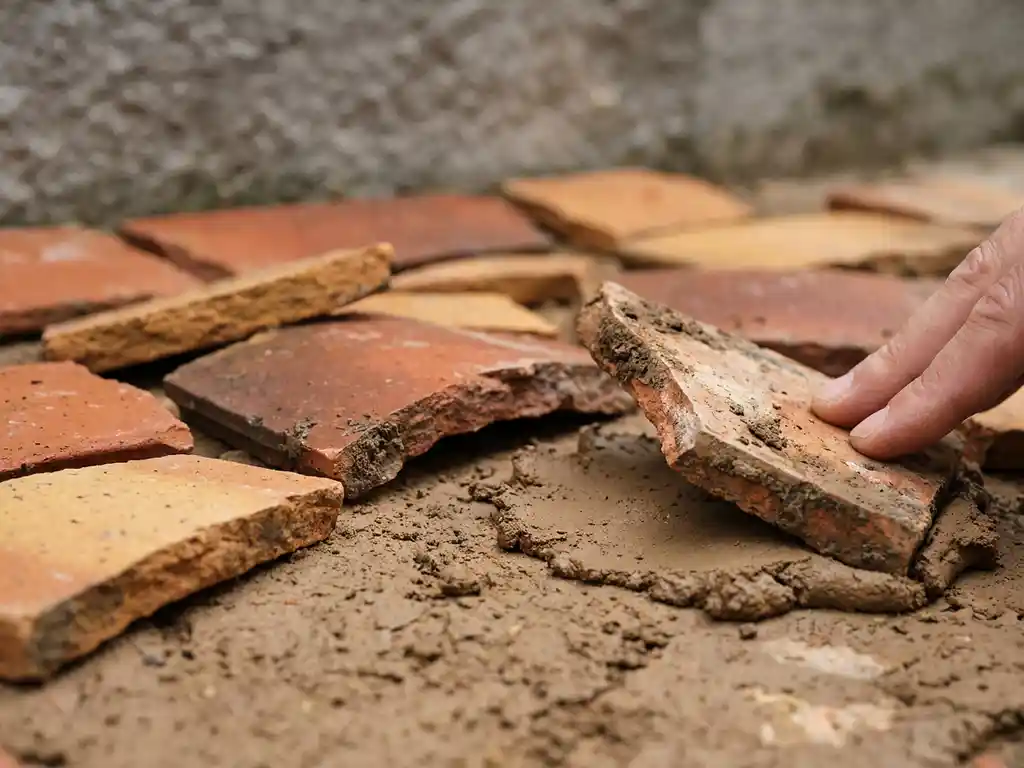
Upcycling retains more material value than downcycling. Upcycling transforms end-of-life terracotta facade materials into products of equal or greater quality, preserving the ceramic’s inherent properties. Downcycling, by contrast, reduces material quality with each processing cycle, typically converting ceramic waste into lower-grade aggregate or fill material. For facade contractors and project managers working with terracotta cladding, understanding this distinction has real consequences for how a project contributes to the circular economy.
As sustainability requirements tighten across European construction markets in 2026, the recyclability pathway of your facade material is no longer a secondary consideration. The sections below unpack each stage of the recycling process, from how terracotta is typically downcycled to what genuine upcycling looks like in practice, and why the decisions made at installation directly influence which outcome is achievable.
Which process retains more material value — downcycling or upcycling?
Upcycling retains significantly more material value than downcycling. In upcycling, the ceramic material is reprocessed into a product of comparable or higher quality, keeping the embodied energy and raw material investment intact. Downcycling sacrifices that investment by converting high-quality ceramic into a lower-grade material that cannot re-enter the same value chain.
This distinction matters because ceramic facade tiles represent a substantial input of energy, raw material, and manufacturing precision. When a terracotta facade element is downcycled into road base or coarse aggregate, the value embedded in its production is largely lost. When the same element is upcycled back into ceramic production or repurposed into an equivalent-grade product, that investment continues to deliver value.
In the context of terracotta facade recycling, the circular economy ideal is to keep materials at their highest possible use level for as long as possible. Upcycling achieves this. Downcycling is a step down the value ladder, and once that step is taken, it is difficult to reverse. You can explore how terracotta surfaces and formats are engineered with longevity and material quality in mind to better understand what is at stake in that value chain.
How is terracotta facade material typically downcycled?
Terracotta facade material is typically downcycled by crushing or grinding end-of-life ceramic elements into granulate or aggregate, which is then used as sub-base fill, road construction material, or low-grade drainage aggregate. The process is straightforward but irreversible, and the resulting material cannot be returned to ceramic production without significant reprocessing.
The reason downcycling is so common in facade demolition projects is largely logistical. Mixed demolition waste, contaminated surfaces, or adhesive-bonded ceramic systems make clean material separation difficult. When facade tiles are bonded directly to substrates with mortar or adhesive, separating them cleanly enough for higher-value recycling becomes time-consuming and costly. The path of least resistance is often to crush the material and use it as fill.
This is not without value. Downcycled ceramic aggregate can displace virgin aggregate in some applications, reducing extraction demand. But it represents a significant reduction in material quality compared to what the original terracotta facade tile was capable of. For project teams focused on ceramic facade sustainability, downcycling should be seen as a last resort rather than a recycling success.
What does upcycling look like for ceramic facade tiles?
Upcycling ceramic facade tiles means recovering the elements intact or in large sections and reintroducing them into a use that matches or exceeds their original quality. This can include direct reuse of undamaged tiles in new facade projects, reprocessing clean ceramic material back into raw input for new tile production, or repurposing tiles into high-quality interior or architectural applications.
The most effective form of upcycling is direct reuse. If facade tiles can be removed without damage, cleaned, and reinstalled on another building, no reprocessing is required at all. This preserves the full material value and avoids any energy expenditure in remanufacturing.
Where direct reuse is not possible, clean ceramic material from facade tiles can re-enter the production stream as a raw material input. High-quality terracotta, fired at temperatures exceeding 1,200 degrees Celsius, has a dense, stable microstructure that makes it a valuable ceramic feedstock. The key condition for this pathway is clean separation: the ceramic must arrive at the recycling facility free from adhesives, sealants, and mixed materials.
This is where ventilated facade systems with mechanical fixing offer a genuine advantage. Systems where ceramic elements interlock with aluminum retaining profiles and can be dismantled without cutting or breaking make clean recovery far more achievable than bonded alternatives. Requesting samples and technical documentation early in the specification process allows project teams to verify that a system genuinely supports component-level disassembly before committing to it.
Why does facade system design affect recyclability outcomes?
Facade system design directly determines whether end-of-life ceramic elements can be recovered cleanly enough for upcycling. Systems that rely on adhesive bonding or mortar bedding fuse the ceramic to the substrate, making non-destructive removal difficult. Mechanically fixed ventilated facade systems, by contrast, allow individual elements to be removed intact, sorted by material type, and reused or reprocessed at high value.
The principle of design for disassembly is central to circular construction thinking. A facade that cannot be taken apart without destroying its components is, by design, a downcycling outcome waiting to happen. A facade that can be deconstructed component by component, with ceramic elements separated from aluminum profiles and substructure, creates the conditions for genuine material recovery.
This is not just a theoretical concern. When a building reaches the end of its life or undergoes renovation, the ease of deconstruction directly affects what happens to the materials. If separating ceramic from the substrate takes significant time and equipment, contractors will default to demolition and crushing. If the system can be dismantled quickly and cleanly, the economic case for recovery improves substantially.
Facade systems designed with low dead weight and mechanical fixing also reduce the substructure requirements, which means fewer mixed materials to separate at the end of life. Every component that can be sorted cleanly by material type is a component that can follow its optimal recycling pathway. Completed terracotta facade projects demonstrate how these design principles translate into real buildings across a range of typologies and scales.
How do downcycling and upcycling compare in terms of CO₂ impact?
Upcycling has a substantially lower CO₂ impact than downcycling when measured across the full material lifecycle. Downcycling destroys the embodied carbon investment of the original ceramic production and requires new virgin materials to replace the lost capacity. Upcycling preserves that investment, reducing the need for energy-intensive raw material extraction and kiln firing in new production cycles.
Ceramic facade tiles carry significant embodied energy from their firing process. Producing high-density, frost-resistant terracotta at temperatures above 1,200 degrees Celsius requires substantial thermal input. When that material is crushed into aggregate and discarded from the ceramic value chain, the carbon cost of its production is written off entirely. A replacement tile requires the same energy input all over again.
When the same tile is recovered and reused directly, or its material re-enters ceramic production, a portion of that embodied carbon is effectively amortized across multiple use cycles. The longer a ceramic element remains in productive use, the lower its per-year carbon footprint becomes.
For project teams working to meet embodied carbon targets or contribute to whole-life carbon assessments, the recyclability pathway of the facade material is a meaningful variable. Specifying a facade system that supports upcycling rather than defaulting to downcycling can make a measurable difference to a project’s environmental credentials.
Should facade contractors plan for upcycling at the installation stage?
Yes, facade contractors should plan for upcycling at the installation stage. The decisions made during installation, particularly around fixing method, material separation, and component documentation, directly determine which recycling pathways are available decades later. Retrofitting for recyclability after installation is not possible.
Practical planning for upcycling starts with system selection. Choosing a mechanically fixed ventilated facade system over an adhesive-bonded one is the single most impactful decision a contractor can make for end-of-life material recovery. Beyond system type, the following installation practices support better recyclability outcomes:
- Keeping ceramic elements, aluminum profiles, and substructure components as separate, identifiable layers without cross-contamination
- Avoiding sealants or adhesives that bond ceramic to metal or substrate where mechanical fixing alone would suffice
- Documenting the facade system components and fixing method so future contractors understand how to dismantle without damage
- Selecting tile formats and profiles that are standard enough to be reusable in other projects
The terracotta building materials circular economy depends on decisions made at installation, not just at demolition. A facade contractor who installs a system with deconstruction in mind is contributing to a material cycle that retains value across multiple building lifetimes. That is not just an environmental benefit; it reflects the kind of long-term thinking that distinguishes high-quality facade work from short-term, cost-focused approaches.
For contractors working with ceramic cladding systems that are 100% recyclable and designed for component-level separation, the infrastructure for upcycling already exists. The question is whether the installation method preserves access to it.
How TONALITY® supports upcycling over downcycling
TONALITY® terracotta facade systems are engineered from the outset with end-of-life material recovery in mind. Rather than leaving recyclability as an afterthought, the system design actively enables the conditions that make upcycling achievable in practice. Specifically, TONALITY® addresses the key barriers that cause ceramic facade materials to default to downcycling:
- Mechanical fixing without adhesives: TONALITY® panels are secured using aluminum retaining profiles that allow individual elements to be removed cleanly and without damage, preserving their value for direct reuse or high-grade reprocessing.
- 100% recyclable ceramic material: The terracotta used in TONALITY® systems is fully recyclable and can re-enter ceramic production as a raw material input, keeping embodied energy and material value within the value chain.
- Component-level separation: The ventilated facade construction separates ceramic, aluminum, and substructure into clearly distinct layers, making clean material sorting at deconstruction straightforward rather than costly.
- Documented system transparency: TONALITY® provides technical documentation that supports future contractors in dismantling the facade correctly, reducing the risk that the system defaults to demolition and crushing at end of life.
If you are specifying a terracotta facade and want to ensure the material pathway supports upcycling rather than downcycling, contact the TONALITY® team to discuss system options, recyclability documentation, and how the facade can be designed for the circular economy from day one.
Related Articles
- What is a prefabricated facade renovation system?
- Can single-layer ceramic elements simplify facade installation?
- How do you specify ceramic cladding for a high-rise facade project?
- How do building owners track the residual value of terracotta facade panels?
- How do ceramic tiles compare to other sustainable options?