

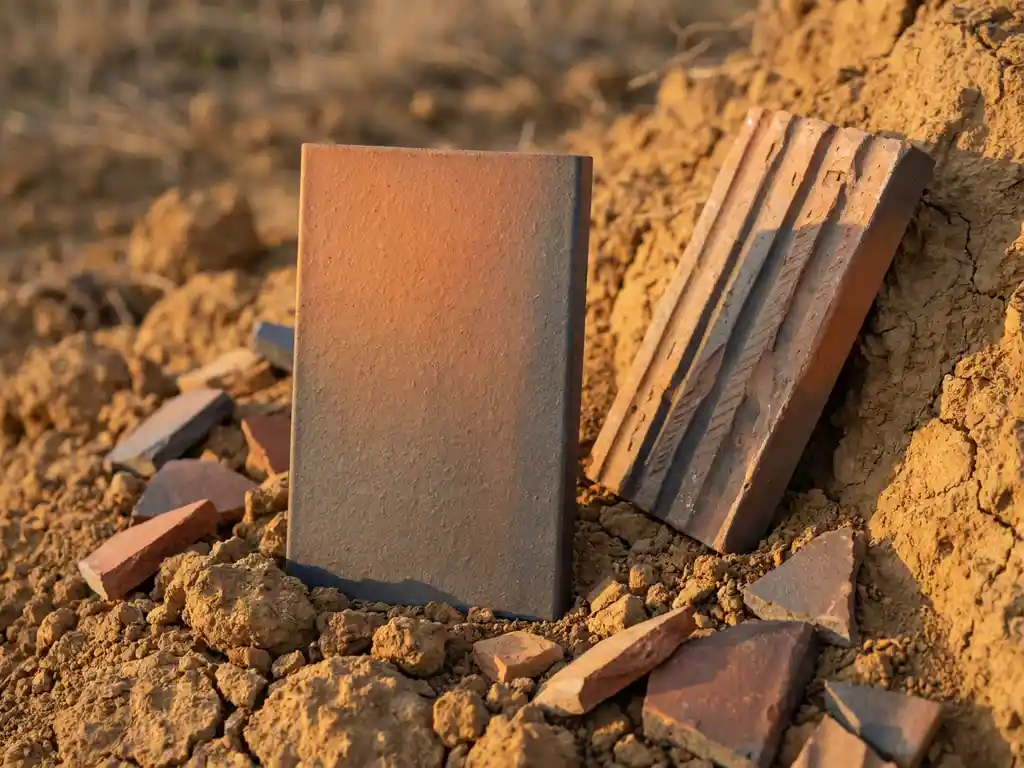
A facade material can be recyclable without being truly circular. Recyclable means the material can be processed into something new at end of life. Truly circular means the material is designed from the outset to re-enter use with minimal energy, no loss of quality, and without producing waste at any stage of its lifecycle.
The distinction matters most for construction professionals and specifiers who need to evaluate long-term environmental performance, not just tick a sustainability box. The sections below unpack each dimension of circularity as it applies to facade materials.
Can a facade material be recyclable but not truly circular?
Yes, a facade material can be recyclable without being truly circular. Recyclability is a single end-of-life property, while circularity describes the entire material lifecycle, from raw material extraction through production, installation, use, and recovery. A material that can technically be recycled but requires energy-intensive processing, downcycles into a lower-grade product, or is difficult to separate from adhesives and substructures falls well short of circular economy principles.
Consider a facade panel bonded directly to a substrate with adhesive mortar. Even if the panel material itself is technically recyclable, the bonded installation makes clean separation at end of life almost impossible. The result is either landfill or a costly, energy-heavy recycling process that produces a degraded material rather than a recovered one. In circular economy construction, this is called downcycling, and it represents a significant gap between the claim of recyclability and genuine circular performance.
The distinction also applies to production. A material that uses virgin raw materials in every production cycle, even if it accepts recycled content in theory, is not operating within a closed loop. True circularity requires that recovered materials can re-enter the same production stream without quality loss, which is a far more demanding standard than simple recyclability. Reviewing technical documentation and material samples is one practical way to verify these claims before specifying.
What makes a facade material truly circular?
A truly circular facade material meets four criteria simultaneously: it is made from materials that can be continuously recovered and reused without quality degradation, it is manufactured with low embodied energy, it is installed in a way that allows non-destructive disassembly, and it is designed so that components can be sorted by material type at end of life. Meeting all four criteria, rather than just one, defines genuine circularity.
The raw material dimension is foundational. Materials derived from abundant natural mineral deposits, such as clay, have inherently low extraction risk and can be processed without rare or synthetic inputs. This contrasts with composite materials that combine plastics, metals, and organic binders in ways that are difficult or impossible to separate later.
Production efficiency matters equally. A sinter-firing process that consolidates the material into a dense, stable structure at high temperature produces a product that does not require surface coatings, sealants, or chemical treatments to perform. That means fewer material inputs over the product’s life and no coating waste at end of life.
Disassembly design is often the weakest link in facade sustainability claims. A facade system that uses mechanical fixing rather than adhesive bonding allows individual elements to be removed, inspected, and reused or recycled without destroying either the element or the substructure. This is the practical foundation of circular facade material lifecycle management. Understanding the full range of available surfaces and formats helps specifiers assess how material composition and finish affect end-of-life sortability.
How does ceramic compare to other facade materials on circularity?
Ceramic performs strongly against competing facade materials on circularity because it is made from a single, stable mineral material, requires no surface coatings to maintain performance, and can be mechanically fixed for clean disassembly. Compared to composite cladding, fiber cement, or coated metal panels, ceramic does not degrade, delaminate, or require chemical renewal over its service life.
Fiber cement and composite panels typically combine organic and inorganic components that cannot be cleanly separated for recycling. At end of life, these materials are usually classified as mixed waste and sent to landfill or incineration. Metal panels can be recycled, but their production is energy-intensive, and the recycling process itself requires significant energy input, reducing the net circular benefit.
Ceramic facade tiles produced through high-temperature sintering achieve a material density and surface stability that eliminates the need for coatings, sealants, or periodic treatment. This means the material that leaves the factory is the same material that gets recovered at end of life, with no added substances complicating the recycling stream. The 100% recyclability of ceramic is a direct result of this material purity, not a theoretical claim dependent on ideal processing conditions.
The low surface weight of single-layer ceramic facade systems, around 40 kilograms per square meter, also has a circularity benefit that is often overlooked. Lighter cladding requires less substructure material, which means less total material in the building envelope and less material to manage at end of life. Completed building references illustrate how these material properties translate into real project outcomes across different construction types.
What role does facade system design play in end-of-life reuse?
Facade system design is the single most important factor determining whether recyclable facade materials can actually be recovered and reused in practice. A material with excellent recyclability credentials becomes a waste problem if the installation method makes non-destructive removal impossible. Systems that use mechanical interlocking profiles rather than adhesive bonding make clean disassembly achievable with standard tools and minimal labor.
The principle of design for disassembly is now central to circular economy construction standards. In practical terms, this means facade systems where ceramic elements slot into vertical aluminum retaining profiles, allowing individual tiles to be removed and replaced without disturbing the surrounding installation. This approach serves two circularity goals at once: it enables targeted repair or replacement during the building’s service life, extending the useful life of both the element and the substructure, and it allows full deconstruction and material separation at end of life.
Component sortability is equally important. A facade system where ceramic elements, aluminum profiles, and fixing hardware can be separated by material type at deconstruction enables each material stream to enter its optimal recycling or recovery route. Mixed-material assemblies that cannot be sorted without destruction undermine the recyclability of every material involved, regardless of how recyclable each component might be in isolation.
This logic applies directly to mechanically fixed ceramic systems: ceramic elements are profiled onto aluminum retaining profiles in a mount-and-done installation that is equally straightforward to reverse. This makes such systems genuinely compatible with circular building practices, not just compliant on paper.
Which certifications and standards define circular facade materials?
Several certifications and standards provide frameworks for evaluating circular facade materials. The most relevant are Environmental Product Declarations (EPDs) under EN 15804, the EU Construction Products Regulation, building material class designations such as A1 for non-combustibility, and lifecycle assessment frameworks aligned with ISO 14040 and 14044. Together, these tools allow specifiers to evaluate a material’s environmental performance across its full lifecycle rather than at a single point.
An EPD is the most useful document for circular economy construction assessment because it quantifies environmental impacts across the full lifecycle, including raw material extraction, manufacturing, transport, installation, use phase, and end-of-life scenarios. EPDs produced under EN 15804 follow a standardized methodology, making it possible to compare facade materials on a consistent basis.
Building material class A1 is directly relevant to circular sustainable facade cladding because non-combustible materials can be incorporated into a wider range of construction types, including timber frame buildings, without requiring additional fire protection layers. This expands the contexts in which a circular material can be specified and reduces the total material input required in the building envelope.
The EU’s Level(s) framework for sustainable buildings and the emerging EU Green Deal construction standards are increasingly requiring manufacturers to demonstrate circularity through documented end-of-life scenarios, not just recyclability claims. For facade materials, this means providing evidence of disassembly potential, material recovery rates, and compatibility with existing recycling infrastructure. Ceramic facade materials with mechanical fixing systems and single-material composition are well positioned to meet these evolving documentation requirements.
For construction project managers evaluating ceramic facade sustainability, the practical takeaway is straightforward: ask for an EPD, check the installation system for disassembly compatibility, and verify that the material class supports the building type. These three steps move the evaluation from marketing claims to verifiable circular performance.
How TONALITY® helps with circular facade material specification
TONALITY® is engineered specifically to meet the demands of circular economy construction, addressing each of the criteria outlined in this article through concrete material and system decisions rather than general sustainability claims.
- Single-material composition: TONALITY® terracotta facade panels are produced from natural clay through high-temperature sintering, with no coatings, sealants, or composite layers. The material recovered at end of life is identical to the material installed, enabling clean re-entry into ceramic recycling streams.
- Mechanical fixing system: TONALITY® panels are installed using interlocking aluminum retaining profiles, not adhesive bonding. Individual elements can be removed non-destructively with standard tools, supporting both in-service repair and full end-of-life deconstruction.
- 100% recyclability: The material purity of TONALITY® panels means they are fully recyclable without downcycling, and the separated aluminum substructure components can each enter their own optimal recycling route.
- Verified environmental performance: TONALITY® products are supported by Environmental Product Declarations (EPDs) under EN 15804 and carry building material class A1 non-combustibility certification, providing the documentation required by current and emerging EU sustainability standards.
- Low surface weight: At approximately 40 kg/m², TONALITY® systems reduce total material input in the building envelope, minimizing substructure requirements and the volume of material to be managed at end of life.
If you are specifying a facade system that needs to perform on circularity, not just recyclability, contact the TONALITY® team to discuss your project requirements, request technical documentation, or arrange material samples.
Related Articles
- 6 Architectural Effects Created With Profiled Ceramic Elements
- Buildings Where Reclaimed Terracotta Panels Got a Second Life
- Can sustainable materials meet fire safety requirements?
- What acoustic insulation benefits do terracotta ventilated facades provide?
- 5 Universities That Chose Terracotta Facades (And Why)