

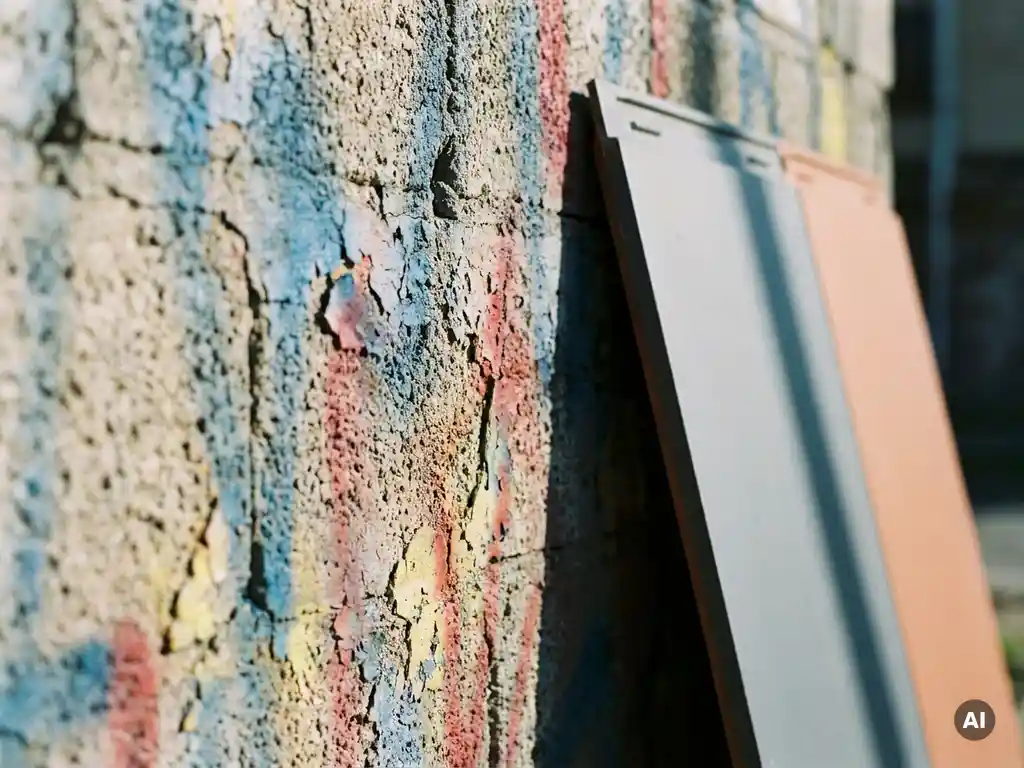
A facade material becomes vulnerable to vandalism primarily when its surface is porous, rough, or chemically reactive in ways that allow paint, ink, or adhesive to bond deeply into the material. Smooth, dense, and non-absorbent surfaces resist graffiti far more effectively because they prevent pigments from penetrating below the surface layer. The sections below break down exactly which properties, materials, and surface characteristics determine how easy or difficult a facade is to vandalize and clean.
Which surface properties make a facade easy to vandalize?
A facade surface becomes easy to vandalize when it is porous, rough, or chemically absorbent. These properties allow spray paint, permanent markers, and adhesives to penetrate into the material rather than sitting on top of it. Once a substance is absorbed below the surface, removal becomes difficult, time-consuming, and sometimes impossible without damaging the facade itself.
The key surface properties that increase vandalism vulnerability are:
- High porosity: Open pores act like tiny reservoirs, drawing in liquid paint and ink through capillary action.
- Surface roughness: Textured or uneven surfaces trap pigment particles in microscopic recesses that cleaning tools cannot reach.
- Chemical reactivity: Some materials react with the solvents in spray paint, causing the pigment to bond chemically rather than just physically adhering.
- Low surface density: Soft or loosely compacted materials absorb substances faster and more deeply than dense, hard-fired alternatives.
A facade with any combination of these properties will not only be easier to mark but will also require more aggressive cleaning methods, which can themselves cause surface damage over time.
What facade materials are most vulnerable to graffiti damage?
The facade materials most vulnerable to graffiti damage are natural stone, untreated concrete, brick, and render. These materials share a common characteristic: they are either inherently porous, rough-textured, or both. Paint and ink sink into their surfaces quickly, making removal genuinely difficult and often leaving ghost marks even after cleaning.
Natural stone such as limestone and sandstone is particularly susceptible because its open grain structure absorbs liquid instantly. Untreated concrete, while hard, has a rough surface with a network of micro-pores that trap pigment. Traditional brick, depending on its firing temperature and density, can also absorb graffiti deeply, especially when the mortar joints are targeted. Render and plaster finishes are among the most vulnerable of all because their relatively soft, porous surfaces offer almost no resistance to paint penetration.
Painted metal and wood present a different challenge. While their base material may be less porous, their painted or coated surfaces can be chemically attacked by the solvents in spray paint, meaning removal often strips the protective coating along with the graffiti. Facade surface options with high firing density and low absorption rates consistently outperform these traditional materials in vandalism-prone environments.
Why does material porosity matter for graffiti removal?
Material porosity determines how deeply graffiti penetrates a surface, which directly controls how difficult removal will be. On a low-porosity surface, paint sits on top and can often be removed with mild solvents or pressure washing. On a high-porosity surface, paint is drawn into the material by capillary action, and removal requires aggressive chemicals or abrasion that can damage the facade itself.
Think of porosity as a spectrum. At one end, highly porous materials like untreated sandstone absorb spray paint almost immediately on contact. At the other end, sintered ceramics fired at very high temperatures achieve such low porosity that liquids bead on the surface rather than soaking in. The practical consequence is straightforward: the more porous the material, the longer graffiti needs to sit before it becomes effectively permanent, and the shorter that window is in practice because vandalism is rarely discovered and cleaned immediately.
Porosity also affects the long-term appearance of a facade after graffiti removal. Even when paint is successfully removed from a porous material, residual pigment trapped in micro-pores often leaves a visible stain. On low-porosity surfaces, complete removal is far more achievable without leaving traces.
Does surface texture affect how easily graffiti can be removed?
Yes, surface texture significantly affects graffiti removal. Smooth, flat surfaces allow cleaning tools and solvents to make full contact with the graffiti, while rough or textured surfaces create sheltered areas where pigment accumulates and cleaning agents cannot reach effectively. The rougher the texture, the more difficult and incomplete graffiti removal tends to be.
This is particularly relevant for facade materials with deliberately decorative textures such as split-face stone, rough-sawn timber cladding, or exposed aggregate concrete. These finishes are chosen for their visual character but create a significant practical disadvantage in locations where vandalism is a risk. Cleaning a deeply textured surface often requires high-pressure washing at angles that can force water behind cladding systems or damage surface finishes.
Matte finishes present a middle ground. A matte surface is not necessarily rough, but its micro-texture can still provide more grip for paint than a polished or glazed surface. For vandalism resistance, the ideal combination is a smooth, dense surface that offers minimal mechanical grip for paint adhesion alongside low porosity to prevent chemical bonding.
What is integrated graffiti protection and how does it work?
Integrated graffiti protection is a vandalism resistance property that is built into the facade material itself during manufacturing, rather than applied as a separate coating afterward. It works by ensuring the material’s surface is so dense, smooth, and non-absorbent that paint and adhesives cannot bond to it in any meaningful way. This is fundamentally different from topical anti-graffiti coatings, which sit on the surface and can wear off, be scratched, or require periodic reapplication.
With integrated protection, the material’s own physical and chemical properties do the work. A surface fired at extremely high temperatures, for example, achieves a density and smoothness that leaves no pores for paint to enter and provides minimal mechanical texture for pigment particles to grip. When graffiti is applied to such a surface, it remains on top of the material rather than bonding to it, making removal far simpler and more complete.
The long-term advantage of integrated protection over applied coatings is significant. Topical coatings require maintenance, can be damaged by UV exposure, and may alter the visual appearance of the facade. An integrated property requires none of this ongoing attention and does not change the surface’s appearance because it is the surface.
Which facade material is best for vandalism-prone locations?
Sintered ceramic is consistently the best-performing facade material for vandalism-prone locations. Its combination of extremely low porosity, smooth surface density, and inherent chemical inertness means graffiti cannot penetrate the surface. Paint, ink, and adhesives remain on the surface layer and can typically be removed with standard cleaning agents without specialist intervention or surface damage.
Glazed ceramic and high-fired terracotta share these properties to varying degrees, but the key differentiator is the firing temperature and resulting surface density. Materials fired above 1,200 degrees Celsius achieve a sintered, glass-like surface structure that is fundamentally resistant to absorption. This is not a coating but a physical characteristic of the material itself, which means it does not degrade over time, cannot be scratched away to reveal a vulnerable substrate, and requires no maintenance to remain effective.
Compared to alternatives such as fiber cement, HPL panels, or coated metal, high-fired ceramics also offer superior UV and color stability, meaning the facade continues to look as intended even in high-traffic, high-exposure environments. For specifiers and architects working on public buildings, transport infrastructure, or urban commercial facades, the long-term maintenance savings from choosing the right material from the outset represent a meaningful lifecycle advantage. Reviewing completed facade projects in comparable environments can help inform material selection decisions.
How TONALITY® protects facades against vandalism
TONALITY® ceramic facade elements are engineered to address vandalism vulnerability at the material level, not as an afterthought. The combination of high-temperature sinter firing, low surface porosity, and smooth surface density means TONALITY® facades carry integrated graffiti protection as a standard material property, not an optional add-on.
Here is what that means in practice:
- Integrated graffiti resistance: The dense, sintered surface prevents paint and ink from penetrating, keeping graffiti on the surface where it can be removed cleanly.
- Permanent UV and color stability: The facade retains its intended appearance even after repeated cleaning cycles in high-traffic locations.
- Low maintenance lifecycle: Because cleaning is straightforward and the surface is not damaged by removal, long-term upkeep costs are significantly reduced.
- Non-combustible material class A1: Relevant for public and high-occupancy buildings where both vandalism resistance and fire safety are specification requirements.
- Wide format and surface range: Formats from 150 x 300 mm up to 400 x 1,600 mm with a variety of surfaces allow the right aesthetic choice without compromising protection performance.
TONALITY® facades are suitable for exactly the environments where vandalism resistance matters most: public transport hubs, educational buildings, retail facades, and urban residential developments. The full range of surfaces and formats is available to review for your next specification.
[cta_contact_form]
If you are specifying a facade for a location where vandalism is a realistic concern, the material decision made at the design stage will define the maintenance burden for the building’s entire service life. Get in touch with the TONALITY® team to discuss your project requirements and request samples to evaluate surface performance firsthand. You can also download technical documentation to support your specification process.