

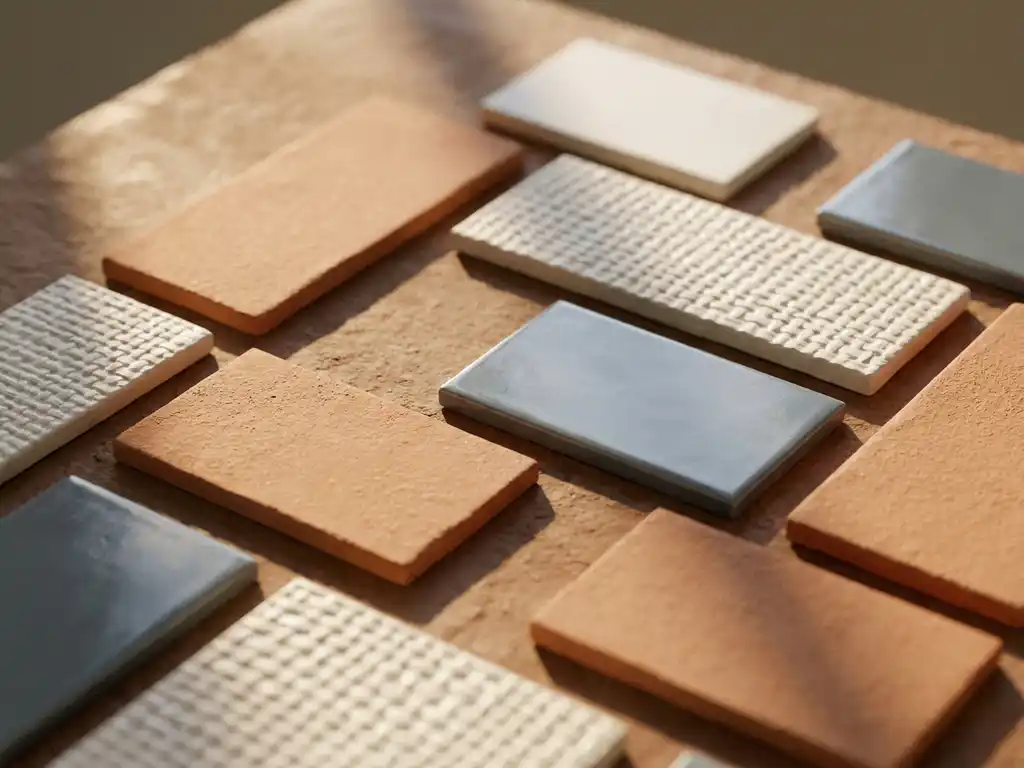
Ceramic cladding is available in a wide range of surface finishes, including smooth, matte, textured, structured, and natural clay surfaces. The right finish depends on the architectural vision, building location, and performance requirements. This article walks through the most common surface options, how they are produced, which finishes suit demanding environments, and how custom finishes can bring a specific design concept to life.
How do different surface finishes affect the look of a ceramic facade?
Surface finish is one of the most powerful design variables in ceramic facade design. A smooth, dense surface creates a sleek, contemporary appearance with sharp light reflections and clean lines, while textured or structured surfaces produce depth, shadow play, and a more tactile, expressive quality. The finish directly shapes how a building reads from the street and how it ages over time.
Beyond aesthetics, the surface finish also influences how a facade interacts with its environment. Matte finishes absorb light and reduce glare, making them well suited to residential or culturally sensitive settings. Glossier or smoother surfaces tend to appear more urban and precise, complementing commercial or institutional architecture. Rough or relief surfaces add dimensionality that shifts dramatically depending on the angle and intensity of natural light throughout the day.
For architects, the choice of surface finish is rarely just visual. It also carries implications for how dirt, water, and pollutants behave on the facade surface, which connects directly to long-term maintenance and lifecycle performance. A finish that looks stunning on day one should also be evaluated for how it will look in five or ten years without intervention.
What surface textures are commonly available for ceramic facade tiles?
The most commonly available surface textures for ceramic facade tiles include smooth, sanded, structured, relief, and natural split or cleft surfaces. Each texture category offers a distinct visual and tactile character, and many manufacturers offer variations within each category to expand the range of ceramic facade design options.
- Smooth surfaces deliver a refined, precise finish with minimal texture variation. They are a popular choice for modern commercial buildings where clean geometry and consistent color are priorities.
- Sanded or matte surfaces offer a softer appearance with a fine, uniform grain. They reduce light reflection and work well in residential or heritage-adjacent contexts.
- Structured surfaces introduce deliberate patterning, such as ribbed, grooved, or wave profiles, that add depth and visual movement to a facade plane.
- Relief surfaces take structured textures further, with pronounced three-dimensional forms that create strong shadow lines and a sculptural quality.
- Natural or split surfaces retain the raw, organic character of fired clay, referencing traditional terracotta aesthetics while meeting modern performance standards.
Many ceramic cladding systems allow these textures to be combined across a single facade, enabling architects to create contrast between zones, highlight entrances, or differentiate floor levels without changing the core material. Browsing completed facade references is a useful way to see how different texture combinations translate in built projects.
How does the firing process influence ceramic cladding surface quality?
The firing process is the single most important factor in determining the surface quality, density, and durability of ceramic cladding. Firing at high temperatures, typically above 1,200 degrees Celsius, causes the clay particles to sinter together, producing an exceptionally dense, smooth, and non-porous surface that resists moisture, staining, and environmental weathering.
This sintering effect is what distinguishes high-quality ceramic facade tiles from lower-fired alternatives. At sufficient temperatures, the surface becomes vitrified, meaning it forms a glass-like matrix that closes off micro-pores and creates a consistently uniform appearance. The result is a facade that maintains its color and surface character over decades without fading, chalking, or absorbing pollutants.
The firing temperature also directly influences color stability. Pigments fired at high temperatures bond chemically with the ceramic body rather than sitting on the surface as a coating or glaze. This means the color is intrinsic to the material itself, not a layer that can chip, peel, or degrade under UV exposure. For architects specifying facades in urban or coastal environments, this distinction is significant for long-term appearance and reduced maintenance.
Which surface finish is best for facades in high-traffic or urban environments?
In high-traffic or urban environments, smooth and dense sintered surfaces are generally the most practical choice. Their low porosity means pollutants, graffiti, and airborne particulates have minimal opportunity to penetrate the surface, making cleaning straightforward and infrequent. Ceramic cladding solutions with integrated graffiti protection add a further layer of resilience in city settings.
Textured and structured surfaces can also perform well in urban environments, but their recessed areas require slightly more attention to ensure dirt does not accumulate in grooves over time. For facades adjacent to busy roads or public spaces, a smooth or lightly sanded finish often delivers the best balance of visual impact and practical upkeep. To evaluate how different finishes hold up in real conditions, it is worth ordering physical samples before finalizing a specification.
Graffiti resistance and surface maintenance
Ceramic surfaces with integrated graffiti protection allow spray paint and marker residue to be removed without chemical solvents or abrasive treatments that could damage the surface. This is particularly relevant for ground-level cladding on public-facing buildings, retail facades, and transit infrastructure.
UV and color stability in urban conditions
Urban facades are exposed to intense UV radiation, especially on south-facing elevations. Ceramic cladding fired at high temperatures offers permanent UV resistance, meaning the surface color does not fade or shift over time. This is a meaningful advantage over polymer-based or painted facade systems that require periodic recoating to maintain their appearance.
Can ceramic facade tiles be custom-finished to match a design concept?
Yes, ceramic facade tiles can be custom-finished to a high degree of precision, including custom colors, surface textures, formats, and dimensional tolerances. This level of customization allows architects to realize a specific design concept without compromising on either aesthetics or technical performance. Think of it as a tailor-made approach to facade design, where the material is shaped around the vision rather than the other way around.
Custom color development for ceramic cladding draws on the natural properties of clay and mineral-based pigments, which can produce a wide spectrum from earthy terracotta tones to cool grays, deep blues, and near-white palettes. Because color is fired into the ceramic body rather than applied as a surface coating, custom shades remain consistent across production batches and do not fade over the building’s lifetime.
Format customization is equally flexible. Tiles can be produced in precise dimensions ranging from small modular formats up to large-format panels, with tolerances as tight as one millimeter. This precision enables complex facade compositions, including mixed-format layouts, vertical or horizontal emphasis, and non-standard tile proportions that would be difficult to achieve with off-the-shelf cladding systems. Architects looking for inspiration can explore completed facade projects to see how custom finishes translate in real-world applications.
How TONALITY® brings ceramic cladding surface options to life
TONALITY® manufactures ceramic facade tiles from the highest-quality clay deposits in the Westerwald region of Germany, firing every element above 1,200 degrees Celsius to achieve the dense, durable surfaces that define their product range. For architects working on contemporary facades, TONALITY® offers a comprehensive set of surface finish options backed by genuine material expertise and a fully customizable production process.
- Wide surface range: Smooth, structured, relief, and natural surfaces are available across the full format range, from compact modular tiles to large-format panels up to 400 x 1,600 mm.
- Custom color and texture development: Colors and surface textures can be developed to match a specific design concept, with consistent results across production batches.
- Integrated graffiti protection: All TONALITY® surfaces include built-in graffiti resistance, making them a practical choice for urban and high-traffic environments.
- Permanent UV and color stability: The high-temperature firing process ensures that colors remain stable and surfaces maintain their appearance without recoating or retreatment over the building’s lifetime.
- Lifecycle value: Low maintenance requirements and 100% recyclability support a strong total cost of ownership argument for specifiers focused on long-term building performance.
To explore the full range of surfaces and formats, browse the surfaces and formats overview or request samples to evaluate finishes in context. Ready to discuss a specific project? Get in touch with the TONALITY® team to start the conversation.