

What Makes Terracotta Inherently Fire-Resistant Compared to ACM Panels?
Terracotta is inherently fire-resistant because it is made from natural clay fired at temperatures exceeding 1,200 degrees Celsius, creating a non-combustible ceramic material. Unlike ACM panels, which contain combustible polymer cores between aluminum sheets, terracotta contains no flammable components and can even become stronger when exposed to high temperatures.
The fundamental difference lies in their composition and manufacturing processes. Terracotta undergoes a sintering process that eliminates all organic matter and creates a dense, vitrified structure. This ceramic material naturally resists ignition and does not contribute fuel to a fire. ACM panels, however, are aluminum composite materials with polyethylene cores that can melt, burn, and release toxic gases when exposed to flames.
When exposed to fire, terracotta maintains its structural integrity and acts as a protective barrier. The material’s high melting point and thermal mass help contain heat rather than spread it. This inherent fire resistance makes terracotta an excellent choice for high-rise building applications where fire protection is paramount.
How Do Fire Safety Classifications Differ Between Terracotta and ACM?
Terracotta typically receives an A1 fire rating under European standards, classifying it as non-combustible with no contribution to fire. ACM panels typically receive lower classifications, ranging from A2 to B or C, depending on their core material composition and any fire-retardant treatments applied.
The A1 fire rating represents the highest level of building material safety, meaning terracotta produces no smoke, does not ignite, and contributes zero fuel to a fire. This non-combustible material classification requires rigorous testing to verify that the material will not burn under any conditions. Standard ACM panels with polyethylene cores often achieve only B or C ratings, indicating that they will burn and contribute to fire spread.
Some manufacturers produce fire-rated ACM panels with mineral-filled cores that can achieve A2 ratings. However, these still contain small amounts of combustible material and may produce limited smoke or flaming droplets. The distinction becomes critical in high-rise applications, where building codes increasingly require A1-rated facade materials for optimal fire protection.
What Happened in High-Rise Fires Involving ACM Panels vs Terracotta?
High-rise fires involving ACM panels have resulted in rapid external fire spread and catastrophic building failures, most notably at Grenfell Tower in London. In contrast, buildings with terracotta facades have historically contained fires at their point of origin without contributing to external flame propagation.
The Grenfell Tower tragedy in 2017 demonstrated how combustible ACM cladding can transform a localized apartment fire into a building-wide catastrophe. The polyethylene core in the ACM panels melted and burned, creating a chimney effect that carried flames up the building’s exterior. Similar incidents have occurred at other high-rises worldwide, leading to urgent reviews of cladding materials and building codes.
Buildings clad with terracotta and other ceramic materials have shown markedly different fire behavior. The non-combustible nature of fired clay means these facades do not contribute fuel to a fire, helping contain incidents to their original location. Historical examples of fires in terracotta-clad buildings show the material’s ability to maintain structural integrity and prevent external fire spread, supporting overall building fire safety strategies.
How Does Installation Method Affect Fire Safety in Each System?
Terracotta installation systems typically provide better fire compartmentalization through mechanical fixing methods and minimal combustible components. ACM panel installations often involve adhesives, sealants, and backing materials that can create continuous combustible pathways behind the facade.
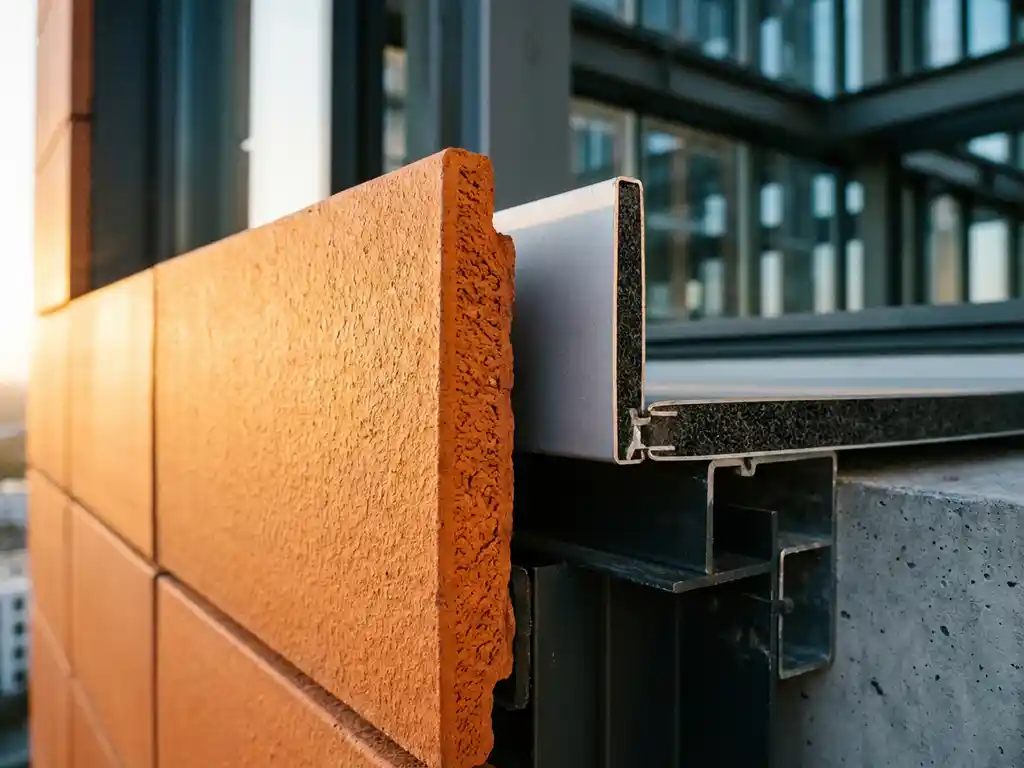
Modern terracotta systems use aluminum retaining profiles and mechanical interlocking connections that maintain their integrity under fire conditions. The installation method creates natural fire breaks between panels, and the minimal use of combustible sealants or adhesives reduces potential fire pathways. The ceramic elements themselves act as protective barriers, shielding the building structure from external heat exposure.
ACM panel installation frequently requires adhesive bonding, foam insulation backing, and extensive sealing systems. These components can create hidden combustible pathways that allow fire to spread rapidly behind the visible facade. The lightweight nature of ACM panels, while advantageous for installation, means they can fail quickly under fire conditions, exposing the building’s structural elements to direct flame contact.
How TONALITY® Ceramic Facades Enhance High-Rise Fire Safety
TONALITY® ceramic facade systems provide superior fire protection through A1-rated, non-combustible ceramic elements that eliminate the fire-spread risks inherent in ACM panels. Our ceramic tiles undergo sintering at temperatures above 1,200°C, creating dense, vitrified surfaces that maintain structural integrity under extreme heat.
Key fire safety advantages include:
- A1 building material classification, ensuring zero combustible content
- Mechanical interlocking installation system, minimizing combustible components
- Dense ceramic structure providing thermal-barrier protection
- No toxic gas emissions during fire exposure
- Maintained structural integrity, preventing facade failure
For architects and developers prioritizing high-rise building safety, TONALITY® ceramic facades offer proven fire resistance with long-term performance reliability. Contact our technical team to discuss how our ceramic facade systems can enhance your project’s fire safety specifications and regulatory compliance.
Ähnliche Artikel
- Wann sollte eine Schule in eine Graffiti-resistente Facade investieren?
- When should you consider sustainable building material alternatives?
- Terracotta vs Large-Format Porcelain: A Technical Specification Comparison
- 5 Stunning Projects Combining Terracotta with Glass, Steel, or Timber
- Which LEED credits can terracotta facades help achieve?