

Sustainable building materials have become a cornerstone of modern construction, with architects and builders increasingly seeking options that balance environmental responsibility with performance. Among these materials, A1-rated sustainable building materials stand out for their exceptional fire safety properties and eco-friendly characteristics, making them ideal for projects that prioritize both safety and sustainability.
Understanding A1 ratings and their role in sustainable construction helps architects make informed decisions that protect both occupants and the environment. These materials offer unique advantages that extend far beyond basic compliance, contributing to long-term building performance and reduced environmental impact.
What does an A1 rating mean for building materials?
An A1 rating represents the highest fire safety classification for building materials under European standards, indicating that the material is completely non-combustible and contains no organic substances that could contribute to fire spread. Materials with an A1 classification undergo rigorous testing to ensure they do not ignite, produce flames, or release significant heat when exposed to fire conditions.
The A1 classification is determined through comprehensive laboratory testing that evaluates multiple fire-related properties. Materials must pass both the non-combustibility test and the bomb calorimeter test, which measures potential heat release. This dual testing approach ensures that A1-rated materials maintain their structural integrity and safety properties even under extreme fire conditions.
For sustainable building materials, achieving an A1 rating often stems from their natural composition. Ceramic, stone, concrete, and certain metals typically earn this classification because they are inherently non-combustible and manufactured through high-temperature processes that eliminate any organic components.
What are the main types of A1-rated sustainable materials?
The primary A1-rated sustainable materials include natural stone, ceramic products, concrete elements, steel components, and glass, all of which offer excellent fire resistance while supporting environmental goals through durability and recyclability.
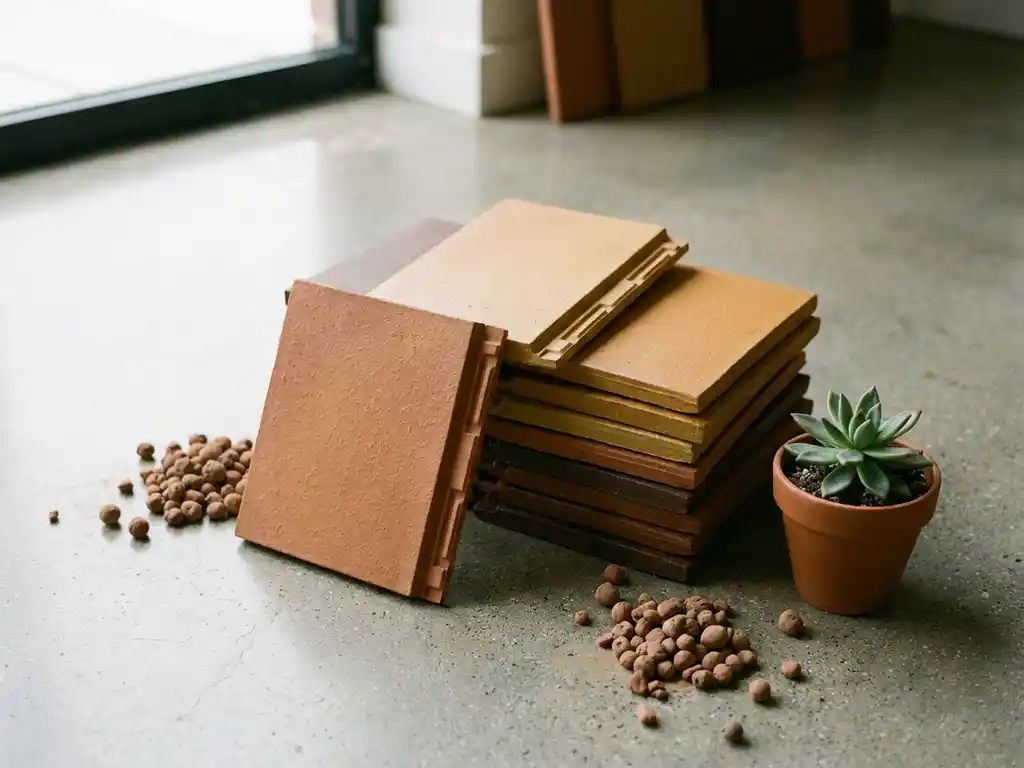
Ceramic façade materials represent one of the most versatile A1-rated options, produced through high-temperature firing processes that create dense, non-combustible surfaces. These materials offer exceptional longevity and can be manufactured from abundant natural clay resources, making them both sustainable and fire-safe. Modern terracotta façade systems demonstrate how traditional materials can meet contemporary fire safety requirements while delivering outstanding environmental performance.
Natural stone materials such as granite, marble, and slate naturally achieve an A1 classification due to their mineral composition. These materials provide excellent thermal mass properties and can often be sourced locally, reducing transportation impacts while delivering superior fire performance.
Concrete and masonry products also commonly receive A1 ratings, particularly when manufactured with mineral-based components. Modern concrete formulations can incorporate recycled materials while maintaining non-combustible properties, supporting circular-economy principles in construction.
How do A1-rated materials contribute to sustainable construction?
A1-rated materials contribute to sustainable construction by providing exceptional durability that extends building lifecycles, reducing replacement needs and associated environmental impacts, while eliminating the need for chemical fire retardants that can pose environmental concerns.
The longevity of A1-rated materials significantly reduces maintenance requirements and replacement cycles. Ceramic façade systems, for example, maintain their appearance and performance for decades without requiring treatments or coatings, minimizing ongoing environmental impacts from maintenance activities.
These materials also support sustainable design through their recyclability and potential for reuse. Many A1-rated materials can be deconstructed and repurposed at the end of a building’s life, contributing to circular-economy principles and reducing waste streams.
Additionally, A1-rated materials often provide superior thermal performance, contributing to building energy efficiency. Their thermal mass properties can help regulate interior temperatures naturally, reducing reliance on mechanical heating and cooling systems.
What’s the difference between A1 and other fire classification ratings?
A1 represents the highest fire safety standard for completely non-combustible materials, while lower classifications such as A2, B, C, D, E, and F indicate progressively increasing combustibility and contribution to fire, with each level allowing more organic content and greater potential for fire spread.
A2-rated materials are largely non-combustible but may contain limited organic content that could contribute minimally to fire development. While still offering excellent fire performance, A2 materials require more careful consideration in high-risk applications than A1 materials.
Class B through Class F materials show increasing levels of combustibility. Class B materials offer limited contribution to fire, while Classes C, D, and E provide acceptable performance under specific conditions. Class F materials offer no reliable fire performance and are generally unsuitable for most building applications.
The distinction becomes particularly important in façade applications, where fire safety regulations often mandate A1 or A2 materials for tall buildings or high-occupancy structures. A1 materials provide the highest level of safety assurance without requiring additional fire safety measures.
Why should architects choose A1-rated materials for façade systems?
Architects should choose A1-rated materials for façade systems because they provide uncompromising fire safety, eliminate liability concerns related to combustible façades, and offer superior long-term performance that reduces maintenance requirements and life-cycle costs.
Recent façade fire incidents worldwide have highlighted the critical importance of non-combustible exterior materials. A1-rated façade systems provide peace of mind by eliminating the risk of façade-driven fire spread, protecting both occupants and neighboring structures. Many successful architectural projects demonstrate how A1-rated materials can deliver both safety and aesthetic excellence.
From a design perspective, A1-rated materials often offer superior aesthetic durability. Ceramic façade systems maintain their color and surface quality indefinitely, providing a consistent appearance throughout the building’s lifespan without fading or degradation.
Regulatory compliance becomes straightforward with A1 materials, as they meet the most stringent fire safety requirements globally. This broad acceptance simplifies the specification process and helps ensure compliance with evolving fire safety standards.
How TONALITY® Delivers A1-Rated Sustainable Building Solutions
TONALITY® ceramic façade systems exemplify the seamless integration of an A1 fire safety rating with sustainable building practices. They are manufactured through specialized sinter-firing processes exceeding 1,200 degrees Celsius, creating inherently non-combustible ceramic elements with exceptional environmental credentials.
Our A1-rated ceramic façades provide comprehensive sustainable building benefits:
- Complete non-combustibility, with no organic components or fire-contributing materials
- 100% recyclable ceramic elements that support circular-economy principles
- Maintenance-free performance, eliminating ongoing environmental impacts from treatments
- Low surface weight, reducing substructure requirements and material consumption
- Precise manufacturing, minimizing waste during production and installation
- Permanent color stability, eliminating replacement needs due to weathering
Ready to specify A1-rated sustainable façade solutions for your next project? Contact our technical team to explore how TONALITY® ceramic systems can deliver uncompromising fire safety while advancing your sustainability goals through innovative German engineering and premium Westerwald clay resources.
Ähnliche Beiträge
- Terracotta vs Porcelain Facade Panels: A Specifier’s Guide
- 5 Things to Look for When Evaluating Terracotta Samples
- How to Evaluate and Shortlist Terracotta Manufacturers for Your Project
- What are the benefits of sustainable building materials?
- What are the thermal performance advantages of terracotta systems?