

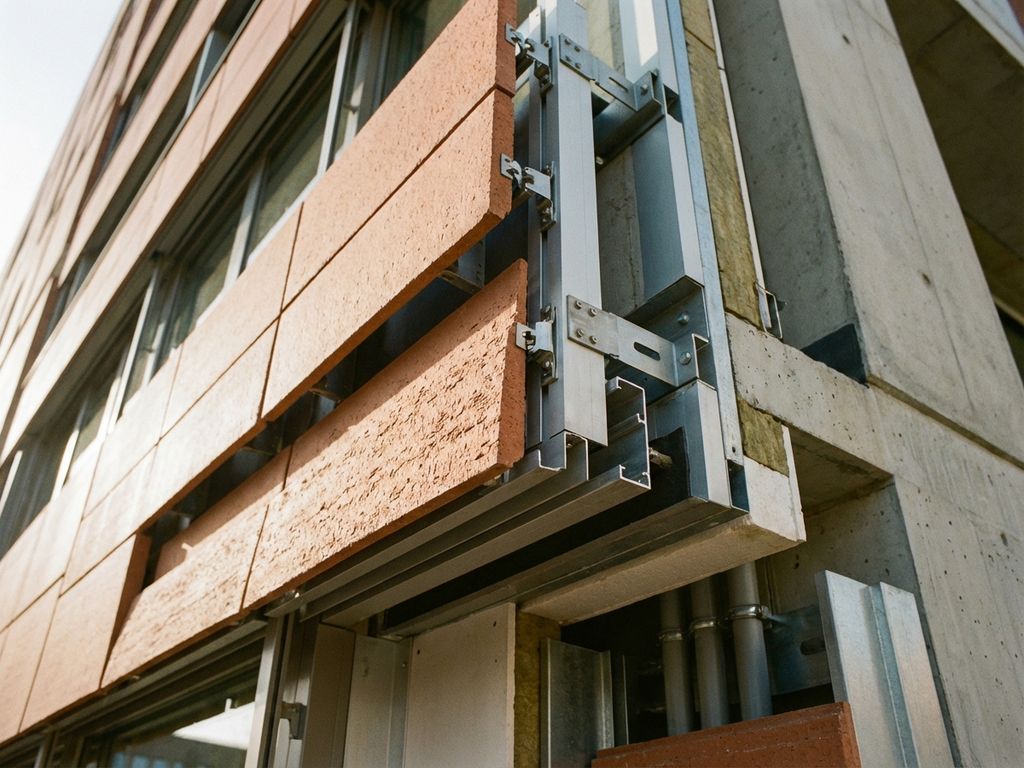
ADS terracotta systems function as mechanically fixed, ventilated facade solutions that attach ceramic panels to buildings without wet adhesives. These systems use rail-mounted clips and anchors to secure panels while creating an air cavity behind the cladding. This approach provides superior thermal performance, easier maintenance, and faster installation compared with traditional wet-applied facade methods.
What are ADS terracotta systems and how do they differ from traditional facades?
ADS (Adhesive Dry System) terracotta systems are mechanically fixed facade solutions that eliminate the need for wet adhesives or mortar. Unlike traditional facades that rely on cement-based fixing methods, these systems use precision-engineered rails, clips, and anchoring mechanisms to secure ceramic panels directly to the building structure.
The fundamental difference lies in the installation methodology and structural approach. Traditional facades typically involve wet trades, curing times, and weather-dependent installation schedules. ADS systems allow year-round installation with immediate completion upon mounting.
Key components include aluminium support rails mounted to the substrate, specialised clips that engage with profiled panel backs, and a continuous ventilated cavity. This creates a rainscreen system in which the outer ceramic layer provides weather protection while the inner cavity manages moisture and thermal movement.
The system architecture minimises thermal bridging, which is common in traditional facades. Each ceramic element functions independently, allowing natural expansion and contraction without transferring stress to adjacent panels or the building structure.
How do the mechanical fixing and ventilation systems work in terracotta facades?
Mechanical fixing systems utilise vertical aluminium rails anchored to the building structure at predetermined centres. These rails feature continuous slots or mounting points that accept spring-loaded clips or brackets designed to engage with profiled ceramic panel backs.
The ventilation system operates on stack-effect principles, with air entering at the bottom of the facade and rising through the cavity by natural convection. This continuous airflow removes water vapour, prevents condensation, and moderates temperature fluctuations within the cavity.
Panel engagement typically involves interlocking profiles machined into the ceramic back surface. These profiles slide onto or clip into the rail system, creating a secure mechanical connection while allowing controlled movement. The fixing method accommodates thermal expansion, building settlement, and wind loading without compromising panel integrity.
Cavity widths typically range from 25–50 mm, providing adequate airflow while maintaining structural efficiency. Ventilation openings at the top and bottom of each facade section ensure proper air circulation throughout the entire system height.
What are the thermal and structural performance benefits of ADS terracotta systems?
ADS terracotta systems minimise thermal bridging by creating a continuous insulation layer behind the ventilated cavity. The mechanical fixing points are thermally broken, preventing heat transfer through structural connections that can compromise traditional facade systems.
Structural load distribution occurs through the rail system rather than through individual panel fixings. This approach reduces point loading on the building structure while providing superior wind-load resistance. The system accommodates building movement through flexible connections that prevent stress concentration.
The ventilated cavity moderates temperature extremes by buffering external conditions. During summer, rising air removes heat build-up, while winter conditions benefit from reduced thermal shock. This thermal stability extends ceramic panel life and maintains a consistent appearance.
Seismic performance benefits from the system’s flexibility and independent panel movement. Each ceramic element can respond to building motion without transferring stress to adjacent panels, reducing the risk of failure during seismic events.
The lightweight nature of ceramic panels reduces overall facade loading compared with stone or concrete alternatives, allowing more economical structural design while maintaining superior durability and weather resistance.
How do you install and maintain ADS terracotta facade systems?
Installation begins with substrate preparation and verification of waterproofing. Support rails are then fixed at predetermined centres using appropriate anchors for the substrate type. Rail alignment and plumbness are critical for proper panel engagement and weather performance.
Panel installation proceeds from bottom to top, with each ceramic element sliding onto or clipping into the rail system. Installation requires no special tools beyond standard construction equipment, and panels can be positioned and adjusted before final securing.
Quality control involves checking panel engagement, cavity dimensions, and ventilation opening clearances. Weather sealing at openings and interfaces requires careful attention to maintain rainscreen performance.
Maintenance requirements are minimal due to the self-cleaning properties of glazed ceramic surfaces and the system’s durability. Annual inspections should verify panel security, cavity cleanliness, and the functionality of ventilation openings.
Individual panel replacement is straightforward and does not affect adjacent elements. This selective repair capability reduces maintenance disruption and long-term ownership costs compared with monolithic facade systems.
How TONALITY® ceramic facade systems optimise ADS terracotta performance
TONALITY® ceramic facade systems address the critical requirements of ADS terracotta applications through precision-engineered solutions that enhance system functionality and long-term performance.
The system provides:
- Interlocking back profiles that ensure secure mechanical engagement with aluminium rails while accommodating thermal movement
- Lightweight ceramic construction at approximately 40 kg per square metre, reducing structural loading and installation complexity
- Maintenance-free surface properties through high-temperature sintering that creates dense, non-porous ceramic with permanent colour stability
- Precision manufacturing tolerances within one millimetre, guaranteeing consistent installation quality and weather performance
- A1 fire classification, providing non-combustible performance essential for modern building safety requirements
The ceramic elements integrate seamlessly with standard ADS fixing systems while offering superior durability and aesthetic consistency. Their low thermal mass and excellent weather resistance optimise the thermal and structural benefits of mechanically fixed facade systems. You can explore various terracotta facade surfaces and formats to find the perfect match for your project requirements.
Contact our technical team to explore how TONALITY® ceramic facade systems can enhance your next ADS terracotta project with proven performance and design flexibility.