

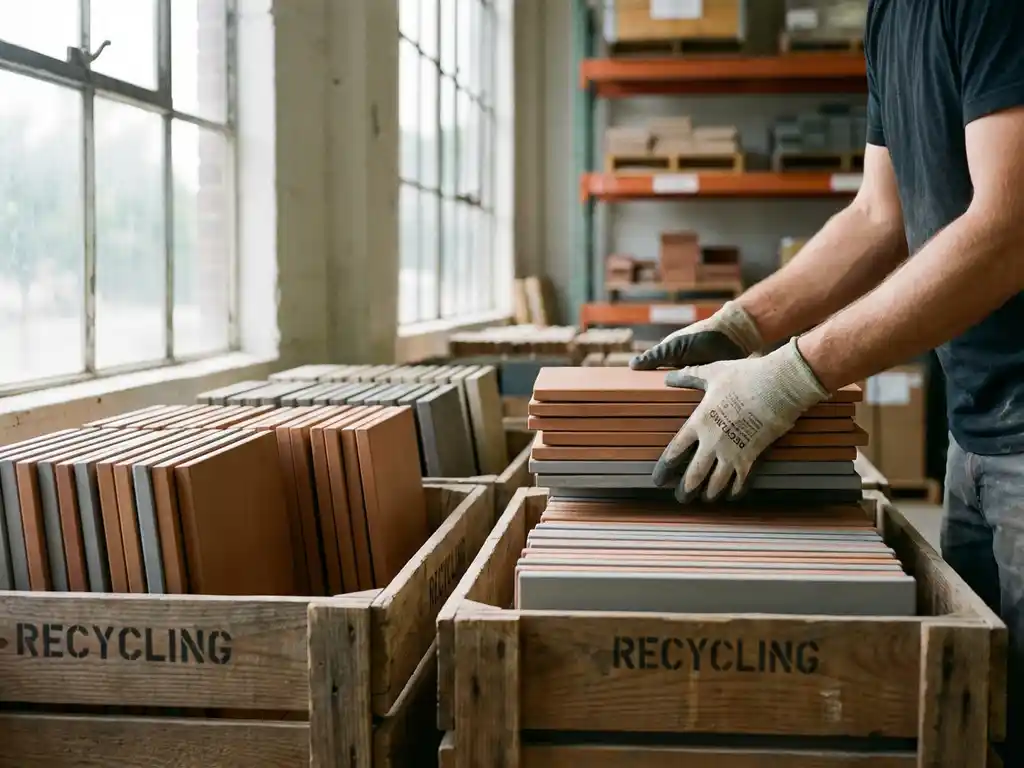
The construction industry faces mounting pressure to reduce its environmental impact, with building materials playing a crucial role in achieving sustainability goals. Recyclable building materials represent a fundamental shift toward more responsible construction practices, offering significant environmental benefits while maintaining structural integrity and aesthetic appeal.
Understanding how sustainable building materials contribute to environmental protection helps architects, builders, and property owners make informed decisions that benefit both their projects and the planet. From reducing waste streams to supporting circular-economy principles, these materials are reshaping how we approach modern construction.
What are recyclable building materials, and why do they matter?
Recyclable building materials are construction products designed to be reprocessed and reused at the end of their life cycle without losing their essential properties or structural integrity. These materials can be broken down and reformed into new products, creating a closed-loop system that minimizes waste and resource consumption.
The importance of recyclable materials extends beyond simple waste reduction. They address the construction industry’s significant environmental footprint, which accounts for approximately 40% of global carbon emissions and consumes vast quantities of natural resources. By choosing materials that can be recycled, builders contribute to resource conservation and reduce the demand for virgin-material extraction.
Key characteristics of effective recyclable building materials include durability during their primary use, ease of separation from other components during demolition, and the ability to maintain quality through multiple recycling cycles. Materials such as ceramic facades, aluminum, steel, and certain concrete formulations exemplify these qualities, offering both immediate performance benefits and long-term environmental advantages.
How do recyclable materials reduce construction waste?
Recyclable materials reduce construction waste by creating alternative pathways for materials that would otherwise end up in landfills, transforming waste streams into valuable resources for future construction projects. This approach addresses both demolition waste and manufacturing byproducts through systematic recovery and reprocessing.
During demolition or renovation, recyclable materials can be carefully separated and collected rather than mixed with general construction debris. This selective deconstruction preserves material integrity and enables efficient processing for reuse. For example, ceramic facade elements can be removed intact, cleaned, and either reused directly or processed into new ceramic products.
The waste-reduction impact extends to the manufacturing phase as well. Producers of recyclable materials often incorporate post-consumer recycled content into new products, creating demand for recovered materials and closing the loop. This circular approach significantly reduces the volume of construction waste requiring disposal while simultaneously decreasing the need for new raw-material extraction.
What environmental benefits do recyclable building materials provide?
Recyclable building materials provide substantial environmental benefits, including reduced carbon emissions, decreased natural-resource extraction, minimized landfill burden, and improved energy efficiency throughout the material life cycle. These benefits compound over time as materials cycle through multiple uses.
Carbon-footprint reduction represents one of the most significant advantages. Manufacturing products from recycled materials typically requires less energy than producing items from virgin resources, resulting in lower greenhouse gas emissions. Additionally, the transportation energy associated with waste disposal is reduced when materials are recycled locally or regionally.
Resource-conservation benefits include reduced mining, quarrying, and harvesting of raw materials, which helps preserve natural habitats and reduces environmental disruption. Water use often decreases significantly in recycled-material production, and air-quality improvements result from reduced industrial processing of virgin materials. The cumulative effect creates a more sustainable construction ecosystem that supports long-term environmental health.
How does the circular economy work in construction?
The circular economy in construction operates by designing buildings and selecting materials with end-of-life recovery in mind, creating continuous cycles of use, recovery, and remanufacturing that eliminate waste and maximize resource value. This system contrasts sharply with traditional linear construction models.
In practice, circular construction begins with material selection and building design that facilitate future disassembly. Components are chosen for their recyclability and compatibility with recovery systems. During the building’s operational life, maintenance and renovation prioritize material preservation and component reuse wherever possible.
When buildings reach end of life, circular principles guide deconstruction processes that carefully separate and catalog materials for reuse. High-quality materials may be reused directly in new construction, while others undergo reprocessing into new products. This systematic approach creates economic incentives for material recovery while building robust supply chains for recycled construction materials.
Which building materials offer the best recycling potential?
Materials with the best recycling potential include metals such as aluminum and steel, ceramic products, concrete, and engineered timber, each offering unique advantages for circular-construction applications. These materials combine durability, separability, and processing efficiency.
Ceramic materials excel in recycling applications due to their inorganic composition and resistance to degradation. High-quality ceramic facade elements maintain their structural and aesthetic properties through multiple life cycles, making them particularly valuable for circular construction. Their noncombustible nature and chemical stability ensure consistent performance regardless of previous use.
Metal components, particularly aluminum profiles used in facade systems, offer exceptional recycling efficiency with minimal quality loss. Steel structural elements can be recycled repeatedly while maintaining their strength characteristics. Concrete presents opportunities for aggregate recovery and reuse, though processing requirements are more intensive. The key to maximizing recycling potential lies in selecting materials designed specifically for disassembly and recovery.
How TONALITY® Supports Sustainable Construction
TONALITY® ceramic facade systems exemplify sustainable building materials through their comprehensive recyclability and circular design principles. Our ceramic elements are engineered for complete end-of-life recovery, supporting environmental goals while delivering exceptional performance throughout their primary use.
Key sustainability advantages of TONALITY® systems include:
- 100% recyclable ceramic composition with no loss of material quality during reprocessing
- Simple deconstruction system enabling efficient material separation and recovery
- Durable construction that extends the primary-use life cycle, maximizing resource value
- Low surface weight, reducing transportation energy and structural requirements
- A1 fire classification, ensuring safety without compromising recyclability
Ready to integrate truly sustainable facade solutions into your next project? Contact our technical team to discover how TONALITY® ceramic systems can support your environmental objectives while delivering outstanding architectural results. For more information about our successful sustainable projects, explore our comprehensive portfolio of environmentally responsible construction solutions.
Ähnliche Artikel
- Wie unterscheidet sich ein Schulgebäude Neubau von einer Generalsanierung?
- Terracotta vs HPL (High-Pressure Laminate): Which Performs Better Long-Term?
- How do terracotta facades perform in coastal and high-salinity environments?
- What is embodied carbon and how does terracotta compare to aluminum cladding?
- What tools are needed for terracotta facade installation?