

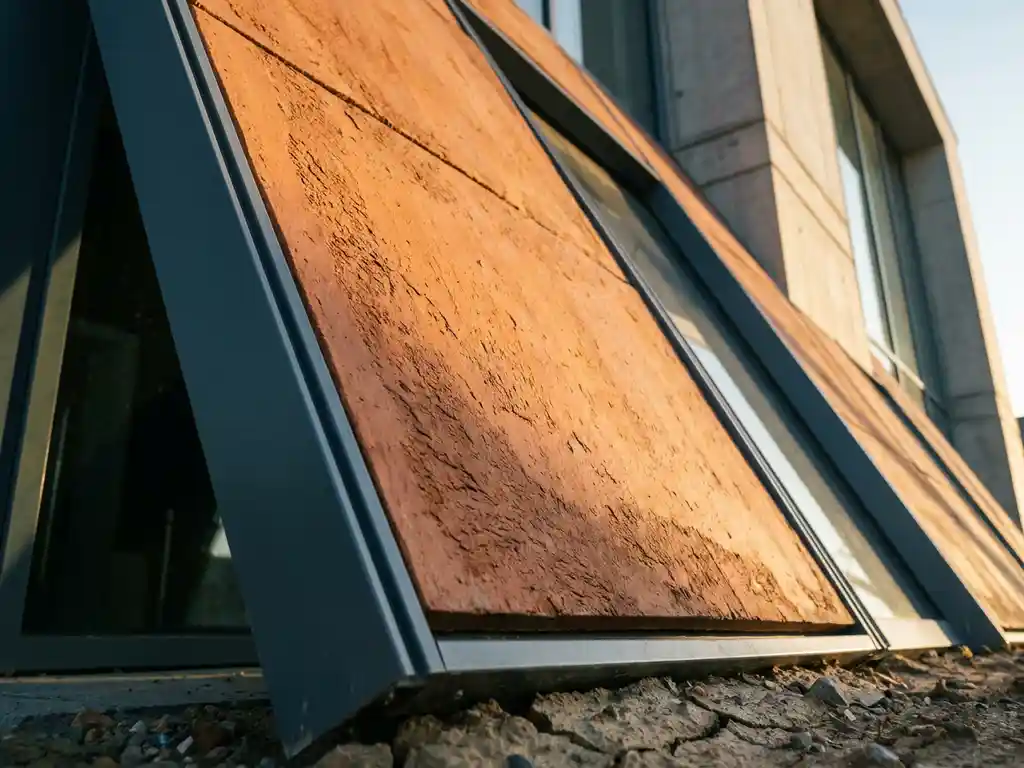
Terracotta facade systems resist earthquake forces through a combination of mechanical attachment, low dead weight, and flexible jointing that allows controlled movement between the cladding and the building structure. Unlike rigid, monolithic cladding systems, terracotta panels are individually mounted and can shift slightly relative to one another without cracking or detaching. The sections below unpack the specific mechanisms that make ceramic facade systems seismically resilient.
How are terracotta facade systems attached to withstand lateral loads?
Terracotta facade systems resist lateral loads through a mechanical clip-and-rail attachment method that allows controlled relative movement between the cladding panels and the primary structure. Each ceramic element is secured into vertical aluminum retaining profiles rather than bonded rigidly to the wall, so seismic energy can dissipate through small, managed displacements rather than fracturing the material.
This interlocking approach is central to seismic resilience. When a building sways during an earthquake, the substructure moves with the frame while the ceramic panels can shift slightly within their retaining profiles. The joints between panels accommodate this movement without transferring destructive stress into the ceramic itself. Because the connection is mechanical rather than adhesive, individual panels can also be replaced after an event without dismantling the entire facade.
The aluminum substructure plays an equally important role. Aluminum profiles are lightweight, corrosion-resistant, and engineered to flex under dynamic loading conditions. When correctly specified for seismic zones, the fixing points, bracket spacing, and profile depth are calculated to handle both the dead load of the cladding and the lateral forces generated by ground motion. This is why facade engineers working in earthquake-prone regions treat the substructure design as a critical structural calculation, not simply an installation detail. If you want to see how these principles translate into real-world projects, browse completed terracotta facade references across a range of building types and climatic conditions.
What role does dead weight play in seismic facade performance?
Dead weight is one of the most decisive factors in seismic facade performance. Heavier cladding generates greater inertial forces during ground shaking, placing higher demands on fixings, anchors, and the primary structure. Lighter cladding systems reduce these inertial loads, which directly lowers the risk of detachment and reduces the seismic demand transferred to the building frame.
Single-layer ceramic facade panels weigh approximately 40 kilograms per square meter, which is significantly lower than many stone or concrete cladding alternatives. This low surface weight means the anchor forces required to keep panels in place during seismic movement are considerably smaller, allowing for lighter and more economical substructure designs. For timber construction in particular, where structural capacity is more constrained, this weight advantage has a meaningful impact on what is structurally feasible.
Reduced dead weight also benefits the overall seismic performance of the building as a whole. Every kilogram removed from the facade envelope is a kilogram that does not contribute to the base shear forces the foundation and frame must resist. In regions with strict seismic design codes, specifying lightweight ceramic facade systems can simplify structural calculations and reduce material requirements across the entire project. Specifiers evaluating panel options can explore available terracotta surfaces and formats to identify the most suitable dimensions and weights for their structural requirements.
How does the ventilated cavity in terracotta facades respond to seismic movement?
The ventilated cavity in a terracotta facade system acts as a deliberate structural gap between the cladding layer and the load-bearing wall, and this separation is precisely what allows the two layers to move independently during seismic activity. Rather than transmitting ground motion directly from the structure into the facade, the cavity decouples the cladding from the primary wall, reducing the forces that reach the ceramic panels.
In a ventilated facade, the ceramic elements are attached to a substructure that is anchored to the building, while the air gap behind the panels remains free. When the building moves laterally, the substructure moves with it, but the individual panels can accommodate small relative displacements within their profiles. This means the facade behaves as a semi-independent skin rather than a rigidly bonded layer, which is a fundamental advantage in seismic conditions.
The cavity also serves a secondary protective function after a seismic event. Because the panels are not bonded to a backing layer, any panels that sustain damage can be removed and replaced individually without disturbing the rest of the facade or the waterproofing membrane behind it. This replaceability significantly reduces the cost and disruption of post-earthquake facade remediation. To evaluate technical details before specifying, download product documentation and request samples for a hands-on assessment of material quality and fixing compatibility.
Which building material classifications apply to terracotta in seismic zones?
Terracotta and ceramic facade panels are classified as building material class A1 under European fire standards, meaning they are non-combustible and contain no organic components. While this classification is primarily a fire safety designation, it is directly relevant in seismic zones because post-earthquake fires are a well-documented secondary hazard, and non-combustible cladding reduces the risk of fire spread following structural damage.
In seismic design, facade materials are also assessed for their brittleness and fragmentation behavior. Dense, sintered ceramic produced at temperatures exceeding 1,200 degrees Celsius results in a smooth, low-porosity surface that is less prone to moisture-induced degradation over time. Structural integrity maintained over decades is important in seismic zones, where aging or deteriorated fixings can fail under dynamic loading even if the original installation was compliant.
Regional seismic codes, such as Eurocode 8 in Europe or equivalent standards in other markets, require facade engineers to demonstrate that cladding systems will not detach and fall during a design-level earthquake. Achieving compliance typically involves specifying the fixing system, bracket capacity, and joint dimensions based on calculated seismic accelerations for the site. The material classification of the ceramic itself informs the structural engineer’s assumptions about panel behavior under dynamic loading.
How do terracotta facades compare to glass or composite cladding in earthquakes?
Terracotta facades generally outperform glass and many composite cladding systems in earthquake conditions because of their lower brittleness risk, simpler mechanical attachment, and superior long-term material stability. Glass panels, particularly large-format unitized curtain wall systems, are vulnerable to in-plane racking and out-of-plane forces that can cause catastrophic shattering. Composite panels, depending on their core material and fixing method, can delaminate or buckle under dynamic loading.
Terracotta versus glass cladding
Glass cladding requires precise tolerance management in seismic conditions. Curtain wall systems must be engineered with movement joints that accommodate inter-storey drift without transferring racking forces into the glass panes. When these tolerances are exceeded, glass failure can be sudden and dangerous. Terracotta panels, by contrast, are smaller in format, mechanically clipped rather than bonded, and less susceptible to progressive failure that can cascade through a glass facade after initial damage.
Terracotta versus composite panels
Composite panels often use aluminum skins bonded to a polyethylene or mineral core. Their seismic performance depends heavily on the integrity of the bonding layers and the fixing system. Over time, thermal cycling and moisture infiltration can weaken adhesive bonds, reducing the panel’s ability to resist dynamic forces. Terracotta’s fired ceramic composition means there are no bonded layers to degrade, and its long-term mechanical properties remain stable across the lifecycle of the building. This durability advantage is particularly relevant in seismic zones where facade performance must be reliable not just at installation but decades into the building’s service life.
How TONALITY® helps with seismic facade performance
TONALITY® terracotta facade systems are engineered specifically to meet the structural and regulatory demands of seismically active regions. The system combines all the performance characteristics outlined in this article into a single, tested solution:
- Mechanical clip-and-rail attachment that allows controlled panel displacement without adhesive bonding, reducing the risk of detachment under lateral loading
- Low panel dead weight of approximately 40 kg/m², minimizing inertial forces on fixings, anchors, and the primary structure during ground motion
- Ventilated cavity construction that decouples the cladding from the load-bearing wall, allowing independent movement and straightforward panel replacement after a seismic event
- A1 non-combustible material classification, addressing the secondary fire risk that frequently follows earthquake damage
- Long-term material stability from dense, sintered ceramic fired above 1,200°C, ensuring fixing integrity and panel performance throughout the building’s service life
Whether you are specifying a new build in a high-seismic zone or retrofitting an existing structure, TONALITY® provides the technical documentation, engineering support, and product range to meet your requirements. Contact the TONALITY® team to discuss your project and receive tailored guidance on system selection and compliance.