

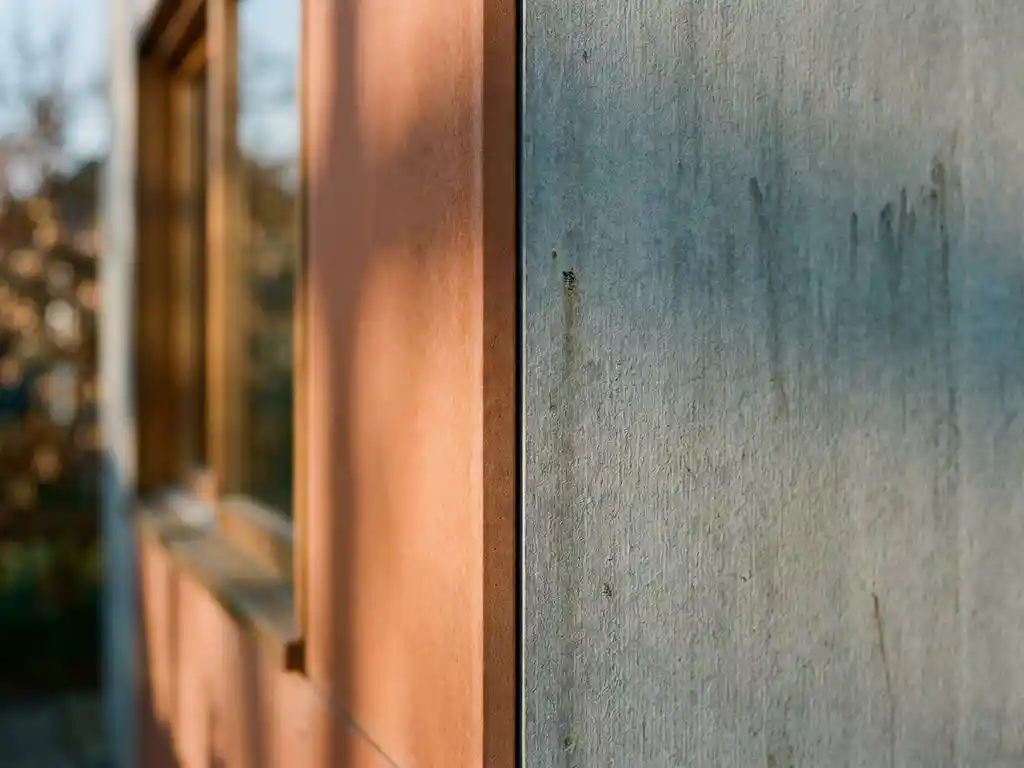
Over a 30-year period, terracotta cladding typically offers a stronger lifecycle cost advantage than fiber cement, primarily because of its superior durability, negligible maintenance requirements, and resistance to UV degradation and moisture damage. Fiber cement can have a lower upfront investment, but recurring maintenance, repainting cycles, and earlier replacement intervals tend to close that gap significantly over time. The sections below break down exactly where each material wins, loses, and surprises.
What makes up the true lifecycle cost of a facade?
The true lifecycle cost of a facade is the sum of its initial installation cost, ongoing maintenance and repair expenses, replacement or refurbishment costs, and end-of-life disposal or recycling value, assessed across the full service life of the building. For most commercial and residential projects, a 30-year window is the standard planning horizon used by architects and specifiers.
When comparing facade cladding materials, it is tempting to focus only on the price per square meter at the point of purchase. But that figure captures only a fraction of what a facade actually costs. The more meaningful calculation includes:
- Material cost at initial installation
- Installation labor and substructure costs, which vary significantly by material weight and fixing system
- Maintenance cycles – cleaning, repainting, sealing, or recoating
- Repair and replacement costs for damaged or degraded panels
- End-of-life costs – whether material can be recycled, landfilled, or reused
A material that appears economical on day one can become expensive by year fifteen if it requires regular repainting or partial replacement. Total cost of ownership, not purchase price, is the metric that matters most for long-term building performance.
How much does terracotta cladding cost over 30 years?
Terracotta cladding carries a higher upfront material and installation cost than many alternatives, but its 30-year lifecycle cost is typically low because the material requires virtually no maintenance, does not fade, does not corrode, and rarely needs replacement under normal conditions. The dominant cost is the initial installation; after that, ongoing expenditure is minimal.
Terracotta is a fired ceramic material, and its properties are locked in at the point of manufacture. There is no coating to peel, no sealant to reapply, and no organic component to degrade under UV exposure. Graffiti can be removed without specialist treatment on many surfaces. These characteristics mean that the cost curve for terracotta is front-loaded and then essentially flat across the remaining decades.
From a substructure perspective, terracotta tiles produced using modern sinter firing techniques can achieve a low surface weight, which reduces the load on the building structure and can lower substructure material requirements. For timber-frame construction in particular, this weight advantage translates directly into structural savings that offset part of the initial material premium.
At the end of a building’s life, terracotta is fully recyclable and can be sorted and reused with minimal effort, meaning disposal costs are low and the material retains residual value. You can explore the range of terracotta formats and surfaces to understand how design flexibility is built into the material from the start.
How much does fiber cement cladding cost over 30 years?
Fiber cement cladding typically has a lower upfront cost than terracotta, but its 30-year total cost is higher than it first appears because the material requires periodic repainting or recoating, is susceptible to moisture ingress if surface coatings fail, and has a shorter effective service life in demanding climates. These recurring costs accumulate significantly over three decades.
Fiber cement panels are manufactured from a composite of cement, cellulose fibers, and sand. The material is durable in moderate conditions, but the surface coating is the weak point. Most manufacturers recommend repainting every eight to twelve years, and in high-UV or coastal environments, that interval can shorten. Each repainting cycle involves scaffolding, surface preparation, and labor, costs that compound over a 30-year horizon.
Moisture management is another consideration. If the surface coating is scratched, chipped, or ages past its effective life, moisture can penetrate the panel core. Swelling, delamination, and biological growth are documented failure modes that can require partial or full panel replacement well before the 30-year mark.
Fiber cement is not classified as non-combustible in the same way as ceramic materials, which can have implications for fire-rated facade specifications and insurance assessments. At end of life, fiber cement panels are more difficult to recycle than ceramic tiles and typically go to landfill, adding a disposal cost that is easy to overlook during initial specification.
Which cladding material has lower maintenance costs?
Terracotta has significantly lower maintenance costs than fiber cement over a 30-year period. Because terracotta is a fully vitrified ceramic material, it does not require repainting, resealing, or surface treatment at any point during its service life. Fiber cement, by contrast, requires periodic recoating to maintain appearance and weather resistance.
The maintenance cost difference between the two materials becomes most visible after the first decade. A fiber cement facade will typically need its first repaint around year eight to twelve, and at least two to three full repaint cycles across a 30-year span. Each cycle requires access equipment, surface cleaning, and skilled labor, none of which is cheap on a large commercial building.
Terracotta maintenance is largely limited to periodic cleaning, which can often be carried out with water and standard cleaning agents. Many terracotta products also include integrated graffiti resistance, which reduces the cost of reactive cleaning in urban environments. The color stability of fired ceramic is permanent – UV radiation does not bleach or shift the tone of the material, so there is no cosmetic maintenance required to keep the facade looking as intended.
For building owners and facilities managers, this difference in maintenance burden also has an indirect cost: management time, scheduling disruption, and the risk of maintenance being deferred and compounding into larger repair bills.
Does the installation method affect long-term costs?
Yes, the installation method has a meaningful impact on long-term facade costs. Ventilated rainscreen systems, which are standard for both terracotta and fiber cement, allow moisture to drain and air to circulate behind the cladding layer. This dramatically reduces the risk of moisture-related damage and extends the effective service life of the facade assembly as a whole.
Where the two materials diverge is in how the fixing system interacts with the panel over time. Terracotta tiles used in modern facade systems typically interlock with vertical aluminum retaining profiles, creating a mechanical fixing that does not rely on adhesives or coatings. This means individual tiles can be removed and replaced without disturbing adjacent panels, a significant advantage if localized damage occurs.
Fiber cement panels are often fixed with visible or concealed screws, and the panels themselves can be harder to replace individually without affecting the surrounding installation. If a panel fails or needs replacement, the repair scope can extend beyond the damaged area, increasing the cost of what might otherwise be a minor intervention.
The weight of the cladding material also affects substructure cost. Heavier panels require more substantial framing, more fixings, and in some cases additional structural support. Lighter ceramic systems reduce substructure requirements, which lowers both installation cost and the long-term risk of substructure fatigue or corrosion. You can see how this plays out in real-world applications by browsing completed facade projects.
Which cladding is cheaper over 30 years?
Terracotta cladding is cheaper over 30 years for most building types when total lifecycle cost is calculated correctly. Although fiber cement has a lower initial price point, the cumulative cost of repainting, potential moisture repairs, and earlier replacement cycles means that fiber cement frequently surpasses terracotta’s total cost of ownership well before the 30-year mark.
The crossover point, where terracotta’s lower running costs offset its higher upfront investment, typically occurs somewhere between years ten and fifteen, depending on the building’s location, climate, and maintenance regime. After that point, every year that passes widens the cost advantage in terracotta’s favor.
It is also worth considering what is not captured in a simple cost-per-year calculation. Terracotta is classified as a non-combustible building material (class A1), which can reduce insurance premiums and simplify compliance with fire safety regulations. It is 100% recyclable, which supports sustainability reporting and may contribute to green building certifications. And because it is produced from natural clay using a high-temperature firing process, its properties are stable and predictable across the full service life, there are no surprises at year twenty.
For architects and developers evaluating facade materials on a total cost of ownership basis, the comparison between terracotta cladding cost and fiber cement cladding cost over 30 years consistently favors ceramic when the full picture is considered. Request samples and technical documentation to support your specification process.
How TONALITY® supports long-term facade value
TONALITY® ceramic facade systems are designed specifically to deliver the lifecycle cost advantages that make terracotta the stronger long-term investment. Every element of the system is engineered to minimize total cost of ownership:
- Zero maintenance surface: Produced using sinter firing at over 1,200 degrees Celsius, TONALITY® tiles achieve a dense, smooth surface that requires no repainting, resealing, or surface treatment across the building’s life.
- Permanent UV and color resistance: The color is fired into the ceramic body, not applied as a coating – it cannot fade, peel, or require cosmetic maintenance.
- Integrated graffiti protection: Reduces reactive cleaning costs in urban and high-traffic locations.
- Low surface weight: At approximately 40 kg per square meter, TONALITY® tiles reduce substructure requirements and are particularly well suited to timber construction.
- Simple mechanical fixing system: Tiles interlock with vertical aluminum retaining profiles, enabling straightforward individual tile replacement without disrupting the surrounding facade.
- Non-combustible (class A1): Fully compliant with demanding fire safety specifications, with no combustible components.
- 100% recyclable: Tiles can be deconstructed and sorted by component type at end of life, supporting circular economy commitments and reducing disposal costs.
- Precision manufacturing: Tiles are produced to within one millimeter tolerance in formats from 150 x 300 mm up to 400 x 1,600 mm, reducing on-site waste and rework.
[cta_contact_form]
If you are comparing terracotta cladding cost against fiber cement cladding cost for an upcoming project, the TONALITY® team can support your specification with technical data, sample materials, and lifecycle analysis. Get in touch with the TONALITY® team to discuss your project requirements and find the right facade solution for your building.