

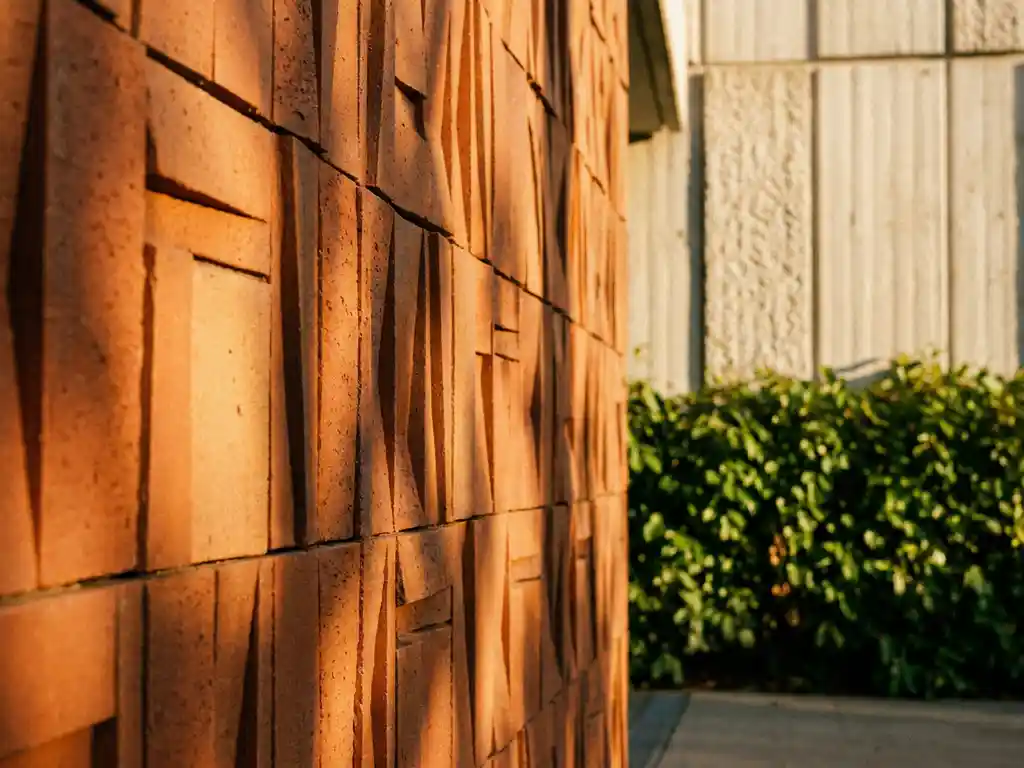
Terracotta colors in facade design refer to the warm, earthy tones derived from fired clay, ranging from pale sandy beige through burnt orange to deep reddish brown. These hues are used to give building exteriors a grounded, natural character that connects architecture to its landscape. The questions below unpack everything from shade families and architectural compatibility to long-term performance and material combinations.
What shades fall under the terracotta color family?
The terracotta color family spans a broad spectrum of warm, clay-derived tones. At its lightest end sit sandy beige and pale ochre; the mid-range includes the classic burnt orange and russet that most people associate with the word terracotta; and the deeper end reaches brick red, sienna, and dark umber. All share an underlying warmth rooted in iron oxide pigmentation.
What makes this family particularly useful in facade design is its internal variety. A designer can move from a sun-baked Mediterranean warmth to a cooler, more Nordic earth tone simply by shifting within the terracotta palette. Subtle surface variation, whether through matte, textured, or smooth finishes, further expands the visual range without leaving the color family. This means a terracotta facade can feel entirely different on a contemporary office building than on a residential block, even when the base hue is similar.
In commercial architecture, the full spectrum is used strategically. Lighter terracotta shades keep large building volumes from feeling heavy, while deeper reds and browns anchor landmark buildings with a sense of permanence and solidity. Exploring the available terracotta surfaces and formats gives a practical sense of how wide this palette genuinely reaches.
How do terracotta colors influence the character of a building facade?
Terracotta colors give a building facade warmth, approachability, and a sense of material honesty. Because these tones are associated with natural clay and earth, they read as grounded and authentic rather than industrial or anonymous. In urban settings, a terracotta exterior softens the visual impact of a large structure and makes it feel more human in scale.
The psychological effect of warm earth tones is well established in environmental design. Buildings clad in terracotta hues tend to feel inviting rather than imposing, which is why these colors appear frequently in mixed-use developments, cultural institutions, and residential towers where the relationship between building and pedestrian matters. In contrast to glass or pale concrete, terracotta reflects and absorbs light in a way that shifts subtly across the day, giving the facade a living quality that changes with the angle of the sun.
From a building exterior design perspective, terracotta also communicates craft and quality. The association with traditional fired ceramics carries connotations of durability and care, which is increasingly valued in an era when architectural authenticity is a genuine differentiator. This is one reason terracotta colors have returned so strongly to architectural design in recent years, appearing on everything from cultural centers to high-end retail facades.
Which architectural styles work best with terracotta facade colors?
Terracotta facade colors work across a wider range of architectural styles than most designers initially expect. They are most naturally associated with Mediterranean, vernacular, and classical architecture, but they integrate equally well into contemporary, Brutalist-influenced, and even industrial design when the right shade and surface texture are chosen.
Contemporary and modernist architecture
In contemporary facade design, terracotta is often used as a counterpoint to glass and steel. Large-format ceramic panels in muted terracotta tones add warmth and texture to otherwise minimal facades, preventing them from feeling cold or generic. The contrast between a smooth, deep terracotta surface and floor-to-ceiling glazing has become a recognizable feature of high-quality urban commercial buildings.
Traditional and contextual architecture
In historic city centers or contexts where planning guidelines require visual continuity with existing masonry, terracotta colors allow a new building to respond respectfully to its surroundings without resorting to pastiche. The earthy palette echoes brick and stone while the ceramic material itself offers a clearly contemporary execution. This balance between contextual sensitivity and architectural integrity is one of the strongest arguments for terracotta in sensitive urban environments.
What’s the difference between natural terracotta and glazed ceramic facade colors?
Natural terracotta achieves its color through the iron content of the clay body itself, fired without any additional coating. The result is a matte, slightly variable surface where tone shifts subtly across individual elements. Glazed ceramic facade colors, by contrast, involve a vitrified coating applied before or during firing, producing a denser, more uniform surface that can achieve colors far outside the natural clay spectrum.
For facade textures and visual character, the distinction matters considerably. Natural terracotta has an inherent depth and slight surface variation that reads as organic and warm, even on large building surfaces. Glazed ceramics offer precision and consistency, and they can be pushed toward deeper, richer tones or even cooler hues while still referencing the terracotta family through their warm undertones.
In practical terms, glazed surfaces tend to be denser and more resistant to surface absorption, which affects both maintenance and long-term color stability. The sinter-firing process used in high-quality ceramic facade production, where elements are fired at temperatures exceeding 1,200 degrees Celsius, produces surfaces that are exceptionally smooth and dense regardless of whether a glaze is applied, delivering the best qualities of both approaches.
How do terracotta facade colors perform over time?
High-quality terracotta and ceramic facade colors are among the most stable exterior finishes available. Because the color in fired ceramic is locked into the material at a molecular level during the kiln process, it cannot fade, peel, or chalk the way paint or applied coatings can. UV resistance is inherent to the material rather than dependent on a surface treatment that degrades over time.
This is a critical consideration in building exterior design because facade color consistency across decades directly affects how a building ages. A terracotta ceramic facade that looked warm and considered on completion will look the same twenty or thirty years later, without repainting or refinishing cycles. This long-term color stability is one of the strongest lifecycle cost arguments for ceramic over alternative cladding systems.
Permanent UV and color resistance also means that terracotta facades in high-sun exposures, coastal environments, or polluted urban settings maintain their appearance without specialist intervention. Many ceramic facade systems also incorporate integrated protection against graffiti and surface soiling, further reducing the maintenance burden over the building’s lifetime. For project teams evaluating total cost of ownership rather than upfront specification, this performance profile is a compelling argument.
Can terracotta facade colors be combined with other exterior materials?
Yes, terracotta facade colors combine exceptionally well with a range of exterior materials. The most effective pairings are those where the warmth of terracotta is balanced by a cooler or more neutral counterpart: raw concrete, weathered steel, natural timber, and dark-toned glass all work well in combination with terracotta ceramic panels.
In contemporary architectural design, mixed-material facades are increasingly common because they allow designers to articulate different functional zones of a building through material change. A terracotta ceramic body paired with a concrete base and aluminum window frames, for instance, creates a clear visual hierarchy without relying on color contrast alone. The facade patterns created by alternating terracotta panels with recessed glazing or projecting elements like a brise-soleil facade add depth and shadow play that enrich the overall composition.
Timber is a particularly interesting pairing because both materials carry natural, organic associations that reinforce each other. Terracotta ceramic is also well suited to timber-frame construction from a technical standpoint, given its low surface weight, which reduces structural demands on the substructure. You can explore how these combinations have been realized in built projects through completed facade references.
How TONALITY® brings terracotta color to life on your facade
TONALITY® ceramic facade systems are designed specifically to give architects and specifiers full control over terracotta color, surface, and format, without compromising on performance or longevity. Every element is produced from the high-quality clay deposits of the Westerwald region and fired at over 1,200 degrees Celsius, locking in color permanently and creating surfaces that are dense, smooth, and maintenance-free from day one.
Here is what TONALITY® brings to terracotta facade projects specifically:
- Broad terracotta color range: From pale sandy ochre through classic burnt orange to deep brick red, available across a wide selection of surface textures and finishes
- Precision manufacturing: Facade tiles produced to within one millimeter, in formats from 150 x 300 mm up to 400 x 1,600 mm, enabling precise facade patterns and large-format designs
- Permanent UV and color stability: No coatings, no repainting, no fading, giving architects confidence that the facade will look as intended for decades
- Integrated graffiti protection: Suitable for urban locations where surface protection is a practical requirement
- Non-combustible material class A1: Particularly relevant for timber construction projects where fire protection requirements are stringent
- Low surface weight: Around 40 kilograms per square meter, enabling lighter substructures and faster installation
- 100% recyclable: Fully deconstructable and sortable by component type, supporting circular construction principles
[cta_contact_form]
Whether you are specifying a terracotta facade for a commercial development, a cultural building, or a residential project, TONALITY® offers the material quality and design flexibility to realize your vision precisely. Request samples and downloads to see the terracotta color range in person, or get in touch with the sales team to discuss your project requirements directly.