

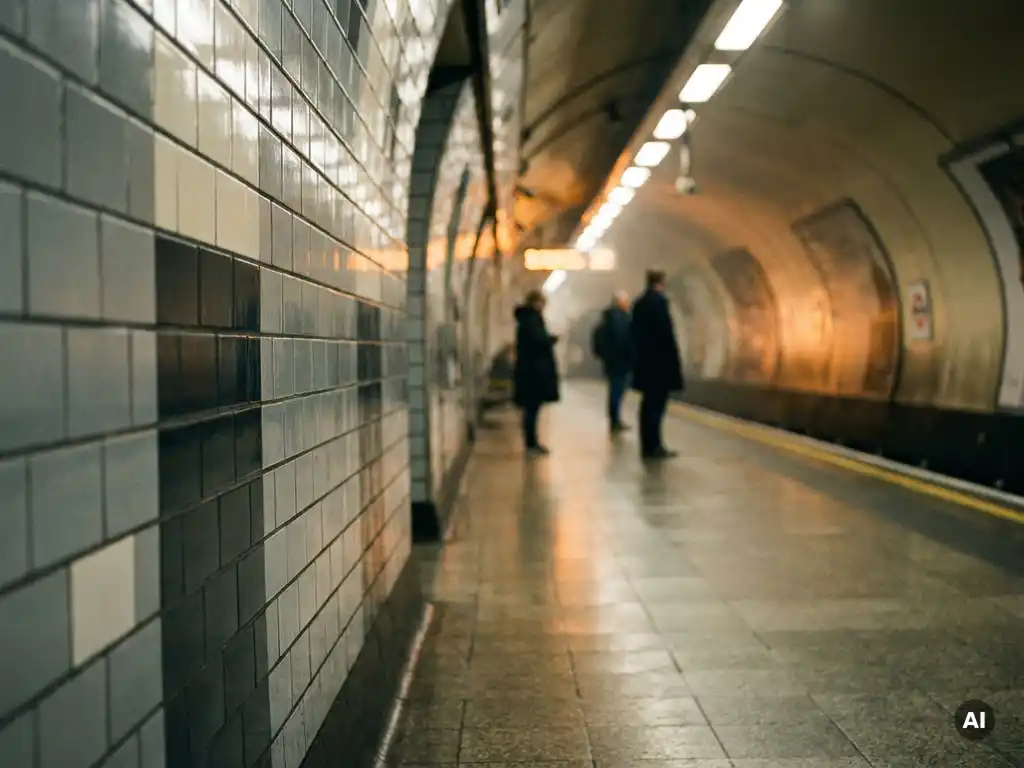
Ceramic surfaces are highly suitable for underground stations because they combine exceptional durability, non-combustibility, and near-zero maintenance requirements in one material. These properties directly address the most critical challenges of subterranean public infrastructure: constant moisture exposure, strict fire safety regulations, and relentless foot traffic. The sections below answer the most common questions architects and specifiers ask when evaluating ceramic cladding for metro and subway environments.
What makes underground stations so demanding on surface materials?
Underground stations place extreme stress on surface materials because they combine high humidity, temperature fluctuations, mechanical impact, and fire safety requirements in a single enclosed environment. Unlike above-ground buildings, metro stations have no natural ventilation, no direct sunlight for drying, and passenger volumes that can reach tens of thousands per day, all of which accelerate material degradation.
The specific challenges that surface materials must withstand in underground stations include:
- Persistent moisture and condensation caused by air pressure changes from passing trains and limited airflow
- Mechanical abrasion from luggage, maintenance equipment, and constant physical contact
- Chemical exposure from cleaning agents, graffiti, and exhaust residues
- Fire safety requirements that are far stricter than standard commercial buildings due to limited evacuation routes
- Long service life expectations, since refurbishment in an operational metro station is logistically complex and costly
A material that performs well in a standard commercial interior will often fail rapidly in this environment. This is why specifiers working on public transport infrastructure consistently turn to proven facade solutions with a documented track record in demanding conditions.
How do ceramic surfaces hold up against moisture and humidity underground?
Ceramic surfaces perform exceptionally well against moisture and humidity in underground stations because their dense, sintered structure leaves virtually no pores for water to penetrate. High-fired ceramic tiles achieve very low water absorption rates, meaning moisture cannot work its way into the material to cause cracking, swelling, or mold growth over time.
This resistance comes directly from the manufacturing process. When ceramic is fired at temperatures exceeding 1,200 degrees Celsius, the raw clay particles fuse into a dense, glassy matrix. The result is a surface that repels standing water, resists condensation buildup, and remains dimensionally stable even through repeated wet-dry cycles.
In underground environments where walls and floors are regularly cleaned with high-pressure water or aggressive cleaning agents, this impermeability is a practical advantage. Ceramic does not absorb cleaning chemicals, does not stain from mineral deposits, and does not support bacterial or fungal growth the way porous materials can. Over a multi-decade service life, this translates directly into lower life-cycle costs and a consistently clean appearance without surface treatments or sealants.
Why are ceramic facades classified as non-combustible in public infrastructure?
Ceramic cladding is classified as non-combustible because it contains no organic or combustible components. Fired ceramic is an inorganic mineral material, and when exposed to fire, it does not ignite, does not contribute fuel to a fire, and does not release toxic gases. This places it in the highest fire safety classification available for building materials.
In many European building codes, this classification is described as building material class A1, which means the material is non-combustible with no contribution to fire at all. For underground stations, where evacuation routes are limited and smoke accumulation can be life-threatening within minutes, specifying A1-classified materials on walls and ceilings is often a regulatory requirement rather than a design preference.
Beyond regulatory compliance, the fire safety profile of ceramic cladding offers a practical advantage during incidents. Unlike composite panels or polymer-based cladding systems that can melt, drip, or delaminate under heat, ceramic tiles remain structurally intact. This helps maintain the integrity of evacuation routes and reduces post-fire remediation requirements, both of which have significant implications for the total cost of ownership of a station’s surface finishes.
How does ceramic compare to alternative cladding materials in metro stations?
Ceramic outperforms most alternative cladding materials in metro stations across the criteria that matter most: fire safety, moisture resistance, long-term appearance, and maintenance burden. While materials such as glass, stone, metal panels, and fiber cement each have specific strengths, none combine all of these properties as consistently as high-fired ceramic.
Ceramic versus natural stone
Natural stone offers a premium aesthetic but is significantly heavier than ceramic, which increases structural load requirements and complicates installation. Stone is also more porous than high-fired ceramic, making it more susceptible to staining and moisture ingress in humid underground environments. Ceramic tiles can be produced to closely replicate stone appearances while delivering better technical performance and considerably lower surface weight.
Ceramic versus metal and composite panels
Metal panels and aluminum composite materials are lightweight and fast to install, but many composite systems include a polymer core that places them in lower fire safety classifications. In metro applications where A1 non-combustibility is required, these materials are often disqualified outright. Ceramic carries no such limitation. Metal surfaces also show scratches, dents, and graffiti more visibly than ceramic, and their long-term appearance in high-traffic environments tends to deteriorate faster without protective coatings that require periodic renewal.
For architects evaluating available surfaces and formats, ceramic offers a breadth of design options that few alternative materials can match while maintaining technical superiority in the most critical performance categories.
What maintenance does ceramic cladding actually require in high-traffic stations?
Ceramic cladding in underground stations requires minimal maintenance. Routine cleaning with standard commercial cleaning agents is typically sufficient to keep ceramic surfaces looking consistent over decades of use. Unlike painted surfaces, coated panels, or natural stone, high-fired ceramic does not need periodic resealing, recoating, or surface treatment to maintain its performance or appearance.
The practical maintenance routine for ceramic in a metro environment generally involves:
- Regular wet cleaning using standard detergents or pH-neutral cleaning agents, compatible with automated cleaning systems
- Graffiti removal without special products, because the dense ceramic surface resists paint penetration and allows graffiti to be cleaned without damaging the tile itself
- Periodic inspection of mechanical fixings and substructure components rather than the ceramic surface itself
The integrated graffiti resistance of sintered ceramic is particularly relevant in public transport environments, where vandalism is a recurring operational challenge. Because the surface is non-porous, spray paint and marker residue sit on the surface rather than soaking in, making removal straightforward without abrasive methods that would damage softer materials.
Over a full building life cycle, this low-maintenance profile represents a meaningful operational advantage. Metro operators and facility managers can direct resources toward other priorities rather than scheduling frequent surface restoration work.
How TONALITY® supports ceramic cladding projects in public transport
TONALITY® ceramic facade systems are engineered specifically to meet the technical demands of infrastructure projects like underground stations, metro lines, and public transport hubs. The product range addresses each of the performance requirements discussed in this article through a combination of material quality, system design, and production precision.
Key features relevant to public transport applications include:
- Building material class A1 classification, confirming non-combustibility with no contribution to fire
- Low surface weight of approximately 40 kg per square meter, reducing structural load and enabling lighter substructures
- Sinter firing at over 1,200 degrees Celsius, producing a dense, smooth, and virtually non-porous surface
- Integrated graffiti protection without additional coatings or treatments
- Precision production to within one millimeter, supporting clean joints and consistent appearance across large surface areas
- 100% recyclability and deconstruction by component type, supporting sustainable infrastructure planning
- A wide range of formats, from 150 x 300 mm up to 400 x 1,600 mm, allowing flexible design responses to different station geometries
TONALITY® facade elements interlock with vertical aluminum retaining profiles, making installation straightforward even in the constrained working conditions typical of underground construction sites.
[cta_contact_form]
If you are specifying ceramic cladding for a metro station, subway entrance, or public transport facility, the TONALITY® team can support your project from material selection through technical documentation. Get in touch with the sales team to discuss your project requirements, or request samples and technical downloads to begin your evaluation.