

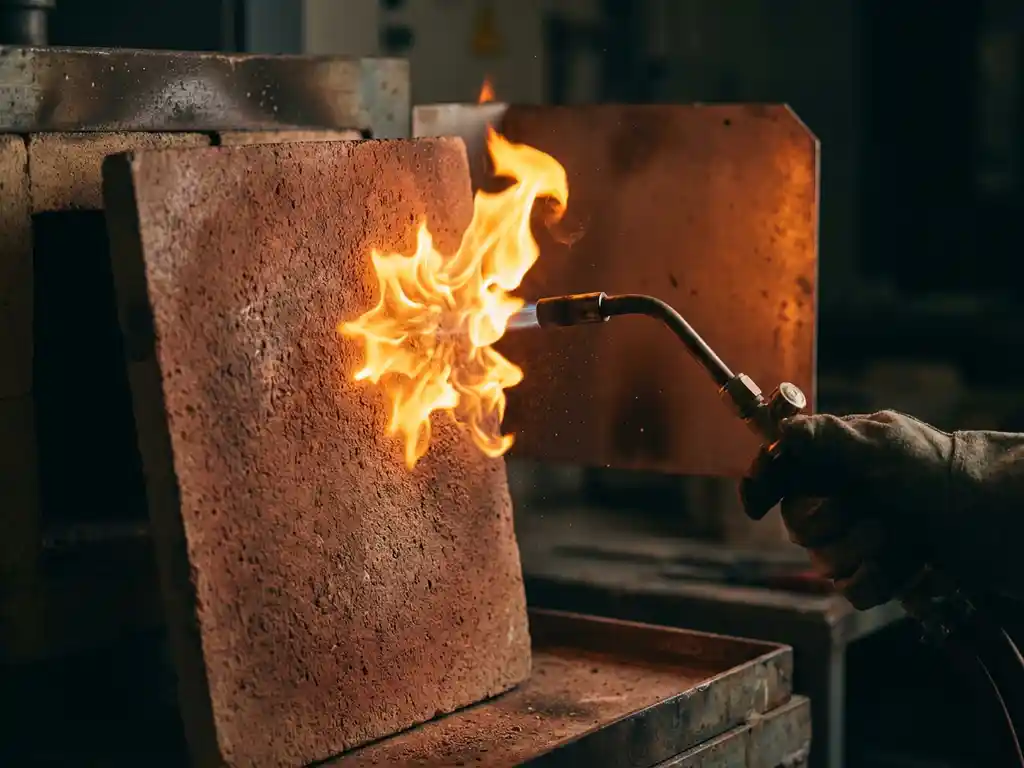
Terracotta facades are highly fire resistant. Ceramic facade materials, including terracotta, are classified as building material class A1, the highest non-combustible rating under European fire standards. This means they contain no combustible components whatsoever and will not contribute to the spread of fire. The sections below break down what that classification means in practice, how it is achieved, and how terracotta compares to other facade materials.
What fire classification do terracotta facades carry?
Terracotta facades carry building material class A1, the highest fire classification available under European standard EN 13501-1. Class A1 materials are defined as non-combustible and contain no organic or combustible components. This classification applies to the ceramic elements themselves, meaning they will not ignite, burn, or release heat or smoke in a fire scenario.
For construction project managers and facade contractors, this classification carries significant practical weight. A1-rated facade cladding simplifies compliance with fire protection requirements in building regulations, reduces the need for additional fire-rated barriers in many configurations, and supports approval processes for multi-storey and high-rise projects where facade fire performance is subject to strict scrutiny. Because the A1 rating is intrinsic to the material, it does not degrade over time or require periodic re-certification the way some applied coatings or composite systems might. You can explore completed projects featuring ceramic facade systems to see how A1-rated cladding has been applied across a range of building types and heights.
How does the firing process make ceramic facades fire resistant?
The fire resistance of terracotta and ceramic facades is a direct result of how they are manufactured. During production, ceramic elements are fired at temperatures exceeding 1,200 degrees Celsius through a sinter firing process. At these extreme temperatures, all organic material within the raw clay is completely burned away, and the mineral particles fuse into a dense, vitrified structure. The finished product is fundamentally inorganic and thermally stable.
This is not a surface treatment or an additive. The non-combustibility is built into the molecular structure of the material itself. When exposed to fire, a sintered ceramic facade element will not melt, drip, or release flammable gases. The dense surface that results from sinter firing also resists thermal shock better than lower-fired ceramics, meaning the material maintains its structural integrity even under significant heat exposure. This is why ceramic facade systems can carry the A1 classification without qualification or limitation. For a closer look at the range of available surfaces and formats, including how different finishes are achieved through the firing process, the full product overview provides useful technical detail.
Are terracotta facades suitable for timber construction?
Yes, terracotta facades are particularly well suited to timber construction, and their fire classification is a central reason why. Timber frame and cross-laminated timber buildings require facade cladding that compensates for the combustibility of the structural substrate. An A1-rated ceramic cladding provides a non-combustible outer layer that helps contain fire spread at the building envelope, which is a critical consideration for regulatory approval of timber construction projects.
Beyond fire performance, the low surface weight of single-layer ceramic facade panels makes them compatible with the lighter load-bearing capacity typical of timber structures. Reduced substructure requirements follow naturally from lower dead weight, which translates into material savings and faster installation. The combination of excellent fire protection properties and low structural demand makes ceramic facade systems a logical choice for the growing timber construction sector, where both sustainability and safety performance are priorities.
What’s the difference between terracotta and other fire-rated facade materials?
The key distinction is between materials that are inherently non-combustible and those that achieve a fire rating through composition or treatment. Terracotta and ceramic cladding are A1 by nature because they are entirely inorganic. Many other facade materials, including certain fiber cement boards, high-pressure laminates, and composite panels, achieve fire ratings through the inclusion of mineral fillers or fire-retardant additives, which places them in lower classifications such as A2 or B.
A2-rated materials, for example, contain only a very limited amount of combustible content and will not significantly contribute to fire, but they are not equivalent to A1. Materials rated B or below may self-extinguish but can still contribute heat or smoke under fire conditions. For projects with stringent fire safety requirements, particularly high-rise buildings or structures with sensitive occupancies, the difference between A1 and A2 can affect which facade systems are permissible under local building codes. Terracotta’s unconditional A1 status removes ambiguity from that compliance process entirely. Architects and specifiers who want to evaluate material options in detail can request samples and technical documentation to support their fire compliance assessments.
Does graffiti protection or surface coating affect fire resistance?
When graffiti protection is integrated into the ceramic element during the manufacturing process rather than applied as a separate surface coating afterward, it does not compromise the fire classification of the facade. Ceramic facade elements with integrated graffiti protection maintain the A1 fire rating without the need for topical sealants or organic lacquers that could introduce combustible material to the surface.
This distinction matters for specification. Topically applied graffiti coatings, particularly solvent-based or resin-based products, can in some cases alter the fire performance of a facade assembly. If a coating introduces a measurable organic layer to a facade surface, it may require re-testing or reclassification of the overall system. Specifying ceramic facade systems where protective properties are inherent to the fired material avoids this complication entirely. The result is a facade that is low maintenance, resistant to vandalism, and fully fire classified without any trade-off between those performance attributes.
How TONALITY® helps with fire-safe facade specification
TONALITY® ceramic facade systems are engineered to meet the highest fire safety standards without compromise. For architects, project managers, and facade contractors working on buildings where fire performance is non-negotiable, TONALITY® offers a clear and complete solution:
- Certified A1 fire classification on all ceramic facade elements, with no combustible components and no reliance on coatings or additives to achieve the rating
- Integrated graffiti protection built into the fired material, preserving the A1 classification without introducing organic surface layers
- Compatibility with timber construction, providing a non-combustible outer envelope for cross-laminated timber and timber frame structures
- Low dead weight that reduces structural load demands while delivering full fire performance, simplifying both engineering and installation
- Full technical documentation to support building regulation submissions and fire compliance processes across European markets
Whether you are specifying for a high-rise residential project, a public building, or a timber-frame development, TONALITY® provides the fire safety credentials your project demands. Get in touch with the TONALITY® team to discuss your project requirements and receive tailored technical support.