

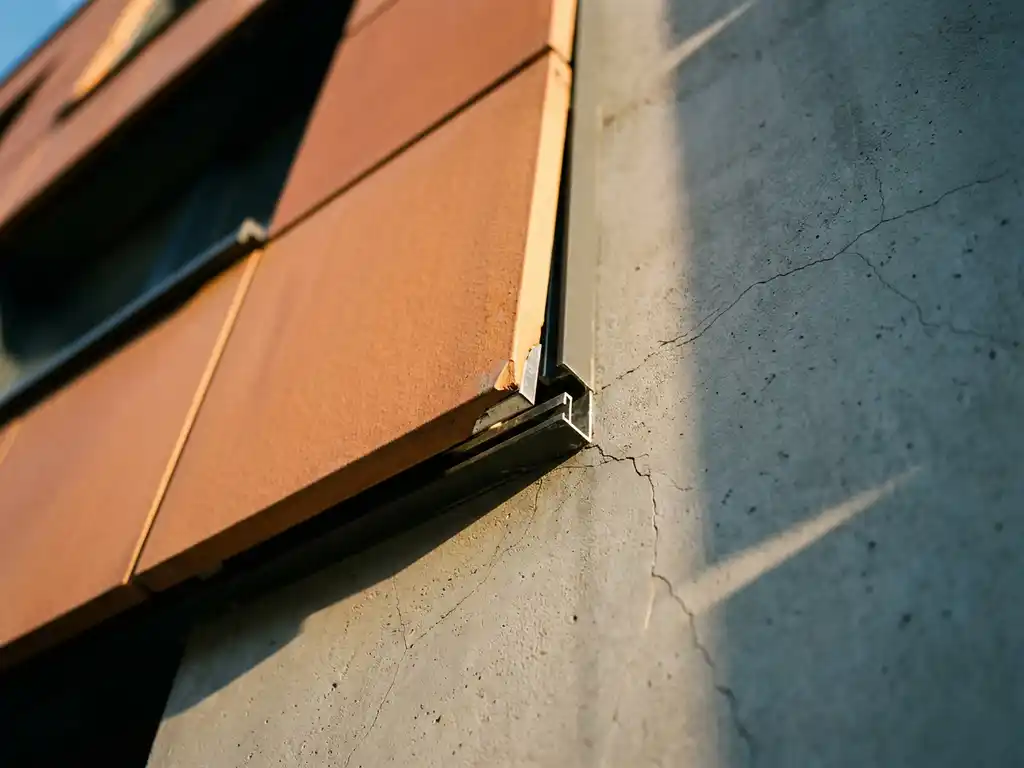
Yes, terracotta facades can be used in seismic zones, provided the facade system is designed, engineered, and installed to meet the structural requirements of the relevant seismic classification. The key factor is not the ceramic material itself but the mounting system and its ability to accommodate dynamic movement without transferring destructive forces to the cladding. The sections below address the most important technical and regulatory questions contractors and project managers face when specifying ceramic facade systems for seismically active regions.
How do terracotta facade systems perform during earthquakes?
Terracotta facade systems perform well in seismic conditions when they are mounted using ventilated rainscreen substructures that allow independent movement between the cladding and the primary building structure. Because the ceramic elements are mechanically fixed rather than adhesively bonded, the facade can flex and shift relative to the building without cracking or detaching. This decoupled behavior is a fundamental seismic advantage over rigidly bonded cladding systems.
During a seismic event, a building experiences horizontal and vertical accelerations. A facade system must absorb these forces without transferring them directly into the ceramic tiles. Modern ceramic facade systems use aluminum retaining profiles that interlock with profiled ceramic elements, allowing controlled micro-movement at each fixing point. This mechanical flexibility distributes stress across the entire system rather than concentrating it at individual tiles, significantly reducing the risk of localized failure.
The inherent brittleness of fired ceramic is a material characteristic that system designers account for through appropriate joint sizing, panel dimensions, and fixing geometry. When these parameters are correctly specified for the seismic demand of a given site, the ceramic elements themselves are rarely the limiting factor in facade performance.
What seismic standards apply to ceramic facade cladding?
In Europe, ceramic facade cladding in seismic zones must comply with EN 1998, commonly known as Eurocode 8, which governs the design of structures for earthquake resistance. Facade systems are treated as non-structural components under this standard, and their fixing systems must be verified to resist seismic forces proportional to the building’s seismic zone classification and the facade’s position on the structure.
Beyond Eurocode 8, national annexes in countries such as Italy, Greece, Portugal, and Romania impose additional requirements that reflect local seismic hazard maps. Project teams working in these markets must verify that the facade system supplier can provide documentation confirming compliance with both the European standard and the applicable national annex.
Outside Europe, comparable standards include the International Building Code in the United States, which references ASCE 7 for seismic design of non-structural components, and equivalent national codes in Japan, New Zealand, and other high-seismicity markets. The underlying engineering principle across all these frameworks is consistent: the facade fixing system must be independently verified to resist calculated seismic forces without relying on the primary structure for lateral stability of the cladding. Reviewing technical documentation and system specifications early in the design phase helps project teams confirm compliance before committing to a particular facade solution.
Why does facade dead weight matter in seismic zone calculations?
Facade dead weight matters in seismic calculations because seismic force is directly proportional to mass. A heavier facade generates larger inertial forces during ground motion, which must be resisted by the fixing system, the substructure, and ultimately the primary building frame. Reducing facade weight reduces seismic demand across the entire load path, simplifying structural engineering and lowering material requirements.
This is one area where modern ceramic facade systems offer a measurable engineering advantage. Single-layer ceramic facade tiles carry a surface weight of approximately 40 kilograms per square meter, which is substantially lower than many alternative cladding materials such as stone, concrete panels, or thick brick slips. A lighter facade means smaller anchor loads, lighter substructure profiles, and reduced seismic demand on the building’s primary structure.
For new construction in seismic zones, specifying a lightweight ceramic facade system can reduce the overall structural steel or concrete required to resist facade-induced seismic forces. For renovation projects where existing structures have limited reserve capacity, a low dead weight facade may be the only technically viable option for re-cladding without costly structural upgrades. The lifecycle value of this weight advantage extends well beyond installation, contributing to long-term structural efficiency and reduced maintenance complexity. Exploring completed projects in comparable contexts can give structural engineers and project managers a clearer picture of how these systems perform across different building types and seismic conditions.
What installation details make ceramic facades seismically safe?
The installation details that make ceramic facades seismically safe are those that allow controlled relative movement between the ceramic elements and the substructure while maintaining secure retention under dynamic loading. The most critical details are joint sizing, fixing tolerance, and the connection between the substructure and the primary building structure.
Joint sizing and movement accommodation
Open joints between ceramic panels must be sized to accommodate both thermal movement and seismic displacement without the panel edges making contact. When panels touch under dynamic loading, point loads concentrate at the ceramic edge, which can cause chipping or cracking. Seismic joint calculations are typically performed by the structural engineer of record and must account for the inter-story drift expected at the design seismic level.
Substructure anchorage and sliding connections
The vertical aluminum retaining profiles that support ceramic elements must be anchored to the primary structure using brackets that allow in-plane sliding while resisting out-of-plane forces. This sliding connection permits the facade to move with the building during an earthquake without the substructure becoming a rigid link that transfers seismic forces into the ceramic. Bracket specifications for seismic applications are typically provided by the facade system manufacturer as part of their technical documentation package, and independent structural verification is recommended for high-seismicity sites.
Are terracotta facades approved for high-seismic-risk buildings?
Yes, terracotta and ceramic facade systems can be approved for high-seismic-risk buildings, but approval depends on the specific system configuration, the fixing details, and the structural engineering analysis for the project. No generic material approval covers all seismic applications; each project requires a system-specific assessment against the applicable seismic standard.
Facade system manufacturers who supply to seismically active markets typically provide test data and engineering documentation that supports the approval process. This documentation usually includes pull-out and shear test results for the fixing system, calculated resistance values under seismic loading, and installation specifications that must be followed to maintain the validated performance. Project teams should request this documentation early in the design phase to ensure the chosen system can be approved within the project’s regulatory framework.
For buildings in the highest seismic risk categories, such as essential facilities or structures in zones with very high peak ground acceleration, the facade system may require third-party structural verification in addition to the manufacturer’s documentation. Working with a facade supplier that has established technical support processes and can provide project-specific engineering assistance is particularly valuable in these contexts. Ceramic facade systems that combine low dead weight with mechanically interlocking fixing profiles are well positioned to meet these requirements, since both characteristics directly address the primary engineering demands of seismic facade design.
How TONALITY® helps with seismic facade design
TONALITY® offers a ventilated terracotta facade system engineered to meet the demands of seismically active regions. The system’s mechanically interlocking aluminum retaining profiles and low-dead-weight ceramic panels address the core engineering requirements that seismic standards impose on non-structural facade components. Specifically, TONALITY® supports seismic projects through:
- Low surface weight of approximately 40 kg/m², reducing inertial forces and seismic demand on the primary structure and substructure
- Mechanically fixed, decoupled mounting that allows controlled relative movement between ceramic elements and the building frame without adhesive bonding
- Flexible joint and panel configurations sized to accommodate inter-story drift and thermal movement simultaneously
- Comprehensive technical documentation, including system test data and installation specifications, to support regulatory approval processes in European and international seismic zones
- Project-specific engineering support for high-seismicity applications requiring third-party verification or custom bracket detailing
If you are specifying a ceramic facade for a project in a seismic zone, contact the TONALITY® team to discuss system configurations, obtain technical documentation, and get support for your structural approval process.
Related Articles
- How do you match new ceramic facade tiles to an existing building during a renovation?
- What role does facade texture play in architectural design?
- How does ceramic cladding perform against UV degradation over decades of exposure?
- Can terracotta facades withstand extreme weather conditions?
- How do BAS terracotta installation methods work?