

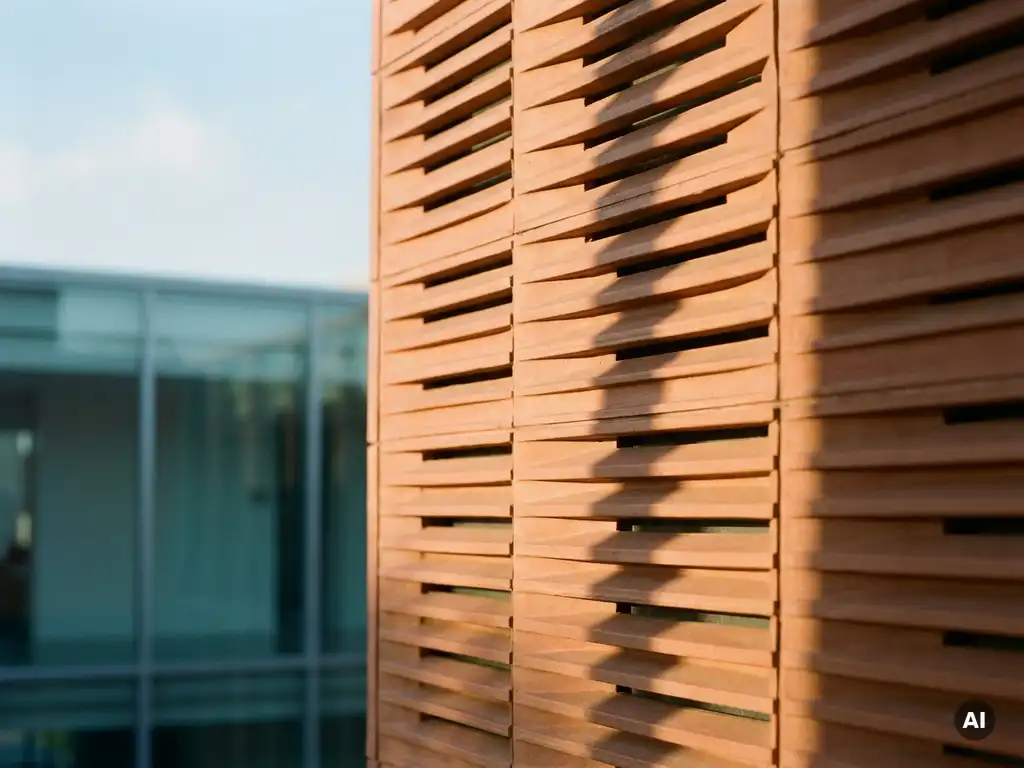
A terracotta facade reduces a building’s lifetime energy use primarily through the ventilated cavity it creates between the cladding and the insulation layer. This air gap acts as a thermal buffer, reducing heat gain in summer and heat loss in winter, which directly lowers the demand placed on heating and cooling systems. The sections below unpack the specific mechanisms, comparisons, and long-term benefits that make ceramic cladding one of the most energy-conscious choices in contemporary architecture.
How does a ventilated terracotta facade actually save energy?
A ventilated terracotta facade saves energy by creating a continuous air cavity between the ceramic cladding and the building’s insulation layer. This cavity allows warm air to rise and escape naturally, a process known as the chimney effect, which prevents solar heat from reaching the structural wall. The result is a measurable reduction in cooling loads during summer and a buffering effect that supports heating efficiency in winter.
The mechanism works in both directions across the seasons. In summer, solar radiation heats the outer ceramic surface, but the rising air within the cavity carries that heat away before it can conduct through to the interior. In winter, the cavity reduces wind-driven heat loss by sheltering the insulation from direct exposure to cold, wet air. Together, these effects mean the building’s thermal envelope performs closer to its theoretical design specification throughout the year.
Beyond the cavity itself, the ceramic elements contribute by remaining dimensionally stable and gap-free over time. Unlike some cladding materials that warp, crack, or shrink with age, well-fired ceramic tiles maintain their geometry, which preserves the integrity of the ventilation channel and the insulation layer behind it. This consistency is what makes ceramic facade formats a reliable long-term investment in energy performance rather than a short-term gain that degrades.
What role does thermal mass play in ceramic facade performance?
Thermal mass in a ceramic facade refers to the material’s capacity to absorb, store, and gradually release heat. Terracotta has moderate thermal mass, which means it can dampen temperature swings at the facade surface, slowing the rate at which heat enters or leaves the building envelope. When combined with a ventilated cavity and adequate insulation, this thermal buffering effect contributes to a more stable interior climate.
It is worth distinguishing between the role of the ceramic cladding and the role of the insulation layer behind it. The insulation does the heavy lifting in preventing heat transfer. The ceramic’s thermal mass acts as a secondary regulator, absorbing peak heat during the hottest part of the day and releasing it slowly as temperatures drop. In climates with significant day-to-night temperature variation, this lag effect can meaningfully reduce the peak load on cooling systems.
The density and firing quality of the ceramic material matter here. Terracotta produced through a high-temperature sinter firing process at over 1,200 degrees Celsius results in a dense, low-porosity surface. This density supports consistent thermal behavior over time, because the material does not absorb moisture that could otherwise alter its thermal properties or add weight to the facade system.
How does a terracotta facade compare to glass or composite cladding for energy use?
Terracotta facades generally outperform glass and many composite cladding systems for building energy use, primarily because ceramic is opaque, has moderate thermal mass, and supports ventilated cavity construction. Glass facades, particularly single- or double-glazed curtain wall systems, allow significant solar gain and require substantial mechanical cooling to compensate. Composite panels vary widely, but many lack the thermal mass and long-term dimensional stability of fired ceramic.
Terracotta versus glass cladding
Glass cladding maximizes natural light and visual transparency, but it also maximizes solar heat gain. Even high-performance glazing with low-emissivity coatings introduces far more solar radiation into a building than an opaque ceramic facade. This places a heavier burden on mechanical cooling, which increases operational energy use over the building’s lifetime. Terracotta’s opacity is an energy advantage in most climates, particularly on south- and west-facing elevations where solar exposure is highest.
Terracotta versus composite panels
Composite cladding panels, such as aluminium composite material, are lightweight and offer good design flexibility, but they typically have low thermal mass and can be prone to surface degradation over time. Some composite systems also incorporate combustible cores, which affects fire classification and can influence insurance and regulatory requirements. Terracotta is classified as building material class A1, meaning it is fully non-combustible, which is a meaningful distinction when comparing the full life-cycle performance of a facade system.
Does facade colour and surface texture affect a building’s energy performance?
Yes, facade colour and surface texture both affect energy performance in measurable ways. Lighter colours reflect more solar radiation, reducing surface temperatures and heat transfer into the building, while darker colours absorb more heat. Surface texture influences how light scatters across the facade and can also affect how efficiently the ventilated cavity dissipates heat. For architects optimising terracotta cladding energy savings, colour selection is a practical design lever.
In practical terms, a light-coloured terracotta facade on a south-facing elevation in a warm climate will absorb significantly less solar energy than a dark-coloured equivalent. This translates directly into lower surface temperatures within the ventilated cavity, which reduces the amount of heat the chimney effect needs to dissipate. In cooler climates, the calculation shifts, and darker facades can actually contribute to passive solar gain in a beneficial way during winter months.
Surface texture adds another dimension. Smooth, dense surfaces reflect light more uniformly, while structured or profiled surfaces create micro-shadows and increase the total radiating surface area. A textured facade can release stored heat more efficiently through radiation, which supports the overall thermal performance of the ventilated system. The wide range of surfaces and formats available in ceramic facades means architects can tune both the aesthetic and the energy behavior of the cladding simultaneously.
How long do the energy benefits of a terracotta facade last?
The energy benefits of a terracotta facade last for the full service life of the building, which for high-quality ceramic cladding is measured in decades. Because the energy performance of a ventilated facade depends on the integrity of the cavity, the insulation, and the cladding itself, the key question is how well each component retains its properties over time. Fired ceramic is among the most durable facade materials available, with permanent UV resistance and no degradation of surface properties.
Many cladding materials lose performance gradually. Paints fade, composites delaminate, and some materials absorb moisture in ways that alter their thermal behavior. Terracotta produced through a sinter firing process at high temperatures is inherently UV stable and does not rely on surface coatings for its colour or density. This means the thermal and reflective properties of the facade remain consistent from the year of installation through to the end of the building’s life.
The ventilated cavity itself also benefits from the dimensional stability of ceramic. Because the tiles do not warp or shift significantly over time, the cavity geometry remains intact, preserving the chimney effect that drives the energy performance of the system. Maintenance requirements are minimal, and the facade does not need periodic replacement or treatment to sustain its energy contribution. You can explore completed projects to see how ceramic facades perform across a range of building types and climates.
Can terracotta facades contribute to green building certifications?
Yes, terracotta facades can contribute to green building certifications such as LEED, BREEAM, and DGNB. These certification frameworks assess buildings across multiple categories, including energy efficiency, material sustainability, and end-of-life recyclability. A ventilated ceramic facade system can generate credits or points in several of these categories simultaneously, making it a strategically valuable choice for projects pursuing formal sustainability recognition.
On the energy side, the reduced heating and cooling loads supported by a ventilated facade system contribute directly to the energy performance modelling that underpins most certification schemes. On the materials side, terracotta is a natural, inorganic material produced from clay without synthetic binders or coatings. It is 100% recyclable and can be deconstructed and sorted by component type at the end of a building’s life, which supports circular economy credits within certification frameworks.
The non-combustible classification of ceramic at building material class A1 also supports compliance with fire safety requirements that some certification schemes incorporate. For project teams working toward a specific certification target, the combination of ventilated facade energy performance, material transparency, recyclability, and fire safety makes ceramic cladding a straightforward choice to justify within a sustainability brief. Requesting technical documentation and samples early in the design process can help certification teams gather the material data they need.
How TONALITY® supports energy-efficient facade design
TONALITY® ceramic facade systems are engineered to deliver the energy performance benefits described throughout this article, with the added advantage of exceptional design freedom. For architects and developers working on projects where both sustainability and aesthetics are non-negotiable, TONALITY® offers a concrete solution backed by manufacturing precision and material quality.
Key features that directly support terracotta facade energy efficiency include:
- Ventilated facade system: Ceramic elements interlock with vertical aluminium retaining profiles, creating a consistent cavity that supports the chimney effect and long-term thermal performance.
- High-temperature sinter firing: Production at over 1,200 degrees Celsius produces dense, low-porosity tiles with stable thermal properties and permanent UV resistance, ensuring energy performance does not degrade over time.
- Low surface weight: At approximately 40 kilograms per square metre, TONALITY® tiles are particularly suited to timber construction and other lightweight structures where substructure loads must be minimised.
- Building material class A1: Fully non-combustible, supporting both fire safety compliance and green building certification requirements.
- Wide colour and surface range: Enables architects to optimise facade colour for solar reflectance or absorption based on climate and orientation, without compromising design intent.
- 100% recyclable: Supports circular economy credits within LEED, BREEAM, and DGNB certification frameworks.
[cta_contact_form]
Whether you are designing a new build or specifying a facade upgrade, the TONALITY® team can provide technical guidance, material samples, and project-specific advice. Get in touch with the sales team to discuss your project requirements and find the right ceramic facade solution for your energy and design goals.
Related Articles
- How does ceramic cladding perform against UV degradation over decades of exposure?
- How do recyclable building materials help the environment?
- How do you identify truly sustainable building products?
- How to Detail Terracotta Facades at Corners, Soffits, and Window Reveals
- What BIM objects are available for terracotta facade specification?