

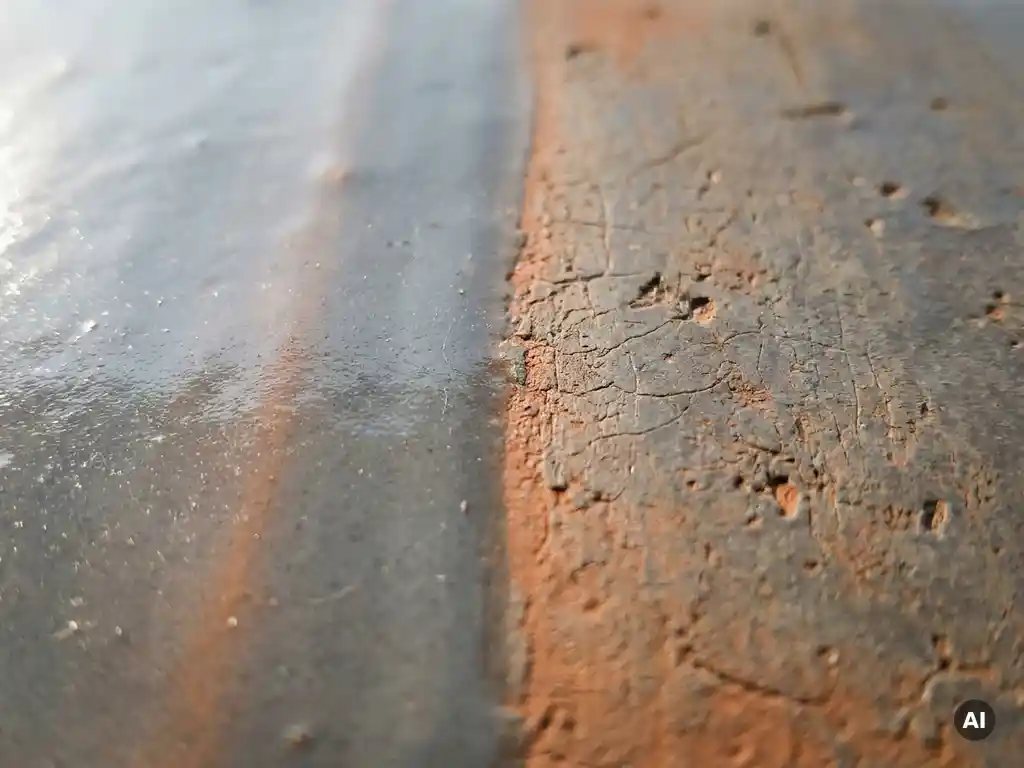
Repeated graffiti removal gradually degrades a facade surface. Each cleaning cycle strips away protective layers, roughens the material, and opens up the surface to deeper penetration by future paint and pollutants. The extent of the damage depends heavily on the facade material, the cleaning method used, and whether any protective coating was applied beforehand. The sections below address the most important questions surrounding graffiti cleaning and long-term facade integrity.
What happens to a facade surface after repeated graffiti removal?
Every graffiti removal attempt puts mechanical and chemical stress on a facade surface. Over multiple cycles, this stress accumulates: surfaces become rougher, micro-cracks form, protective coatings thin out, and the material itself becomes increasingly porous. What began as a smooth, sealed surface can gradually turn into a texture that attracts and holds dirt, moisture, and future graffiti more easily.
The damage is not always visible after the first or second cleaning. It builds up incrementally. Solvents penetrate deeper with each application as the surface loses its original density. Pressure washing at high intensity can erode softer materials like render or natural stone. Even seemingly gentle cleaning agents, when applied repeatedly, alter the surface chemistry of certain materials. The result is a facade that becomes harder to protect and more expensive to maintain over time.
This cumulative effect is one of the strongest arguments for choosing facade materials that resist graffiti absorption in the first place, rather than relying entirely on aftercare.
Which facade materials are most vulnerable to graffiti cleaning damage?
Porous and soft facade materials suffer the most from repeated graffiti cleaning. Natural stone, sand-lime brick, uncoated render, and untreated concrete all absorb both graffiti paint and the solvents used to remove it. Each cleaning cycle leaves these surfaces slightly more open and degraded than before.
Render and plaster are particularly vulnerable. Their surface structure is inherently rough and absorbent, which means graffiti bonds deeply and removal requires aggressive chemical or mechanical action. Repeated treatment can cause the render to crumble, discolor, or lose adhesion to the substrate beneath.
Natural stone presents a similar challenge. Its mineral composition varies widely, and some stone types react poorly to acidic or alkaline cleaning agents. High-pressure washing can widen existing fissures and accelerate weathering.
Coated metal and glass facades fare better in terms of chemical resistance, but their protective coatings can be scratched or chemically stripped over time. Once the coating is compromised, the underlying material becomes vulnerable.
Dense, non-porous materials with smooth surfaces are significantly more resistant. Ceramic facade surfaces, for example, do not absorb paint in the same way that mineral-based materials do, which means removal is less aggressive and cumulative damage is minimized.
Does graffiti protection coating wear off over time?
Yes, applied graffiti protection coatings do wear off over time. Most aftermarket anti-graffiti coatings are either sacrificial or semi-permanent. Sacrificial coatings are designed to be removed along with the graffiti and must be reapplied after each cleaning. Semi-permanent coatings offer more durability but still degrade under UV exposure, temperature cycling, and the mechanical stress of repeated cleaning.
The lifespan of an applied coating depends on the quality of the product, how well it was applied, the underlying surface texture, and the environmental conditions the facade faces. In urban environments with high pollution and strong sunlight, coatings tend to degrade faster. A coating that performs well for several years in a sheltered location may need reapplication far sooner on a south-facing, sun-exposed wall.
This is why integrated graffiti protection built into the material itself offers a fundamentally different level of reliability. When the resistance is part of the material’s structure rather than an added layer on top, it does not wear away independently of the facade surface. The protection lasts as long as the facade itself.
How does surface porosity affect long-term graffiti resistance?
Surface porosity is one of the most decisive factors in long-term graffiti resistance. A porous surface allows paint to penetrate below the visible layer, anchoring itself within the material. Removing that paint then requires either dissolving it deep within the substrate or abrading the surface to the depth of penetration. Both approaches damage the facade material over time.
Low-porosity surfaces keep graffiti paint on the surface rather than inside the material. This means solvents work faster, at lower concentrations, and with less mechanical force. The cleaning process is less aggressive, and the surface integrity is preserved across more cleaning cycles.
Porosity also affects how a facade responds to moisture and pollutants more broadly. A surface that absorbs graffiti paint will also absorb rainwater, biological growth, and airborne particles. Over years of exposure, this combination of contaminants accelerates surface degradation even without any graffiti incidents.
Architects specifying facades for urban environments where graffiti is a realistic risk should treat low porosity as a primary material selection criterion, not an optional feature. Reviewing completed facade projects in comparable urban settings can give a useful sense of how different materials perform in practice.
What’s the most facade-safe method for removing graffiti?
The most facade-safe graffiti removal method is one that matches the cleaning agent and technique precisely to the facade material, uses the lowest effective concentration of solvent, and avoids unnecessary mechanical abrasion. Acting quickly after a graffiti incident is equally important: fresh paint has not yet fully cured on the surface and is significantly easier to remove without aggressive treatment.
For most facade materials, a staged approach works best. Start with the mildest effective method and escalate only if needed:
- Warm water and mild detergent for very fresh, water-based graffiti on non-porous surfaces
- Targeted solvent cleaners formulated for the specific paint type and facade material
- Low-pressure washing as a follow-up rinse, not as a primary removal method on soft materials
- Professional graffiti removal services for stubborn paint on sensitive substrates, where incorrect technique can cause irreversible surface damage
High-pressure washing should be used with caution. While it can be effective on dense, hard surfaces, it strips protective coatings, erodes soft materials, and forces moisture into substrates. On render, natural stone, or aged brick, it can cause more damage than the graffiti itself.
Abrasive methods such as sandblasting are generally a last resort. They remove surface material along with the paint and permanently alter the facade texture, making the treated area more susceptible to future graffiti adhesion. For guidance on suitable materials and technical documentation, reviewing manufacturer specifications before cleaning is always advisable.
How TONALITY® protects your facade from graffiti damage
TONALITY® ceramic facade elements are engineered to address graffiti vulnerability at the material level rather than relying on applied coatings that degrade over time. The key advantages for building owners and specifiers are concrete and measurable:
- Integrated graffiti protection: The dense, low-porosity surface produced by the sinter-firing process at over 1,200 degrees Celsius means graffiti paint cannot penetrate the material. It stays on the surface and can be removed without aggressive solvents or high pressure.
- Permanent UV and color resistance: The ceramic surface does not fade or degrade under UV exposure, so the facade looks consistent and well-maintained across decades without the need for recoating.
- Low maintenance lifecycle: Because graffiti removal is straightforward and does not damage the surface, the long-term maintenance burden is significantly reduced compared to porous or coated alternatives.
- Non-combustible material: TONALITY® elements are classified as building material class A1, meaning they contain no combustible components, which is particularly relevant for timber construction projects where fire protection requirements are stringent.
- Wide format and surface range: With formats from 150 x 300 mm up to 400 x 1,600 mm and a broad range of surfaces, the system offers design flexibility without compromising on protective performance.
[cta_contact_form]
If you are specifying a facade for an urban environment or any location where graffiti is a realistic concern, TONALITY® offers a solution that builds protection into the material itself rather than adding it as an afterthought. Get in touch with the TONALITY® team to discuss your project requirements and find out which system best suits your building’s needs.