

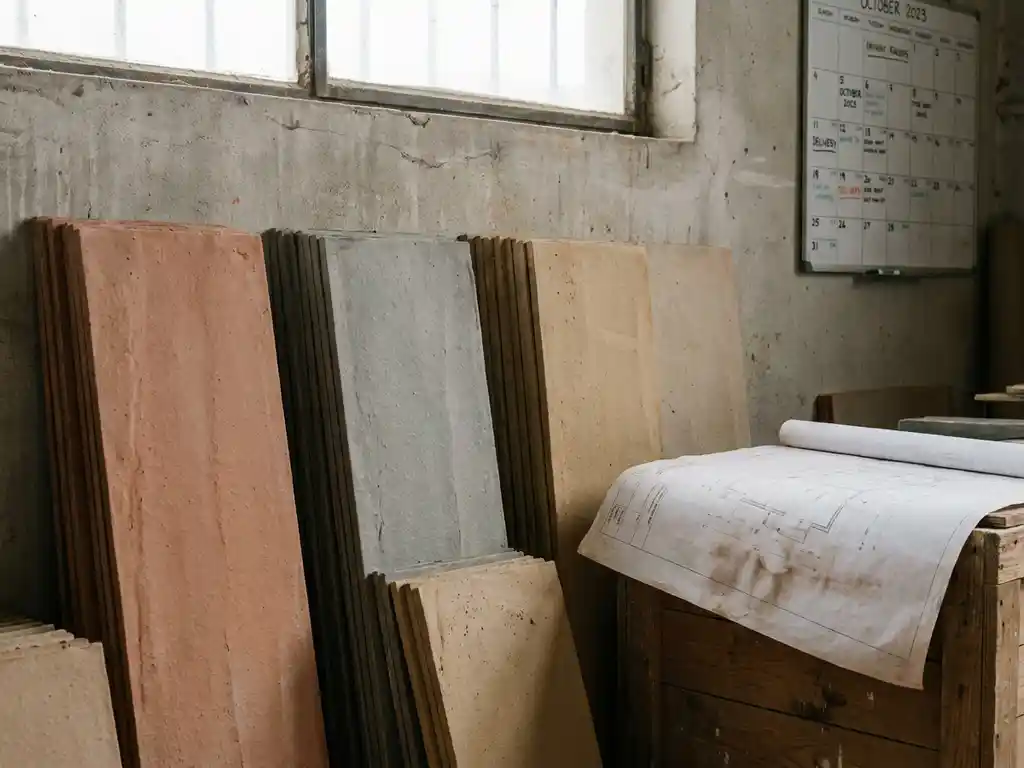
Architects ordering ceramic cladding panels should typically expect lead times of 8 to 16 weeks from order confirmation to delivery, depending on the complexity of the specification. Standard formats from existing product ranges sit toward the shorter end of that window, while fully custom dimensions, special surface finishes, or large-volume orders require more production time. The sections below break down the key variables, realistic timelines, and practical strategies to keep your project on schedule.
What factors affect production time for ceramic facade panels?
Production time for ceramic facade panels is shaped by four main variables: panel format and complexity, surface treatment, order volume, and the manufacturer’s current production schedule. Custom dimensions, textured surfaces, and high-volume orders all add time at different stages of the manufacturing process.
Ceramic facade production involves a precise sequence of steps. Raw clay must be prepared, extruded or pressed into shape, dried, and then fired at temperatures exceeding 1,200 degrees Celsius. This high-temperature sinter firing is not a process that can be rushed without compromising the dense, smooth surface quality that makes ceramic cladding so durable. Each stage has a minimum time requirement dictated by material physics, not production capacity alone.
Additional factors include:
- Panel size: Larger formats, such as panels approaching 400 x 1,600 mm, require more careful handling during drying and firing to prevent warping or cracking.
- Color specification: Certain pigment formulations or special glaze effects need dedicated kiln runs, which may need to be scheduled around other production batches.
- Tolerances: Panels produced to tight dimensional tolerances of within one millimeter require additional quality control steps before dispatch.
- Substructure components: If aluminum retaining profiles and fixing hardware are ordered alongside the ceramic elements, their manufacturing and coordination can influence the overall delivery window.
How long does it typically take to produce custom ceramic cladding?
Custom ceramic cladding panels typically take between 10 and 16 weeks to produce from confirmed order to delivery. This window accounts for material preparation, production scheduling, firing, quality inspection, and logistics. Projects with highly specific dimensions or surface requirements should plan for the upper end of this range.
The word “custom” covers a wide spectrum in ceramic cladding. A panel in a non-standard size but a common color may add only a few weeks to a standard lead time. A panel requiring a unique surface texture, a bespoke color match, or a completely new format profile involves more development work and dedicated production runs that extend the timeline further.
It is also worth noting that ceramic facade elements are precision-manufactured products. Unlike off-the-shelf cladding materials, ceramic panels are produced to exact project specifications, much like a tailor-made suit. That level of precision is what delivers a finished facade with consistent appearance and long-term performance, but it does mean that production cannot begin in earnest until the specification is fully locked down and approved. Reviewing completed facade projects at this stage can help teams align expectations around what is achievable within a given timeframe.
What’s the difference between standard and bespoke ceramic panel lead times?
Standard ceramic panels, drawn from an existing range of formats, colors, and surfaces, typically ship within 8 to 10 weeks. Bespoke panels, which involve custom dimensions, special finishes, or project-specific color matching, generally require 12 to 16 weeks or more. The gap reflects additional design validation, tooling adjustments, and dedicated production scheduling.
Standard panels benefit from established production parameters. The clay mixes, drying profiles, and kiln programs are already optimized, so the manufacturer can move from order confirmation to production quickly. Bespoke panels, by contrast, may require test firings to validate that a new format or color achieves the required finish and structural integrity before full production begins.
For architects, the practical implication is straightforward: the earlier a specification is finalized, the more flexibility there is to work within a standard range and benefit from shorter lead times. Projects that allow for surface and format exploration early in the design phase often find that a standard offering meets their design intent, avoiding the additional time that bespoke production requires.
When in the project timeline should architects order ceramic cladding?
Architects should place ceramic cladding orders no later than the end of the detailed design stage, ideally 16 to 20 weeks before the panels are needed on site. This buffer accounts for production lead times, potential specification adjustments, and logistics. For complex or large-scale projects, ordering even earlier reduces scheduling risk significantly.
A common mistake is treating facade cladding as a late-stage procurement item. Because ceramic panels are manufactured to project-specific dimensions and cannot simply be pulled from a warehouse shelf, they need to be ordered well before the structural envelope is complete. Waiting until the building is watertight before specifying the cladding is a pattern that consistently causes programme delays.
A more effective approach ties the cladding specification to key design milestones:
- Concept stage: Identify the facade system type, approximate format range, and color direction. Request samples to inform design decisions.
- Developed design: Confirm panel dimensions, surface finish, and fixing system. Begin manufacturer dialogue to understand current lead times.
- Technical design: Lock the specification and place the order. Allow the full production window before the required on-site date.
Requesting material samples and technical downloads early in the process also helps avoid late-stage changes that reset the production clock.
What can cause delays when ordering ceramic facade panels?
The most common causes of delay when ordering ceramic facade panels are late or incomplete specifications, mid-process design changes, high demand periods at the manufacturer, and logistics disruptions. Any one of these can add weeks to an already tight programme, but most are preventable with early planning.
Late specifications are the single biggest driver of delays. If panel dimensions are not confirmed until the structural frame is complete, the order is placed months later than it should be. Similarly, a change to panel size or color after production has begun typically means scrapping work already done and restarting that batch from scratch.
Other factors that can introduce delays include:
- Incomplete fixing system coordination: If the aluminum substructure specification changes after the ceramic panels are in production, the two components may no longer align correctly, requiring redesign.
- Peak production periods: Manufacturers often experience higher demand in spring and early summer as construction programmes accelerate. Orders placed during these periods may face longer queues.
- Approval cycles: Projects requiring planning authority or client sign-off on sample panels before production can begin add approval time on top of manufacturing time.
- Shipping and customs: International delivery adds logistical variables, particularly for large panel formats that require specialist freight handling.
How can architects reduce lead times for ceramic cladding projects?
Architects can reduce ceramic cladding lead times by finalizing specifications early, working within established format and color ranges where possible, maintaining close communication with the manufacturer throughout design development, and avoiding late-stage changes to confirmed orders. Early engagement with the manufacturer is the single most effective step.
Manufacturers can often provide preliminary scheduling information based on an indicative specification, even before the order is formally placed. This allows project teams to build a realistic procurement programme and flag potential conflicts with the construction schedule before they become critical. It also gives the manufacturer visibility of upcoming demand, which can help them plan production capacity accordingly.
Practical steps that consistently shorten lead times include:
- Requesting physical samples and technical data sheets at concept stage so surface and format decisions are made with full information, reducing the likelihood of late changes.
- Coordinating the facade panel specification with the substructure design in parallel rather than sequentially, so both components are ready to order at the same time.
- Choosing panel dimensions that align with the manufacturer’s standard format and surface range, which avoids the additional time required for bespoke tooling or test firings.
- Confirming the full panel schedule, including any phased deliveries for large projects, at the point of order rather than managing deliveries reactively.
How TONALITY® helps with ceramic cladding lead times
TONALITY® is designed to give architects both the design freedom and the procurement confidence they need to deliver ceramic facade projects on programme. Because panels are manufactured precisely to specification, from 150 x 300 mm up to 400 x 1,600 mm with tolerances within one millimeter, there is no compromise between design intent and production reality.
Key features that support efficient project delivery include:
- Wide standard range: An extensive selection of formats, surfaces, and colors means many project specifications can be met without bespoke production, keeping lead times as short as possible.
- Integrated facade systems: Ceramic elements and aluminum retaining profiles are developed together, so coordination between components is straightforward and does not introduce additional scheduling complexity.
- Low surface weight: At approximately 40 kilograms per square meter, TONALITY® panels place minimal load on the substructure, simplifying installation logistics and reducing on-site programme time.
- Non-combustible classification: Building material class A1 certification means fire safety compliance does not require additional approval steps that could delay the programme.
- Lifecycle value: The durability, UV resistance, and maintenance-free performance of TONALITY® ceramic cladding deliver long-term value that goes well beyond the initial installation, making the investment worthwhile for the full life of the building.
To discuss your project timeline, request samples, or get guidance on lead times for your specific specification, contact the TONALITY® team directly. Early conversations cost nothing and can save weeks on your programme.
Related Articles
- What maintenance do terracotta facade systems require?
- Are terracotta facades more durable than aluminium cladding?
- How do ceramic facade systems interact with whole-building energy modeling tools?
- Are terracotta facades suitable for listed building refurbishments?
- 10 Laboratory Tests Every Terracotta Facade System Should Pass