

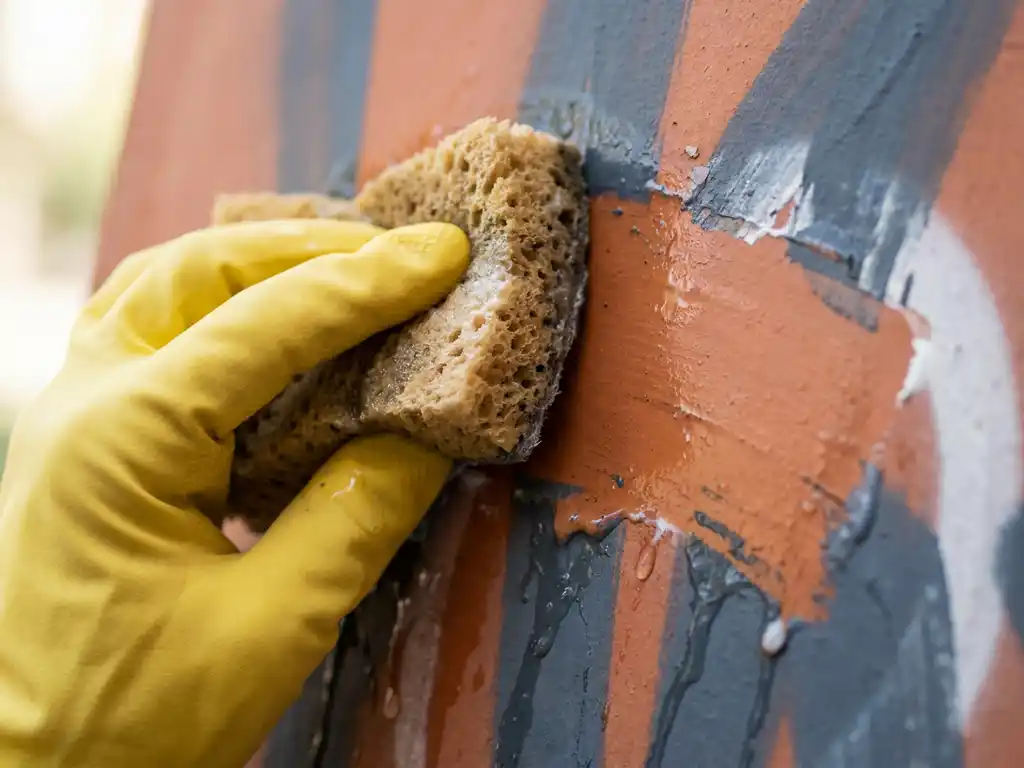
Cleaning graffiti from terracotta ceramic facades is straightforward and effective, especially when the material has integrated graffiti protection built into its surface. The dense, sintered surface of high-quality ceramic facade tiles resists paint penetration, meaning most graffiti can be removed without specialist chemicals or lasting damage. The sections below cover everything from built-in protection to long-term performance after cleaning.
Does terracotta have built-in graffiti protection?
Yes, terracotta ceramic facade tiles can have graffiti protection integrated directly into the material itself. With high-quality ceramic facade systems, graffiti protection is a standard feature rather than an optional coating. The protection works because the tiles are fired at temperatures exceeding 1,200 degrees Celsius, producing an exceptionally dense, smooth surface that prevents spray paint and marker ink from bonding deeply with the material.
This matters in practice because graffiti protection that relies on a topical sealant eventually wears off, especially on facades exposed to UV radiation, rain, and temperature fluctuations. A surface that is inherently dense and non-porous at the material level does not degrade in the same way. The sinter firing process essentially closes the surface at a microscopic level, leaving very little for paint to grip onto.
This built-in protection is particularly valuable for facades in urban environments, transport hubs, and publicly accessible buildings where graffiti risk is elevated. Rather than scheduling periodic resealing, building owners benefit from a surface that retains its protective qualities throughout the facade’s lifespan.
What cleaning methods work best on ceramic facade graffiti?
The most effective cleaning methods for graffiti on ceramic facade tiles are pressure washing combined with mild alkaline or solvent-based cleaners, applied promptly after the graffiti occurs. Because the dense sintered surface prevents deep paint penetration, graffiti on terracotta facades typically sits on or near the surface rather than soaking in, which makes mechanical and chemical removal significantly easier.
Pressure washing
For fresh graffiti, a pressure washer alone is often sufficient, particularly on smooth ceramic surfaces. The key is using appropriate pressure levels that remove the paint without risking damage to joints or surrounding materials. Ceramic facade tiles themselves are highly resistant to pressure washing, so this method is both safe and practical for routine graffiti removal.
Chemical cleaning agents
For older or more stubborn graffiti, a targeted graffiti remover applied before pressure washing improves results considerably. Choose products formulated for ceramic or mineral surfaces, and always test on a small, inconspicuous area first. Because the surface is non-porous, the chemical remover works on the paint layer rather than needing to penetrate the tile, which reduces the amount of product needed and shortens dwell time. If you want to evaluate material samples before committing to a facade system, ordering samples is a practical first step.
How does terracotta compare to other facade materials for graffiti removal?
Terracotta ceramic facades are among the easiest facade materials to clean after graffiti, outperforming porous alternatives such as natural stone, brick, and render. Porous materials absorb spray paint quickly, allowing pigment to penetrate deep into the surface where it becomes extremely difficult to remove fully without abrasive methods that risk damaging the material itself.
Compared to metal cladding, ceramic tiles offer a comparable level of surface density but without the risk of solvent-based cleaners affecting protective coatings or finishes. Metal panels often rely on lacquers or powder coatings that can be degraded by aggressive cleaning agents. Ceramic, being an inorganic mineral material, is chemically inert and tolerates a wider range of cleaning products without surface degradation.
Fiber cement and HPL panels occupy a middle ground. They are less porous than render but more susceptible to surface damage from abrasive cleaning than ceramic. Over time, repeated graffiti incidents and cleaning cycles can visibly wear these materials in ways that do not affect the fired ceramic surface of a quality terracotta facade system. You can explore completed facade references to see how ceramic performs across a wide range of building types and environments.
Can graffiti permanently stain a ceramic facade tile?
Permanent staining on ceramic facade tiles is rare when the surface has been properly sintered and graffiti protection is integrated into the material. The dense, closed surface structure means that even oil-based spray paints struggle to bond at a depth that would survive thorough cleaning. In most cases, complete removal is achievable without leaving residual discoloration.
The main risk factor for permanent staining is delayed cleaning. The longer graffiti remains on any surface, the more opportunity UV radiation has to cure the paint, making it harder to remove. On ceramic facades, this risk is lower than on porous materials, but prompt action still produces the best results. Addressing graffiti within a few days of it appearing is strongly recommended as a standard maintenance practice.
Certain specialty paints, including some acid-etching compounds sometimes used for glass, fall outside the scope of standard graffiti and require specialist assessment. For conventional spray paint and marker graffiti, however, ceramic facade tiles provide a highly forgiving surface.
Does cleaning graffiti affect the facade’s long-term performance?
Cleaning graffiti does not meaningfully affect the long-term performance of ceramic facade tiles when appropriate methods are used. The fired ceramic surface is chemically stable, UV resistant, and physically robust, meaning it withstands repeated cleaning cycles without losing its protective qualities, color consistency, or structural integrity.
This is a significant lifecycle advantage. On facade materials that depend on applied coatings for graffiti resistance, each cleaning event can partially degrade that coating, eventually requiring reapplication. With ceramic facade systems where the surface properties are intrinsic to the material, no resealing or recoating is needed after cleaning. The facade simply returns to its original appearance.
From a total cost of ownership perspective, this matters considerably. A facade that can be cleaned quickly, without specialist contractors, without resealing, and without visible wear accumulating over time represents a lower maintenance burden across the building’s lifespan. For project managers and building owners planning for the long term, the combination of integrated graffiti protection and durable cleanability is a practical advantage that compounds over years of use.
High-quality ceramic elements are also classified as building material class A1, meaning they are non-combustible and contain no organic components that could react unpredictably with cleaning agents. This gives maintenance teams confidence that standard graffiti removal products will not cause unexpected chemical reactions or surface damage.
How TONALITY® helps protect your facade against graffiti
TONALITY® ceramic facade systems are engineered to make graffiti a manageable maintenance task rather than a costly problem. The integrated graffiti protection is not a surface coating that wears away — it is built into the material through a high-temperature sintering process that closes the surface at a microscopic level. Here is what that means in practice:
- No resealing required: The surface retains its graffiti-resistant properties throughout the facade’s lifespan, with no periodic recoating needed after cleaning events.
- Faster, simpler removal: Most spray paint and marker graffiti can be removed with standard pressure washing and mild cleaning agents, reducing contractor time and costs.
- No visible wear over time: Unlike fiber cement or coated metal panels, repeated cleaning cycles do not degrade the TONALITY® surface or alter its appearance.
- Building material class A1: The non-combustible, fully inorganic composition means cleaning agents can be applied without risk of unexpected chemical reactions.
- Suitable for high-risk locations: Urban buildings, transport hubs, and publicly accessible structures benefit from a surface that is genuinely low-maintenance in graffiti-prone environments.
If you are specifying a facade for a project where graffiti resistance, durability, and long-term maintenance costs are priorities, contact the TONALITY® team to discuss your requirements and request technical documentation.
Related Articles
- Can ceramic facade tiles be used in timber construction?
- What is the environmental impact of terracotta facade systems?
- What technical questions should architects ask terracotta manufacturers?
- 7 Cultural Institutions with Iconic Terracotta Facades
- Does vertical or horizontal terracotta orientation affect building perception?